
Blog
What to Check Before Buying a Multi Head Embroidery Machine
By Ramana Machines · October 19, 2026
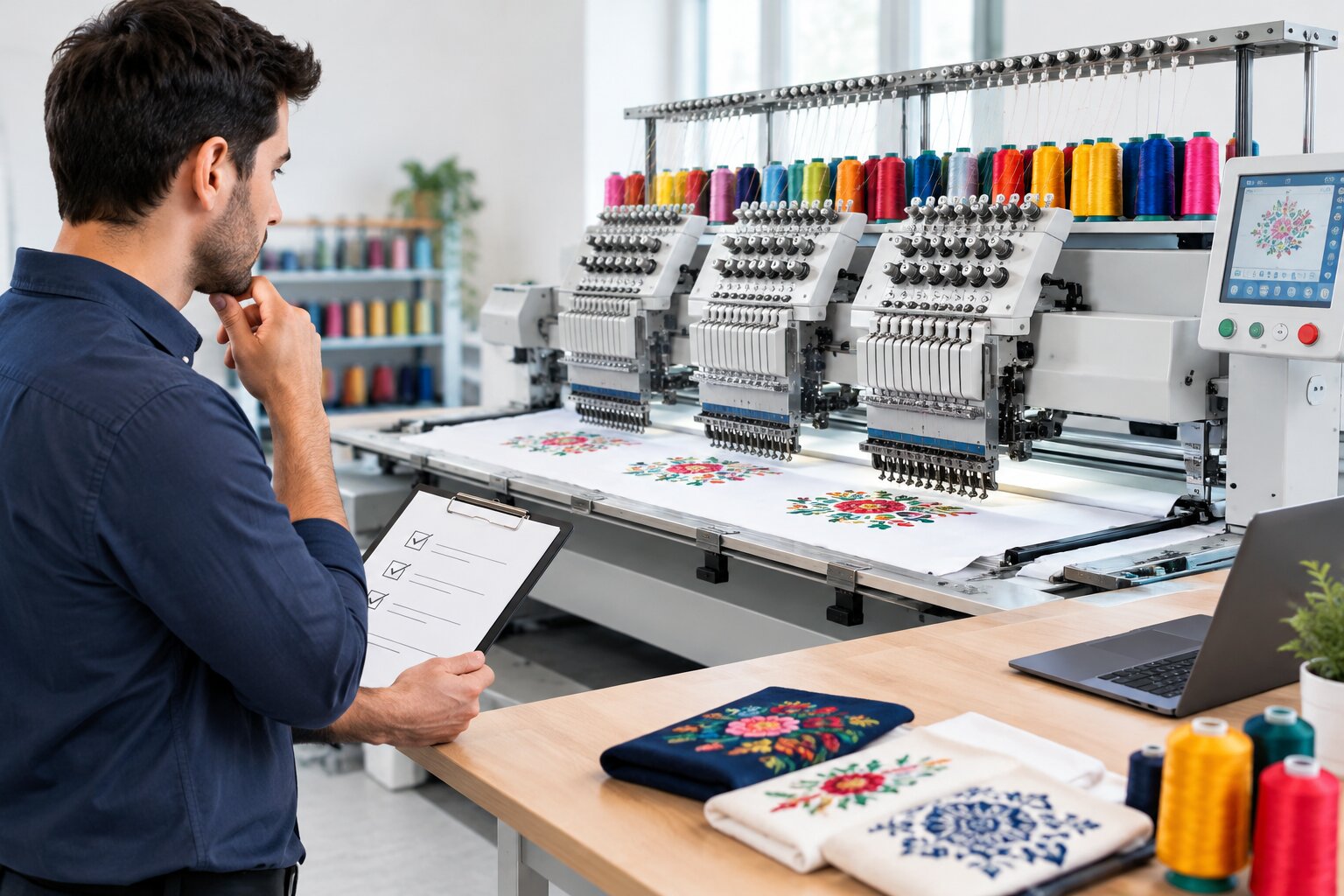
Learn what to check before buying a multi head embroidery machine, including machine speed, heads, fabric compatibility, price, maintenance, and supplier support.
1. Number of Heads and Production Needs
The first thing to check is the number of embroidery heads. A multi head embroidery machine allows you to embroider several garments or fabric pieces at the same time, depending on the machine setup.
Small businesses may consider 2-head or 4-head machines, while growing production units may need 6-head, 8-head, or 12-head machines. Larger businesses may require even more heads.
Before choosing, calculate your daily orders and expected production. Buying a machine with too many heads can increase your investment, while a machine with too few heads may slow down your work.
2. Machine Speed and Production Capacity
Machine speed is important when you have regular customer orders and fixed delivery dates. However, actual production also depends on the design, stitch count, fabric type, and thread changes.
Ask the supplier about the maximum stitching speed and normal working speed. Request a demonstration to see how the machine performs with a design similar to the ones you plan to produce.
This will help you understand whether the machine can meet your daily production targets.
3. Embroidery Area and Hoop Size
The embroidery area decides how large a design you can stitch on a garment or fabric. Check the maximum embroidery area before purchasing the machine.
If you produce small logos for T-shirts, shirts, or uniforms, a smaller embroidery area may be enough. If you plan to embroider jackets, large designs, bags, or other products, you may need a larger working area.
Also check whether the machine supports cap embroidery and whether cap frames, hoops, and other required accessories are included in the price.
4. Computerized System and Design Support
Most modern multi head embroidery machines use a computerized control panel to manage designs and machine settings. The system should be easy for your operator to understand.
Before buying, check whether the machine supports common embroidery file formats, USB transfer, and the design functions you need. Ask whether embroidery software is included or must be purchased separately.
You should also confirm whether the supplier provides operator training. Proper training can help reduce operating mistakes and improve production quality.
5. Fabric and Thread Compatibility
Different fabrics need different needles, threads, stabilizers, and machine settings. A machine that works well with cotton shirts may need adjustments for denim, polyester, knitwear, caps, or thick materials.
Ask the supplier which fabrics and thread types the machine can handle. If possible, test the machine using your own fabric and embroidery design.
Check the finished embroidery for loose threads, skipped stitches, uneven designs, and fabric damage. A sample test is a practical way to judge whether the machine suits your business.
6. New vs Refurbished Machine Condition
Your budget may determine whether you choose a new or refurbished best multi head embroidery machine.
A new machine may offer a manufacturer's warranty and updated features, depending on the supplier. A refurbished machine can cost less, but its condition depends on previous use and the quality of the refurbishment.
For a refurbished machine, check the mechanical parts, control panel, embroidery heads, thread tension, and overall stitching quality. Ask for its service history and test it before making a payment.
Always compare the warranty, expected maintenance costs, and spare parts availability before deciding.
7. Maintenance and Spare Parts
Regular maintenance helps keep an embroidery machine working properly. Before purchasing, ask about the cost and availability of needles, bobbin cases, hooks, belts, sensors, and other replacement parts.
Also check whether technical support is available when the machine develops a problem. For imported machinery, confirm how spare parts will be supplied and how long delivery may take.
Reliable after-sales support can help reduce production delays and avoid unnecessary repair expenses.
8. Machine Price and Additional Costs
Do not compare machines only by their purchase price. Your total investment may include transportation, installation, training, accessories, software, taxes, and maintenance.
Ask the supplier for a detailed quotation showing exactly what is included. Compare machines with similar head counts, working areas, features, warranty terms, and service support.
Choose a machine that fits your budget while meeting your current and future production needs.
9. Choose a Reliable Textile Machinery Supplier
A reliable supplier can make the buying process easier by providing clear specifications, product guidance, and support after delivery.
Ramana Machines is a supplier, distributor, and importer of textile machinery. We help textile businesses explore machinery options based on their production requirements and business goals.
Before placing an order, confirm the machine model, warranty, delivery schedule, payment terms, installation support, and availability of spare parts. Ask for a machine demonstration and get important purchase details in writing.
Related
More insights
19 Oct 2026
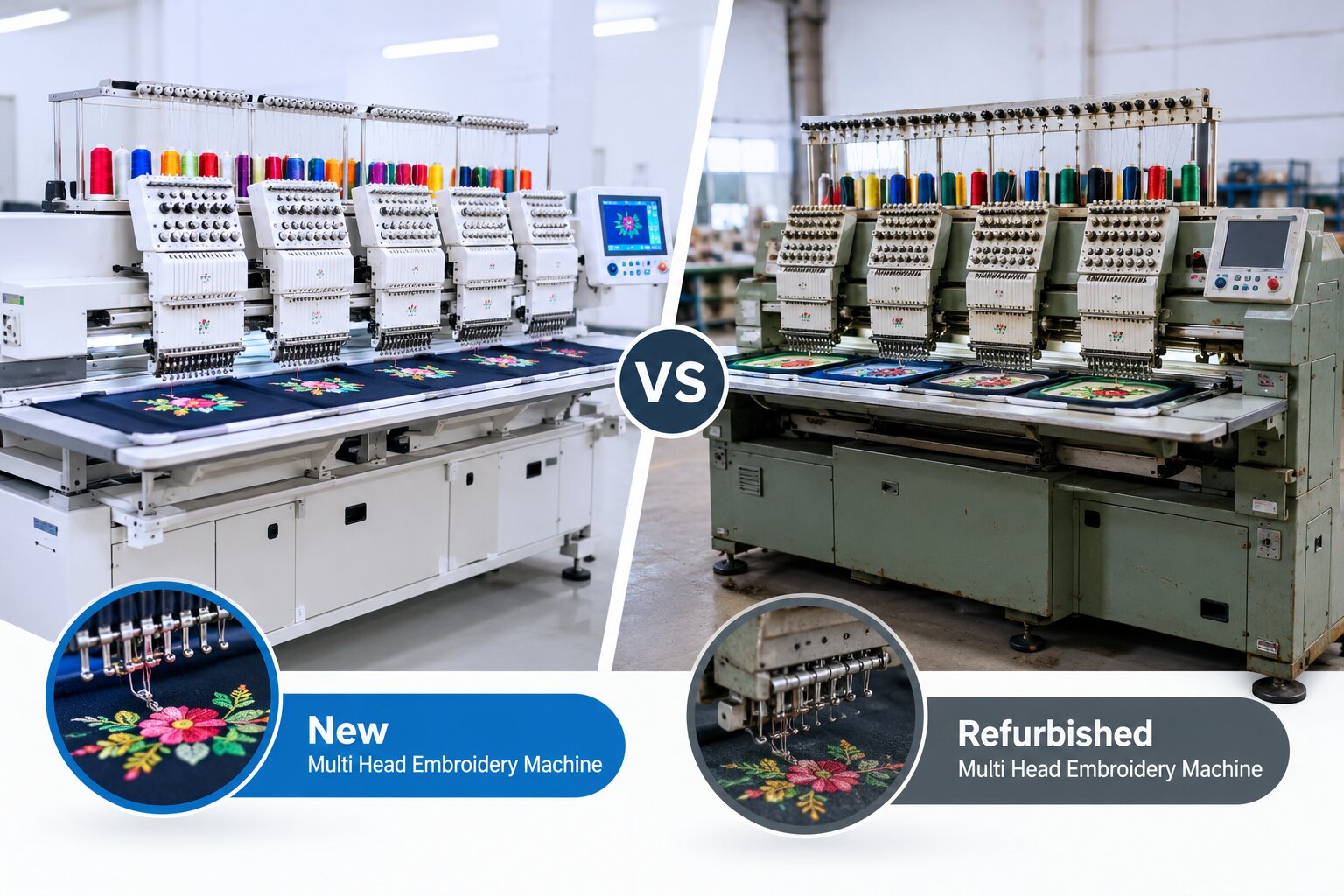
New vs Refurbished Multi Head Embroidery Machines
View19 Oct 2026
New vs Refurbished Multi Head Embroidery Machines
Compare new vs refurbished multi-head embroidery machines by price, quality, maintenance, and features to choose the right machine for your textile business.
View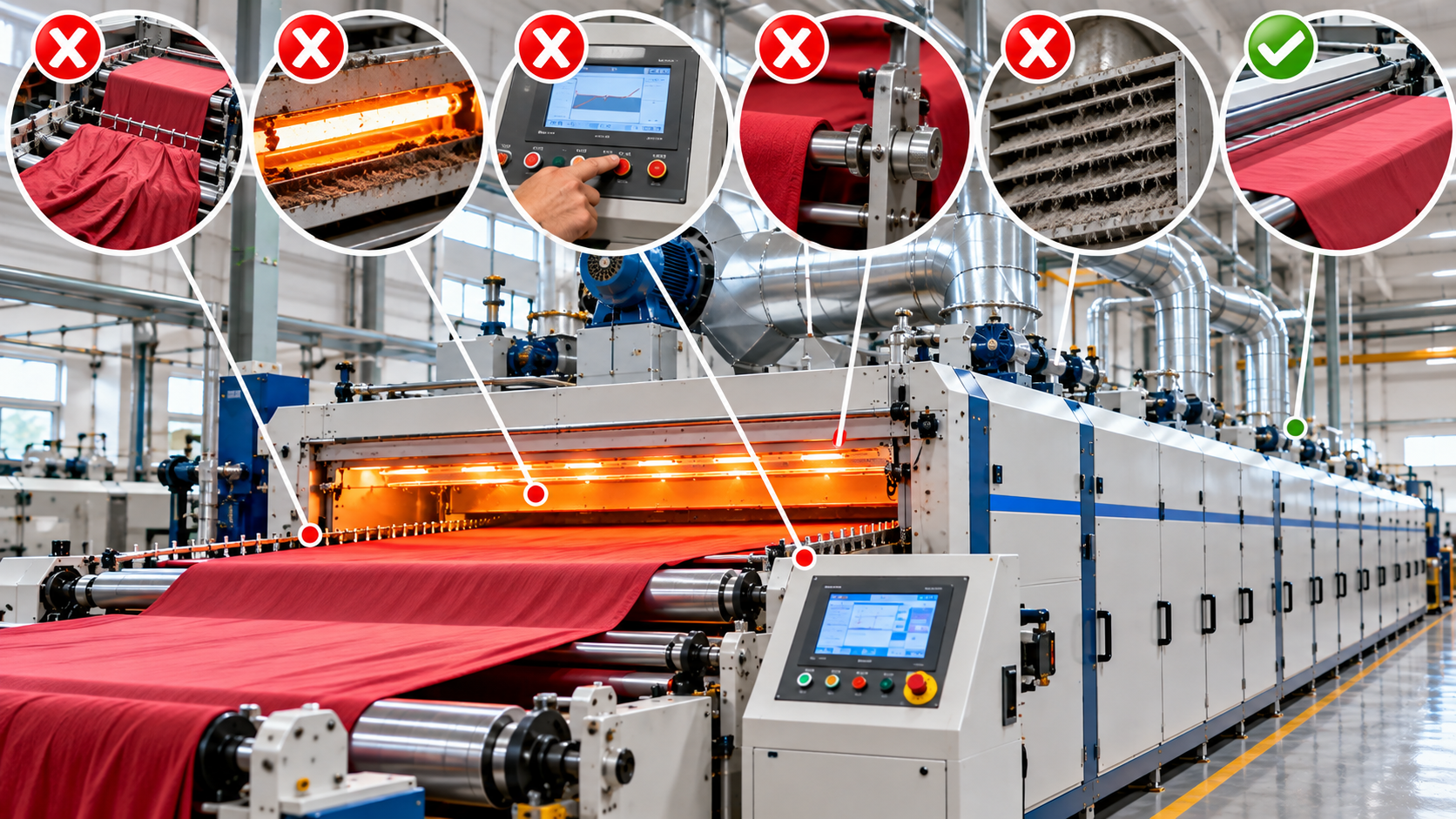
16 Oct 2026
Common Operating Mistakes to Avoid When Using a Stenter Machine
View16 Oct 2026
Common Operating Mistakes to Avoid When Using a Stenter Machine
Incorrect temperature, fabric tension, overfeed, and airflow settings can affect stenter machine performance and fabric quality. Learn the common operating mistakes to avoid and how regular maintenance and correct settings can improve textile finishing results.
View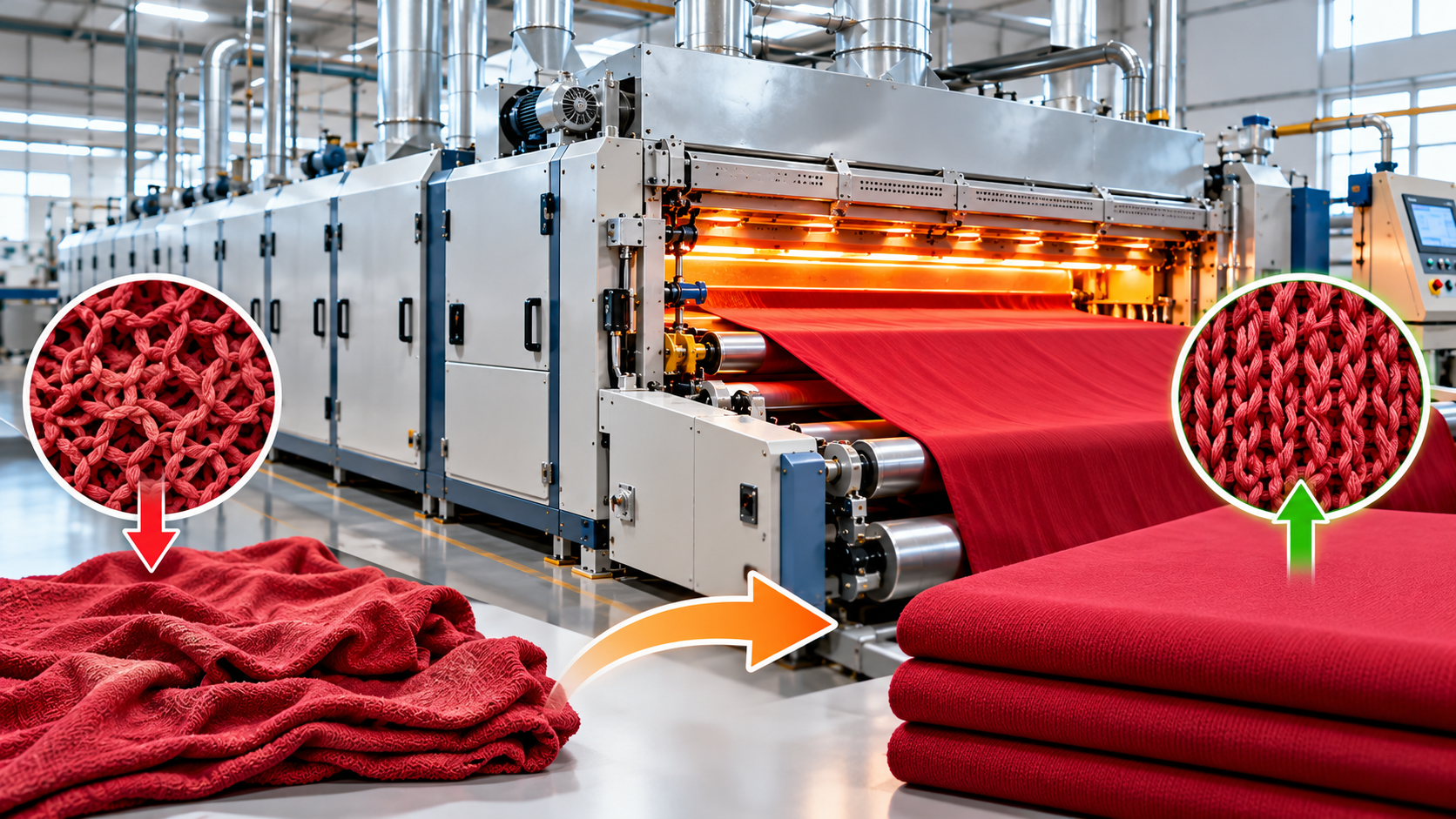
16 Oct 2026
How Does a Stenter Machine Help Control Fabric Shrinkage?
View16 Oct 2026
How Does a Stenter Machine Help Control Fabric Shrinkage?
A stenter machine helps textile manufacturers control fabric width, manage tension, and apply controlled heat during finishing. Learn how temperature, overfeed, airflow, and proper machine settings support dimensional stability and help reduce unwanted shrinkage.
ViewFrequently Asked Questions
Find answers to the most common questions about our machines, services and support.
A 2-head or 4-head machine may be suitable for a small business. The right choice depends on your budget, daily orders, design requirements, and available workspace.
Choose the number of heads according to your expected production volume. Calculate your daily workload and consider future growth before selecting a machine.
Yes, it can be an economical option if the machine is in good working condition. Always inspect the machine, test its embroidery quality, and check the service history before purchasing.
The most important features depend on your work. Head count, embroidery area, stitching speed, fabric compatibility, control system, and maintenance support should all be considered.
Ask about the machine specifications, price, warranty, accessories, installation, operator training, spare parts, and after-sales service.
You can contact Ramana Machines to discuss your textile machinery requirements and explore suitable equipment for your embroidery business.