
Loading…
Loading…
Loading…
Loading category…
Category
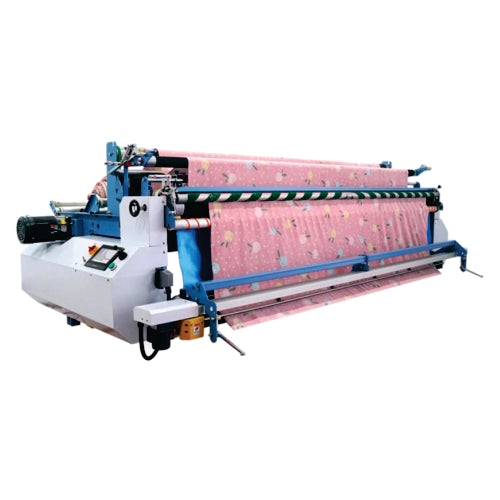
A fabric spreading machine is an important part of the fabric cutting and garment production process. It helps lay fabric evenly and accurately in multiple layers before cutting, reducing unnecessary manual work and supporting better fabric utilization.
Ramana Machines supplies fabric spreading machines for different textile and garment production requirements, including solutions for knitted and woven fabrics, home textiles, automatic spreading, and multilayer fabric spreading.
Our range includes automatic fabric spreading machine solutions as well as specialized spreading equipment for different fabric types and production needs. Whether you are processing lightweight woven material, knitted fabric, elastic fabric, home textile material, or multiple fabric rolls, selecting the right spreading system can improve the preparation stage before cutting.
Ramana Machines offers different fabric spreading solutions to suit fabric type, production volume, and spreading requirements.
The Spreader Knit & Woven is designed for applications involving both knitted and woven fabrics. The available models include TSK-160/TSK7-160, TSK-190/TSK7-190, and TSK-210/TSK7-210.
The machine includes features such as automatic return when the fabric runs out, automatic fabric expansion, driven wheels for tension-free spreading, dynamic speed control, and a PLC touch panel with a graphical interface. The listed configurations also provide different working widths for production requirements.
The Spreader Woven is designed specifically for woven fabrics, including lightweight, thin, and slippery materials. It can be considered for garment and textile production environments where controlled fabric spreading is important before cutting.
The 1205 V-Hopper Automatic Spreading Machine is designed to handle elastic, easily deformable, and loosely structured fabrics. Its V-hopper system provides an alternative to traditional tubular hopper designs, while an automatic lifting arrangement helps with fabric placement.
The machine can handle roll fabrics up to 1 metre in diameter and flat-folded fabrics up to 1.2 metres in width, according to the product information.
The 1203M/1205 Home Textile Spreading Machine is designed for home textile applications and is suitable for production environments that require the handling of wider and heavier fabrics. The product range features a double servo drive system for these applications.
The 1302 Multilayer Spreading Machine is designed to handle multiple fabric rolls simultaneously. It can be considered for production setups where multilayer spreading and higher fabric-handling requirements are part of the workflow.
A fabric spreading machine is used to spread fabric from a roll onto a cutting table in controlled layers. The fabric is laid according to the required length and spreading method so that the prepared fabric can move to the cutting stage.
The main purpose is to achieve a consistent fabric lay while controlling factors such as fabric tension, alignment, spreading speed, and layer formation.
Compared with manual spreading, an automatic system can help reduce repetitive work and improve consistency, particularly in production environments where fabric rolls are processed regularly.
The basic spreading process generally involves:
The exact operation depends on the fabric type and machine configuration.
Modern fabric spreading equipment can include functions designed to improve control and production efficiency, such as:
The available features vary according to the machine selected.
Fabric spreading equipment is used in many production environments where fabric needs to be prepared before cutting.
Application | Spreading Requirement |
| Garment Manufacturing | Preparing multiple fabric layers for cutting |
| Apparel Production | Controlled spreading of garment fabrics |
| Knitwear Production | Spreading suitable knitted materials |
| Woven Fabric Cutting | Preparing woven fabrics for cutting |
| Home Textiles | Handling wider and heavier textile materials |
| Fashion Production | Preparing different fabrics for pattern cutting |
| Industrial Garments | Supporting repeated and higher-volume production |
| Multilayer Cutting | Preparing multiple layers for cutting operations |
An automatic fabric spreading machine can reduce the amount of manual movement required during fabric preparation. Automated movement, feeding, tension management, and other controls can help make the spreading process more consistent.
For production units with higher fabric volumes, a fully automatic spreading machine can provide a greater level of automation. The appropriate automation level depends on production capacity, fabric characteristics, cutting-table setup, and operator requirements.
The goal is not simply to select the most automated machine, but to select a machine that fits the actual production process.
Different fabrics require different spreading approaches. Before selecting a machine, consider:
Identify whether you primarily process knitted, woven, elastic, lightweight, slippery, heavy, or loosely structured fabrics.
Check the required working width and make sure it matches your cutting-table and production requirements.
Fabric roll diameter and weight can affect machine selection and handling requirements.
Stretch, elasticity, slipperiness, thickness, and structure can influence the type of spreading equipment required.
For frequent or high-volume production, automatic and multilayer solutions may provide better workflow efficiency.
The spreading machine should work effectively with the cutting table and cutting system used in your production line.
Consider whether standard automatic operation is sufficient or whether a higher level of automation is required.
One spreading machine does not necessarily suit every fabric. For example, woven fabrics may require different handling from knitted or elastic materials.
Ramana Machines offers different configurations within its range so businesses can select equipment according to their specific fabric and production requirements. The woven spreader is intended for lightweight, thin, and slippery woven materials, while the V-Hopper system is particularly suited to elastic and easily deformable fabrics.
This application-based approach helps businesses avoid selecting equipment based only on machine speed or automation level.
Ramana Machines is a textile machinery supplier providing machinery solutions for textile, garment, and fabric-processing applications.
We supply and distribute fabric spreading equipment for different production requirements, including knitted and woven fabric spreading, automatic spreading, home textile applications, and multilayer spreading.
As a supplier and distributor, we help customers understand the available machine options and select equipment based on fabric type, production volume, machine width, automation requirements, and cutting workflow.
When purchasing textile machinery, the machine itself is only one part of the decision. Businesses also need reliable product information, machinery sourcing, technical coordination, installation support, spare parts availability, and after-sales assistance.
Ramana Machines works with customers looking for suitable fabric spreading solutions and supports the machinery sourcing and supply process.
Whether you need a fabric spreading machine, automatic spreading equipment, woven fabric spreader, knit and woven spreader, home textile spreading machine, or multilayer spreading machine, our team can help you evaluate the suitable option.
Proper machine maintenance can help maintain spreading accuracy and reliable operation.
Important practices include:
Regular inspection can help identify wear or operating issues before they affect production.
Looking for the right fabric spreading machine for your production line? Explore Ramana Machines' range of knit and woven, automatic, home textile, and multilayer spreading solutions and discuss your fabric and production requirements with our team.
Find answers to the most common questions about our machines, services and support.
A fabric spreading machine is used to lay fabric in controlled layers on a cutting table before the cutting process. It helps improve fabric preparation and reduce repetitive manual work.
The Spreader Knit & Woven range is designed for applications involving knitted and woven fabrics. The appropriate model depends on fabric characteristics, working width, roll size, and production requirements.
The Spreader Woven is specifically designed for woven fabrics, including lightweight, thin, and slippery materials.
The 1205 V-Hopper system is particularly useful for elastic, easily deformable, and loosely structured fabrics. Its adjustable V-hopper design helps with fabric placement and handling.
The 1302 Multilayer Spreading Machine is designed to handle multiple fabric rolls simultaneously and can be considered for multilayer production requirements.
Yes. Ramana Machines supplies and distributes fabric spreading solutions for different textile and garment production requirements, including knit and woven, automatic, home textile, and multilayer spreading applications.