
Loading…
Loading…
Loading…
Loading category…
Category
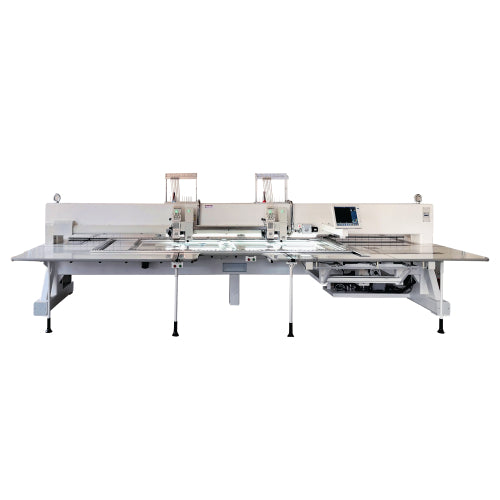
A perforation machine is designed to create holes, patterns, or specific designs in suitable materials for different manufacturing applications. These machines are used in industries such as automotive interiors, upholstery, leather goods, footwear, and specialised textile production. Depending on the machine type, perforation can be combined with sewing or other operations to support a more efficient production process.
Ramana Machines offers perforation machinery for businesses looking for equipment suited to their production needs. Our range includes a Computer Wiring Perforation Machine and a Perforation & Sewing 2-in-1 Machine (Double Head). These solutions support different applications, from specialised wire placement for heated seats to perforation and sewing operations on compatible materials.
Modern perforation equipment can include computerised controls, programmable patterns, and automated operating functions. These technologies can help operators maintain consistent results, reduce repeated manual work, and improve production workflow when the machine is correctly selected and configured.
Ramana Machines provides machinery options for different industrial applications.
The suitable machine depends on the material, pattern, production volume, and whether the process requires perforation alone or a combination of perforation and sewing.
Computerised perforation machines use programmed settings to help control the movement and pattern of the operation. Depending on the model, operators may be able to set designs, working areas, stitch or perforation patterns, and other process parameters through a control interface.
Compared with processes that rely heavily on manual positioning, computerised equipment can help improve repeatability and reduce the time spent setting up repeated designs. It may also support more consistent production when the material, machine settings, and operating conditions are properly matched.
Advanced features vary by model, but may include:
Not every feature is available on every machine. Buyers should confirm the required functions with the product specifications before making a selection.
Perforation machines are used across several industries, but the required machine type and specifications vary according to the material and the finished product. Automotive seating, leather upholstery, footwear, and specialised textile applications may require different hole patterns, working areas, and processing methods.
The following table outlines common applications and the key specifications to review.
Application | Typical purpose | Specifications to check |
| Automotive seats and interiors | Create perforation patterns or support specialised heating-seat production | Working area, pattern control, material compatibility, and wiring requirements |
| Leather furniture and upholstery | Produce consistent decorative or functional perforations | Material thickness, hole size, pattern accuracy, and processing area |
| Footwear and leather goods | Create holes or designs on compatible materials | Required pattern, material handling, working area, and production speed |
| Textile and fabric products | Produce perforation patterns for suitable materials and product designs | Fabric type, hole spacing, pattern requirements, and feeding method |
| Combined perforation and sewing | Complete two compatible operations within one production setup | Sewing capability, perforation method, working area, and control system |
| Heating-seat wiring | Position wires for specialised heating applications | Wiring layout, working area, wire handling, and applicable machine functions |
Exact specifications, such as working area, operating speed, hole diameter, and supported material thickness, depend on the machine model. These should be confirmed against the product details and the requirements of your application.
Installing suitable perforation machinery can help manufacturers improve workflow and handle repeat production more efficiently. Computerised controls and combined operations may also reduce unnecessary manual steps, depending on the production setup.
Feature or benefit | How it helps production |
| Higher production output | Repeatable machine operations can help process more pieces within a shift, depending on the model and material. |
| Reduced processing time | Programmable settings and automated movement can reduce time spent on repeated manual tasks. |
| Consistent perforation patterns | Controlled settings can help maintain more uniform results across production batches. |
| Lower labour requirements for repetitive tasks | Automation can reduce some manual handling, allowing workers to focus on other production activities. |
| Reduced material waste | Accurate setup and suitable settings can help reduce errors and rejected pieces. |
| Combined operations | A perforation-and-sewing machine can help reduce transfers between separate processes when both functions suit the product. |
| Improved production planning | Repeatable settings can make it easier to organise recurring orders and standardise processes. |
| Better process control | Computerised controls can help operators repeat selected settings for compatible jobs. |
Actual improvements in output, labour time, and operating costs depend on the machine, production volume, operator training, material type, and maintenance practices. Proper installation and setup are important to achieve the expected results.
When exploring a textile perforation machine or fabric perforation machine, it is important to match the equipment to the material and the finished product. The required perforation pattern, working area, production volume, and need for additional sewing or wiring functions will influence the suitable machine type.
Businesses should also review the available control features, operating requirements, maintenance needs, and technical support. Confirming these details before purchasing helps ensure that the selected machine fits the intended production process.
Ramana Machines supplies industrial machinery for textile and related manufacturing applications. As a textile machinery supplier, we help businesses explore equipment options according to their production requirements.
If you are searching for a perforation machine distributor in India, Ramana Machines can help you review our available machine range and identify the relevant product for your application. We also work with businesses exploring textile machinery options from Ludhiana, including customers searching for a crochet machine supplier in Ludhiana.
Whether you require a computer wiring solution or a machine that combines perforation and sewing, contact Ramana Machines to discuss your application and equipment requirements.
Visit Ramana Machines to explore our machinery range and make an enquiry.
Find answers to the most common questions about our machines, services and support.
A perforation machine creates holes or patterns in suitable materials. Applications may include automotive interiors, upholstery, leather goods, footwear, and specialised textile production.
A computerised perforation machine uses programmed controls to manage compatible patterns and operating settings. Depending on the model, it can help improve repeatability and reduce manual setup work.
Yes, a suitable machine can improve production output by making repeated operations more efficient. The actual improvement depends on the machine's capabilities, material, operator, and production setup.
Review the working area, supported material types, required hole patterns, operating speed, control system, and any additional functions such as sewing or wiring. Confirm model-specific specifications with the supplier.
Selected models combine perforation and sewing functions. For example, the Perforation & Sewing 2-in-1 Machine (Double Head) is intended for compatible applications requiring both operations.
You can contact Ramana Machines to enquire about available perforation machinery, review product options, and discuss the requirements of your manufacturing application.