
Blog
How to Improve the Working Life of a Textile Dyeing Machine
By Ramana Machines · October 14, 2026
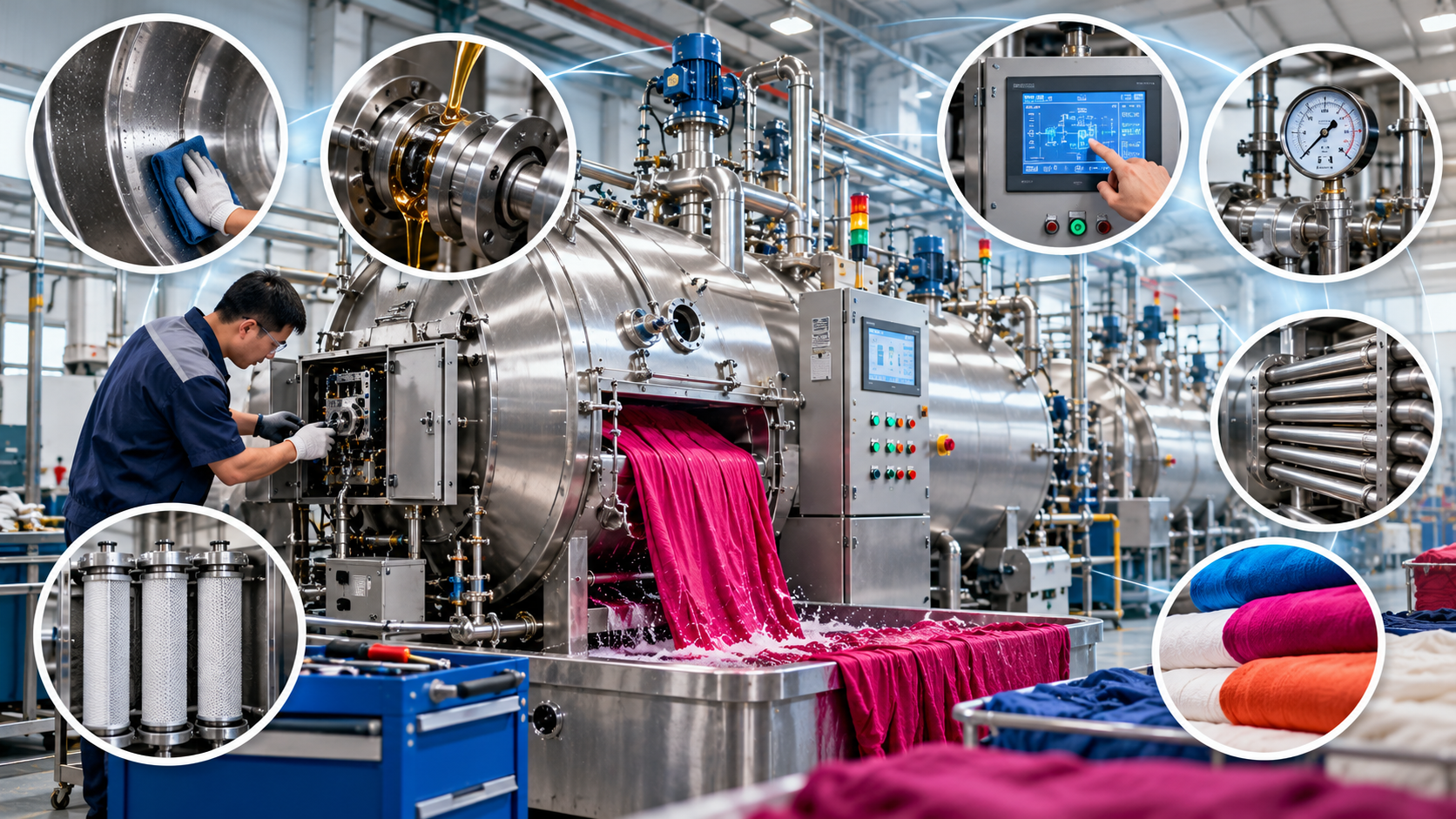
Regular maintenance can help textile manufacturers extend machine life, reduce breakdowns, and maintain consistent dyeing quality. Learn how to clean equipment, check pumps and valves, use correct settings, replace worn parts, and follow a preventive maintenance schedule.
A textile dyeing machine is an important part of textile production. It helps manufacturers achieve the required fabric colour, shade consistency, and production quality. However, continuous operation, poor maintenance, incorrect settings, and improper cleaning can cause machine components to wear out faster.
Extending the working life of a textile dyeing machine is not only about avoiding breakdowns. It also helps reduce repair costs, minimise production downtime, and maintain consistent dyeing results.
With regular maintenance and correct operating practices, textile manufacturers can keep their equipment in good working condition for longer.
Why Does a Textile Dyeing Machine Wear Out?
Before improving machine life, it is important to understand the factors that can damage equipment over time.
Common causes include:
- Poor cleaning after dyeing and washing cycles.
- Corrosion caused by unsuitable chemicals or improper rinsing.
- Incorrect temperature and pressure settings.
- Overloading the machine beyond its recommended capacity.
- Pump wear caused by poor maintenance or unsuitable operating conditions.
- Leakage from worn seals, valves, and pipelines.
- Delayed replacement of damaged components.
- Lack of regular inspection and servicing.
Identifying these issues early helps prevent small faults from developing into expensive repairs.
1. Clean the Machine After Regular Production Cycles
Dyes, chemical residues, salts, and other deposits can build up inside the machine during production. If these deposits are not removed, they may affect subsequent batches and contribute to blockages or corrosion, depending on the materials involved.
How to maintain it:
- Clean the dyeing vessel according to the machine manufacturer's instructions.
- Remove dye deposits from relevant pipelines, filters, and nozzles.
- Rinse the system properly when required by the process.
- Use cleaning chemicals compatible with the machine's construction materials.
- Inspect areas where residue tends to accumulate.
Regular cleaning helps maintain dyeing quality and prevents avoidable operating problems.
2. Follow the Recommended Temperature and Pressure Settings
Textile dyeing machines operate under specific temperature and, in some designs, pressure conditions. Operating outside the manufacturer's limits can place additional stress on seals, valves, heating systems, and other components.
Incorrect settings may also cause fabric defects, leading to unnecessary reprocessing.
How to maintain it:
- Follow the recommended temperature and pressure limits.
- Check temperature sensors and pressure gauges regularly.
- Avoid sudden process changes unless permitted by the operating procedure.
- Inspect safety valves and other pressure-related components according to the maintenance schedule.
- Train operators to follow approved dyeing recipes.
Accurate process control helps protect equipment while maintaining consistent production quality.
3. Inspect Pumps, Valves, and Pipelines
Pumps and circulation systems help distribute dye liquor throughout the machine. Worn pump components, blocked filters, leaking valves, and damaged pipelines can reduce circulation efficiency and affect dyeing results.
How to maintain it:
- Check pumps for unusual noise, vibration, and leakage.
- Clean filters and inspect circulation lines at suitable intervals.
- Check valves, pipe connections, and seals for signs of wear.
- Monitor changes in flow rate or circulation performance.
- Arrange repairs when abnormalities appear.
Do not wait for a complete breakdown before inspecting important machine components.
4. Use Suitable Chemicals and Maintain Correct Dosing
Textile dyeing involves dyes, salts, alkalis, acids, and other processing chemicals. Incorrect concentrations or incompatible chemicals can affect fabric quality and may damage machine surfaces or components.
How to maintain it:
- Follow chemical suppliers' recommendations.
- Use the correct dosing sequence and concentration.
- Avoid mixing chemicals unless the procedure confirms compatibility.
- Check the compatibility of cleaning agents with the machine's construction materials.
- Rinse the equipment when required by the process.
Correct chemical handling protects equipment and reduces the risk of deposits, contamination, and avoidable maintenance problems.
5. Avoid Overloading the Machine
Every dyeing machine has a recommended working capacity. Overloading can restrict fabric movement, affect dye liquor circulation, and place additional stress on certain mechanical components.
It may also lead to uneven shades, creases, and repeated dyeing.
How to maintain it:
- Follow the manufacturer's recommended batch capacity.
- Load fabric according to the machine's operating procedure.
- Select appropriate settings for the fabric type and batch size.
- Avoid forcing additional material into a machine to increase production.
- Check that fabric moves freely where the machine design requires it.
Operating within the recommended capacity supports more stable production and helps prevent unnecessary strain.
6. Lubricate Moving Components as Recommended
Some textile dyeing machines contain motors, bearings, gearboxes, and other moving components that require scheduled lubrication. Insufficient or unsuitable lubrication can increase friction and wear.
However, not every component needs the same lubricant or service interval.
How to maintain it:
- Follow the manufacturer's lubrication chart.
- Use the specified lubricant for each component.
- Check lubrication levels at recommended intervals.
- Inspect for leaks or unusual operating noise.
- Avoid excessive lubrication, which can also create problems.
Regular servicing helps maintain mechanical performance and reduces premature component wear.
7. Check Electrical Systems and Sensors
Electrical faults can interrupt production and cause machine controls to operate incorrectly. Faulty sensors may also provide inaccurate temperature or pressure readings.
How to maintain it:
- Inspect control panels and electrical connections through qualified personnel.
- Check sensors and instruments according to the calibration schedule.
- Look for warning messages or repeated control errors.
- Maintain suitable electrical protection and grounding.
- Investigate repeated trips or unexpected shutdowns rather than repeatedly resetting the system.
Electrical inspections and repairs should be carried out by qualified technicians, with the machine isolated according to the required safety procedures.
8. Replace Worn Spare Parts Before They Fail
Seals, gaskets, filters, bearings, valves, and other components may wear out during regular operation. Continuing to use damaged parts can lead to leakage, poor circulation, unexpected stoppages, or further equipment damage.
How to maintain it:
- Keep records of component replacements.
- Inspect parts at the intervals recommended by the manufacturer.
- Maintain essential spare parts based on actual equipment needs.
- Use compatible replacement components that meet the machine's specifications.
- Investigate recurring failures to identify the underlying cause.
Timely replacement is often more economical than repairing additional components after a major breakdown.
9. Schedule Preventive Maintenance
Preventive maintenance means inspecting and servicing equipment before a failure occurs. It allows operators to identify wear, leaks, unusual vibration, and other problems while they can still be addressed in a planned manner.
A practical maintenance schedule may include the following activities.
Frequency | Maintenance activity |
| Daily or each production cycle | Check for leakage, unusual noise, alarms, and visible residue |
| Weekly, where appropriate | Inspect filters, accessible connections, and circulation performance |
| Monthly, where appropriate | Review component condition, service records, and recurring faults |
| As specified by the manufacturer | Calibrate instruments, inspect critical components, and complete scheduled servicing |
The actual frequency depends on the machine design, operating hours, chemicals used, and manufacturer's instructions. Pressure-vessel inspections and other statutory checks must follow applicable requirements.
10. Train Operators to Use the Machine Correctly
Even well-maintained equipment can develop problems when operated incorrectly. Operators should understand the machine's controls, approved recipes, loading limits, alarms, and shutdown procedures.
Provide training on:
- Starting and stopping the machine safely.
- Selecting the correct process settings.
- Handling chemicals appropriately.
- Recognising early signs of mechanical or electrical faults.
- Reporting unusual noise, vibration, leakage, or alarms.
- Following cleaning and maintenance procedures.
Good operating practices reduce avoidable errors and help protect both the machine and the people working with it.
How to Choose a Reliable Textile Dyeing Machine
Maintenance is important, but machine selection also affects long-term operating costs. When comparing equipment, look beyond the purchase price and consider its suitability for your production process.
Check the following factors:
- Fabric compatibility: Confirm that the machine suits your fibre types and fabric construction.
- Capacity: Select a model that matches your production requirements.
- Construction materials: Ensure that wetted components are suitable for the chemicals and operating conditions.
- Process controls: Check temperature regulation, circulation, and available automation.
- Maintenance requirements: Understand the recommended servicing intervals and expected wear parts.
- Spare parts availability: Confirm access to compatible replacement components.
- Technical support: Ask about installation, commissioning, operator training, and after-sales service.
For businesses considering a China textile dyeing machine, compare the technical specifications, documentation, spare parts support, and service arrangements before making a purchase. The country of origin alone does not determine machine quality or working life.
Final Tips to Extend Machine Life
Improving the working life of a textile dyeing machine requires consistent cleaning, correct operating settings, timely repairs, and preventive maintenance. Operators should monitor machine performance, maintain service records, and address unusual conditions before they lead to major failures.
Ramana Machines supplies textile machinery for businesses looking for equipment suited to their production requirements. If you are planning to purchase new machinery or upgrade your textile processing setup, visit Ramana Machines to explore available equipment and discuss your requirements.
Related
More insights
14 Oct 2026
Common Fabric Defects Caused by Incorrect Dyeing Machine Settings
View14 Oct 2026
Common Fabric Defects Caused by Incorrect Dyeing Machine Settings
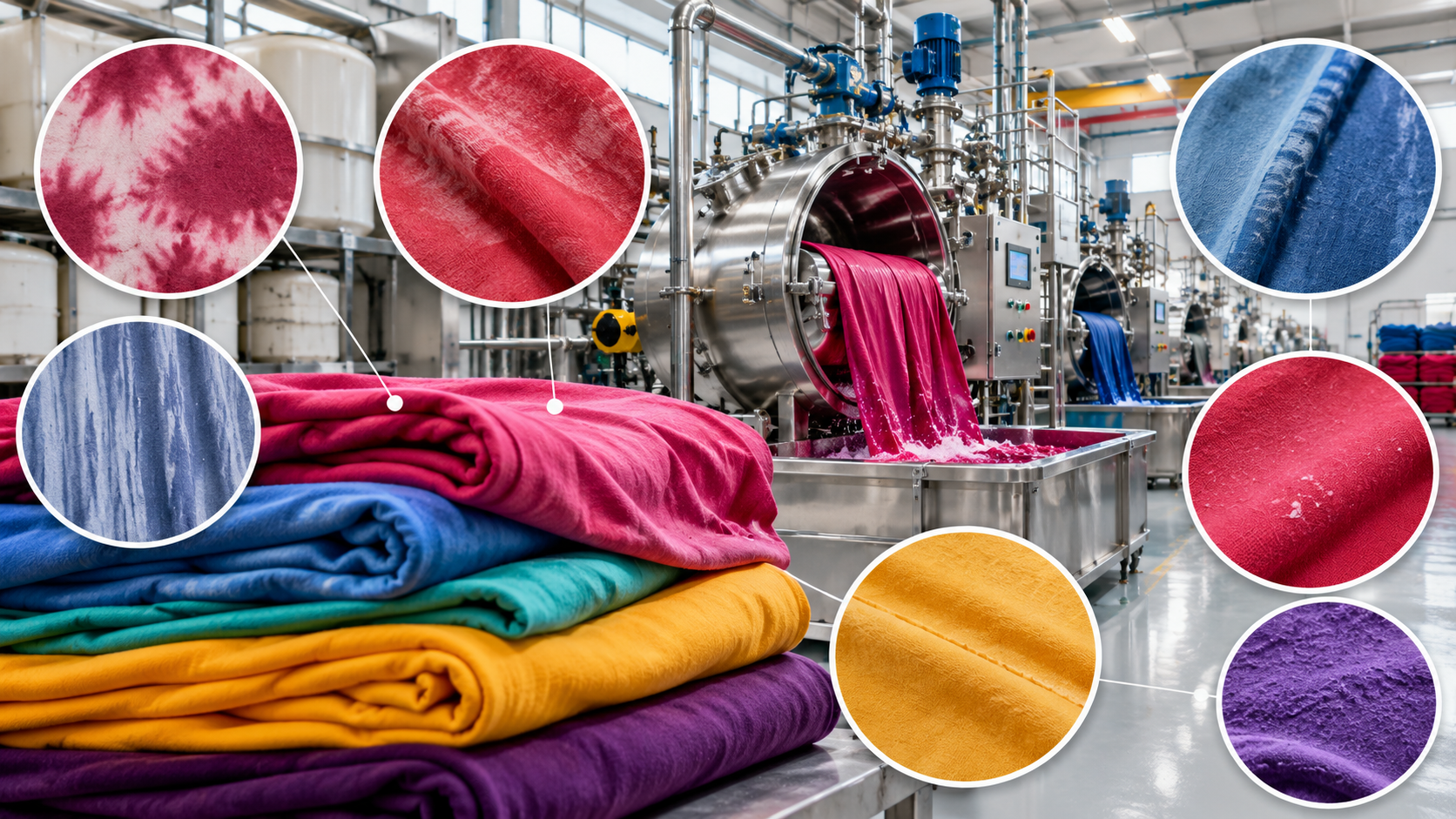
Incorrect dyeing machine settings can cause uneven shades, dark spots, crease marks, streaks, shrinkage, and poor colour fastness. Discover the common causes of these fabric defects and learn how to improve dyeing quality through correct temperature control, proper chemical dosing, machine maintenance, and effective troubleshooting.
View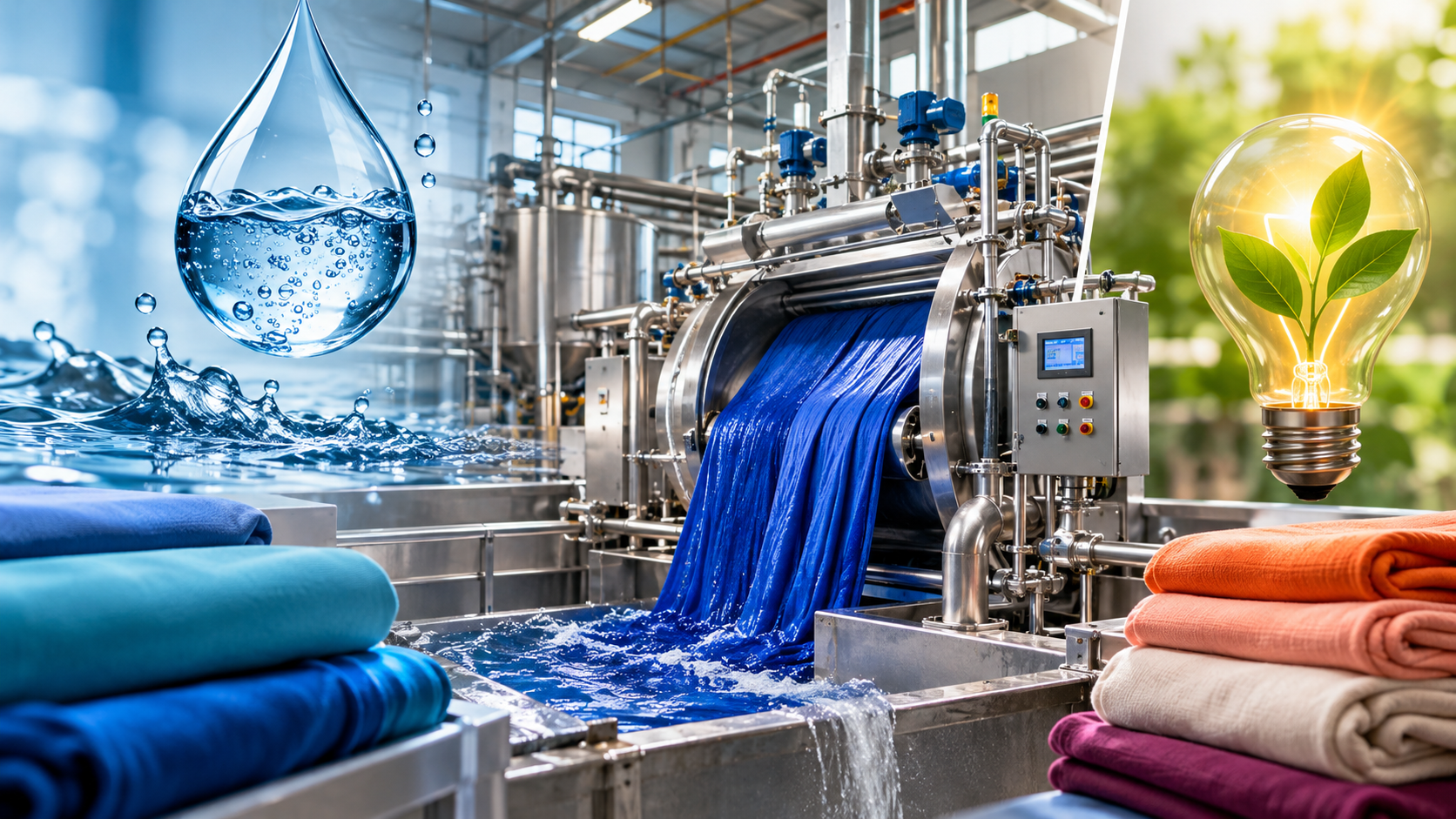
14 Oct 2026
How to Reduce Water and Energy Consumption in Textile Dyeing
View14 Oct 2026
How to Reduce Water and Energy Consumption in Textile Dyeing
Discover practical ways to reduce water and energy consumption in textile dyeing. Learn about low-liquor-ratio processes, efficient rinsing, water reuse, heat recovery, machine maintenance, and process control to lower operating costs while maintaining fabric quality.
View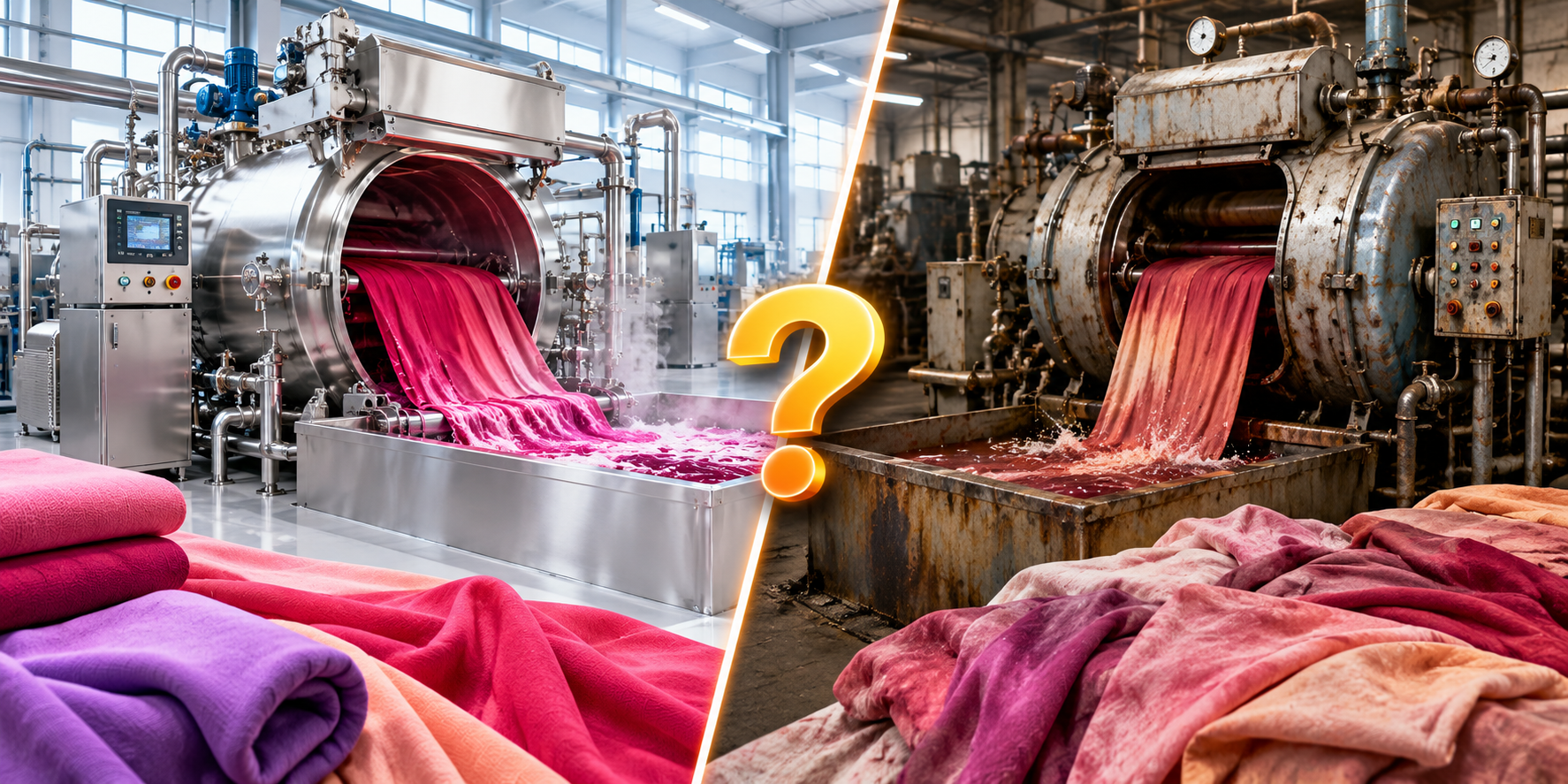
14 Oct 2026
New vs Used Textile Dyeing Machines: Which Should You Choose?
View14 Oct 2026
New vs Used Textile Dyeing Machines: Which Should You Choose?
Should you invest in a new or used textile dyeing machine? Compare purchase costs, energy consumption, maintenance, automation, and technical support to understand which option suits your production needs and budget. Use this practical guide to make a more informed machinery investment.
ViewFrequently Asked Questions
Find answers to the most common questions about our machines, services and support.
Clean the machine regularly, follow the recommended operating limits, inspect pumps and valves, use compatible chemicals, replace worn parts on time, and schedule preventive maintenance.
Daily checks should be combined with periodic servicing based on operating hours, machine condition, and manufacturer recommendations. Critical components may require more frequent inspection.
Operating outside the recommended limits can place additional stress on components such as seals, valves, and heating systems. Incorrect settings can also affect fabric quality.
Cleaning helps remove dye and chemical residues that can cause contamination, deposits, blockages, and problems in subsequent batches.
Depending on the machine, important parts may include seals, gaskets, filters, valves, pump components, bearings, and sensors.
Yes. It helps identify developing faults early, allowing repairs to be planned before a breakdown causes an unexpected production stoppage.
Review the machine's specifications, fabric compatibility, construction materials, operating limits, documentation, spare parts availability, warranty terms, and technical support arrangements.