
Blog
How to Reduce Water and Energy Consumption in Textile Dyeing
By Ramana Machines · October 14, 2026
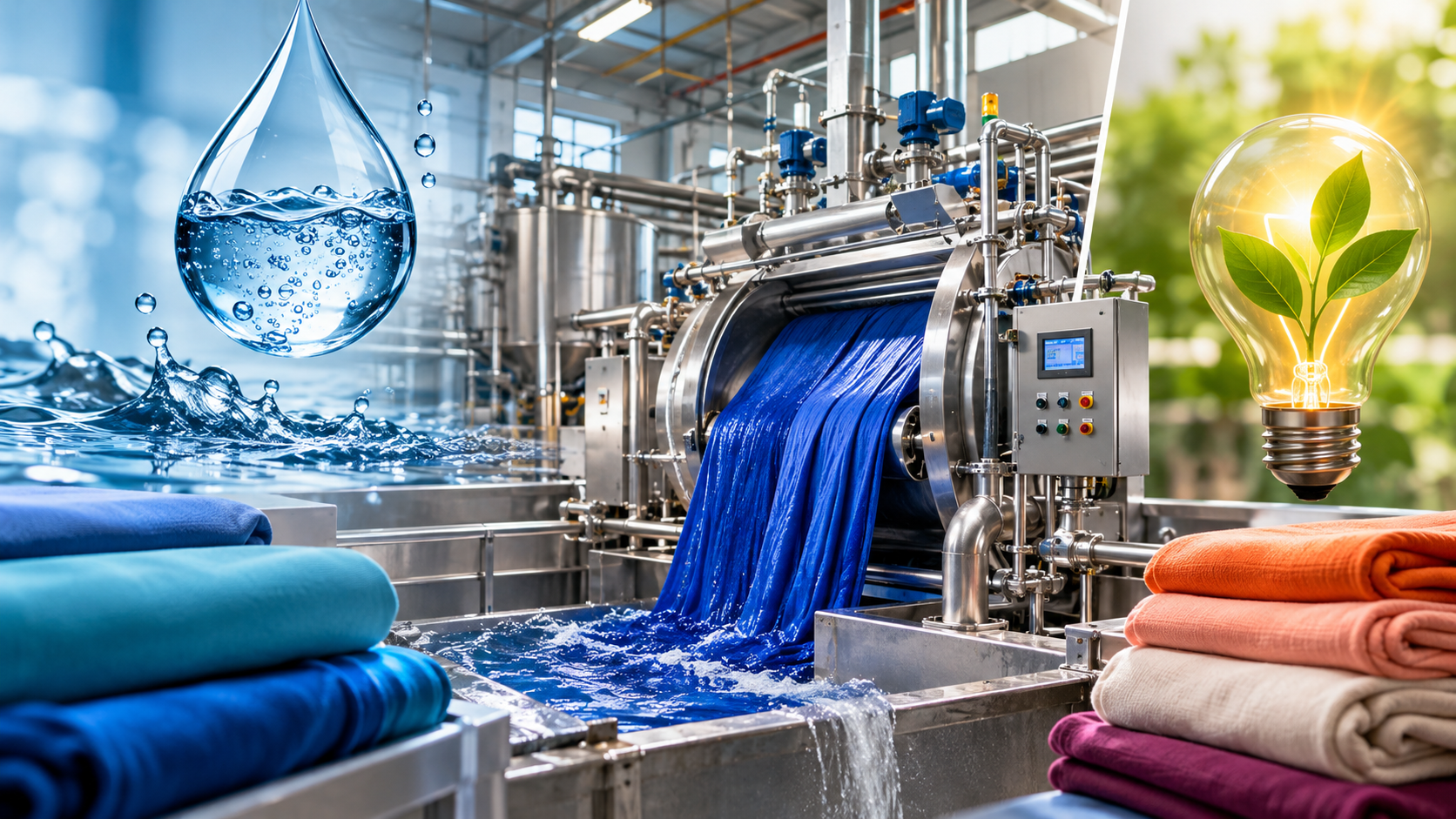
Discover practical ways to reduce water and energy consumption in textile dyeing. Learn about low-liquor-ratio processes, efficient rinsing, water reuse, heat recovery, machine maintenance, and process control to lower operating costs while maintaining fabric quality.
Water and energy are two major operating expenses in textile dyeing. Every batch requires water for dye preparation, fabric treatment, rinsing, and washing. Energy is also needed to heat the dye bath, operate machinery, and dry the fabric.
When water and energy are used inefficiently, production costs increase and more wastewater is generated. Textile manufacturers can reduce these expenses by improving dyeing methods, maintaining machinery, controlling process conditions, and reusing suitable resources.
In this guide, we will explore practical ways to reduce water and energy consumption in textile dyeing without compromising fabric quality.
Why Is Water and Energy Consumption High in Textile Dyeing?
Several stages of textile processing contribute to high resource consumption.
- Fabric pretreatment: Washing, scouring, and bleaching require water and may need heating.
- Dye bath preparation: Water is used to dissolve dyes and prepare chemicals.
- Dyeing process: The dye bath often needs to be heated and maintained at a specific temperature.
- Rinsing and washing: Unfixed dye and chemicals must be removed from the fabric.
- Drying and finishing: Wet fabric requires energy for moisture removal and further processing.
- Repeated dyeing: Incorrect shades or uneven dye absorption may require additional washing and processing.
Reducing unnecessary water use and avoiding repeated processing can help textile manufacturers lower operating expenses while improving production efficiency.
7 Ways to Reduce Water Consumption in Textile Dyeing
1. Use a Suitable Low-Liquor-Ratio Dyeing Process
The liquor ratio is the relationship between the weight of the fabric and the amount of water used in the dye bath. For example, a 1:10 liquor ratio generally means one part fabric to ten parts liquor by weight.
A lower liquor ratio can reduce the amount of water required for a dyeing batch. It can also reduce the energy needed to heat the bath and may lower chemical consumption when the recipe is adjusted correctly.
However, the lowest possible ratio is not always the best option. It must suit the fabric, dye type, machine design, and required shade quality.
Practical tip: Compare the existing liquor ratio with the machine manufacturer's recommended operating range. Test changes on a small batch before applying them to regular production.
2. Reuse Water Where Appropriate
Water from certain washing and rinsing stages may be suitable for reuse in another process. For example, relatively clean rinse water may be used for an initial washing stage, depending on its quality.
Before reusing water, check its colour, pH, temperature, dissolved solids, and chemical content. Water containing residual dye or incompatible chemicals can affect fabric quality if used incorrectly.
Practical tip: Create a water-reuse plan that identifies which process streams can be reused safely and where fresh water is still necessary.
3. Improve Washing and Rinsing Efficiency
Repeated rinsing with fresh water can increase total consumption. Review the washing sequence to identify unnecessary rinse cycles and opportunities for better water use.
Counter-current washing is one option. In this arrangement, fresh water enters the final washing stage and flows toward earlier stages, while the fabric moves in the opposite direction. This can reduce fresh-water demand when the system is properly designed.
Practical tip: Monitor the cleanliness of the fabric after washing and use measurable quality checks to confirm that any reduction in rinsing does not leave unwanted chemicals or unfixed dye behind.
4. Prevent Re-Dyeing and Fabric Rejection
When a batch has uneven shades or the wrong colour, it may require additional treatment, washing, or dyeing. These corrections consume more water, energy, dyes, and chemicals.
Improve first-time dyeing results by maintaining accurate recipes, checking fabric preparation, controlling temperature and pH, and ensuring proper dye liquor circulation.
Practical tip: Record the dyeing conditions for successful batches and use them as a reference for future production.
5. Maintain the Water Supply and Distribution System
Leaks in pipes, valves, tanks, and connections can cause water loss over time. Faulty flow meters can also make it difficult to identify where water is being consumed.
Inspect water lines regularly and repair leaks promptly. Install suitable meters at important process points so that consumption can be measured rather than estimated.
Practical tip: Track water consumption per kilogram of fabric to identify unusual increases and compare performance across production batches.
6. Optimise Pretreatment Processes
Scouring and bleaching prepare fabric for dyeing, but poorly controlled processes can lead to repeated washing or additional treatment.
Use the correct chemical concentration, temperature, processing time, and water volume for the fibre and fabric type. Avoid excessive treatment that does not improve the required fabric quality.
Practical tip: Review pretreatment recipes periodically and verify absorbency and cleanliness before moving fabric to the dyeing stage.
7. Treat and Recover Wastewater
A suitable effluent treatment plant (ETP) can help remove pollutants from wastewater. Depending on the treatment system and water quality, additional filtration or membrane processes may allow some treated water to be reused.
Water recovery must be carefully managed because residual salts, colour, and other dissolved substances can build up during repeated reuse.
Practical tip: Work with a qualified water-treatment specialist to determine which wastewater streams can be treated and reused safely.
6 Ways to Reduce Energy Consumption in Textile Dyeing
1. Control Dye Bath Heating
Heating the dye bath can require a considerable amount of energy. Incorrect temperature settings, excessive heating, and poor process control can increase consumption.
Follow the dye manufacturer's recommended temperature profile. Avoid unnecessary temperature increases and maintain accurate temperature sensors.
Practical tip: Review heating rates and holding times to ensure the dye bath reaches the required conditions without unnecessary delays.
2. Recover Heat from Hot Water and Wastewater
Hot wastewater and discharged dye liquor may contain recoverable heat. A properly designed heat exchanger can transfer some of this heat to incoming process water without mixing the two streams.
Steam condensate can also be recovered and returned to a suitable boiler system, where the installation permits.
Practical tip: Assess the temperature, flow rate, and operating schedule of hot discharge streams before investing in heat-recovery equipment.
3. Insulate Tanks, Pipes, and Steam Lines
Poorly insulated tanks and pipelines lose heat to the surrounding environment. This increases the amount of energy needed to maintain process temperatures.
Inspect insulation around dyeing vessels, hot-water tanks, steam lines, and other heated equipment. Repair damaged or missing insulation and check for steam leaks.
Practical tip: Prioritise hot surfaces and pipes that operate for long periods because they may offer useful opportunities for reducing heat loss.
4. Maintain Pumps, Motors, and Heating Systems
Worn pumps, blocked filters, leaking valves, and poorly maintained motors can reduce machine efficiency. Faulty heating controls may also cause unnecessary energy use.
Follow the manufacturer's maintenance schedule and inspect equipment for unusual noise, vibration, leakage, and changes in operating performance.
Practical tip: Maintain service records and compare energy consumption before and after repairs to identify improvements.
5. Reduce Unnecessary Machine Idle Time
A machine may continue using electricity, steam, or other utilities while waiting for fabric, chemicals, or the next production batch.
Better production planning can reduce unnecessary waiting and repeated heating. Prepare recipes, materials, and loading schedules before starting the process.
Practical tip: Coordinate dyeing, washing, and drying operations so that machines spend less time waiting between production stages.
6. Improve Fabric Dewatering Before Drying
Wet fabric carries moisture into the drying stage. Removing more water mechanically before drying can reduce the thermal energy required to evaporate it.
Suitable options may include efficient hydro-extraction, squeezing, or other dewatering equipment, depending on the fabric and process.
Practical tip: Measure the moisture content before and after dewatering and confirm that the chosen method does not stretch, crease, or damage the fabric.
Water and Energy Saving Methods: Comparison Chart
The following chart summarises common improvement options and their main benefits.
Method | Water-saving potential | Energy-saving potential | Key consideration |
| Low-liquor-ratio dyeing | High, depending on the existing process | High, because less liquor may need heating | Confirm dyeing quality and machine compatibility |
| Water reuse | High, depending on suitable recovery streams | May reduce heating demand if warm water is reused | Check water quality and contamination |
| Efficient rinsing | Moderate to high | May reduce hot-water demand | Ensure adequate removal of chemicals and dye |
| Heat recovery | Limited direct water savings | Moderate to high, depending on recoverable heat | Evaluate flow, temperature, and investment cost |
| Tank and pipe insulation | Little direct water savings | Reduces heat loss | Inspect insulation regularly |
| Improved dewatering | May reduce water carried into drying | Can reduce drying energy | Protect fabric quality |
| Preventing reprocessing | Reduces water used for corrective treatment | Reduces energy used for repeat cycles | Improve process consistency |
| Preventive maintenance | Helps prevent leaks and inefficient operation | Helps maintain machine efficiency | Follow maintenance schedules |
The potential benefits vary by machine, fabric, dyeing method, starting conditions, and factory operations. Measure actual results before assuming a specific percentage of savings.
How Does a Fabric Dyeing Machine Affect Resource Consumption?
A fabric dyeing machine influences how much water is needed for each batch and how efficiently heat and dye liquor are used. Machine capacity, circulation design, liquor ratio, insulation, and process controls can all affect consumption.
When selecting or upgrading equipment, textile manufacturers should consider:
- Liquor ratio: How much dye liquor is required for the intended fabric load?
- Heating system: How efficiently can the machine heat and maintain the required temperature?
- Circulation: Can dye liquor reach the fabric evenly without unnecessary pumping?
- Automation: Can the machine control temperature, dosing, and process time accurately?
- Water management: Does the system support efficient filling, draining, rinsing, or water recovery?
- Maintenance requirements: Are spare parts and technical support readily available?
A newer machine may offer useful efficiency improvements, but age alone does not determine performance. Compare technical specifications and operating data under similar production conditions before making an investment.
How to Measure Water and Energy Savings in a Textile Factory
To understand whether improvements are working, establish a baseline before changing the process.
Step 1: Record current consumption. Measure total water and energy used over a representative production period.
Step 2: Calculate consumption per kilogram of fabric. Divide total water use and energy use by the weight of fabric processed during the same period.
Step 3: Record production conditions. Include fabric type, shade, batch size, machine, and processing method because these affect resource demand.
Step 4: Make one change at a time. For example, test a revised rinsing sequence or improved insulation.
Step 5: Compare the results. Check water and energy consumption alongside shade consistency, fabric quality, processing time, and wastewater quality.
The percentage reduction can be calculated using this formula:
Percentage reduction = [(Old consumption − New consumption) ÷ Old consumption] × 100
For example, if a process previously used 1,000 litres of water per batch and now uses 800 litres under comparable conditions, the water consumption has decreased by 20%.
This approach helps manufacturers identify improvements that deliver genuine savings without compromising product quality.
Explore Textile Machinery with Ramana Machines
Reducing water and energy consumption requires the right combination of process control, efficient equipment, maintenance, and resource management. Even small improvements can make a difference when applied consistently across production batches.
Ramana Machines supplies textile machinery for businesses looking to meet their production requirements. If you are planning to upgrade your textile processing equipment, visit Ramana Machines to explore available machinery and discuss your requirements.
When choosing the best textile machinery trader company in India for your business, compare equipment specifications, supplier experience, spare parts availability, and after-sales support alongside the initial purchase price.
Related
More insights
14 Oct 2026
How to Improve the Working Life of a Textile Dyeing Machine
View14 Oct 2026
How to Improve the Working Life of a Textile Dyeing Machine
Regular maintenance can help textile manufacturers extend machine life, reduce breakdowns, and maintain consistent dyeing quality. Learn how to clean equipment, check pumps and valves, use correct settings, replace worn parts, and follow a preventive maintenance schedule.
View
14 Oct 2026
Common Fabric Defects Caused by Incorrect Dyeing Machine Settings
View14 Oct 2026
Common Fabric Defects Caused by Incorrect Dyeing Machine Settings
Incorrect dyeing machine settings can cause uneven shades, dark spots, crease marks, streaks, shrinkage, and poor colour fastness. Discover the common causes of these fabric defects and learn how to improve dyeing quality through correct temperature control, proper chemical dosing, machine maintenance, and effective troubleshooting.
View
14 Oct 2026
New vs Used Textile Dyeing Machines: Which Should You Choose?
View14 Oct 2026
New vs Used Textile Dyeing Machines: Which Should You Choose?
Should you invest in a new or used textile dyeing machine? Compare purchase costs, energy consumption, maintenance, automation, and technical support to understand which option suits your production needs and budget. Use this practical guide to make a more informed machinery investment.
ViewFrequently Asked Questions
Find answers to the most common questions about our machines, services and support.
Manufacturers can optimise liquor ratios, improve rinsing efficiency, reuse suitable process water, repair leaks, and prevent re-dyeing caused by shade defects.
Control dye bath heating, recover heat from hot discharge streams, insulate tanks and pipes, maintain equipment, reduce idle time, and remove excess moisture before drying.
It is a dyeing machine designed to process fabric using a lower amount of dye liquor relative to the fabric weight. When suitable for the material and process, it can reduce water use and the energy needed to heat the bath.
It can if the reused water contains residual dye, salts, chemicals, or other contaminants. Water should be tested and treated as necessary before being reused in a process.
Heat recovery transfers usable heat from hot wastewater, discharged liquor, or other streams to incoming water or another suitable process. This reduces the amount of new energy needed for heating.
Yes, depending on its design, operating conditions, controls, and maintenance. Compare measured consumption data for similar fabrics and production conditions before choosing equipment.
Install or use suitable water meters, record consumption over a representative period, and calculate litres used per kilogram of fabric. Compare results under similar production conditions.
Maintenance helps identify leaks, blocked filters, inefficient pumps, faulty controls, and heat loss. Correcting these issues can improve machine performance and prevent unnecessary resource consumption.