
Loading…
Loading…
Loading…
Loading category…
Category
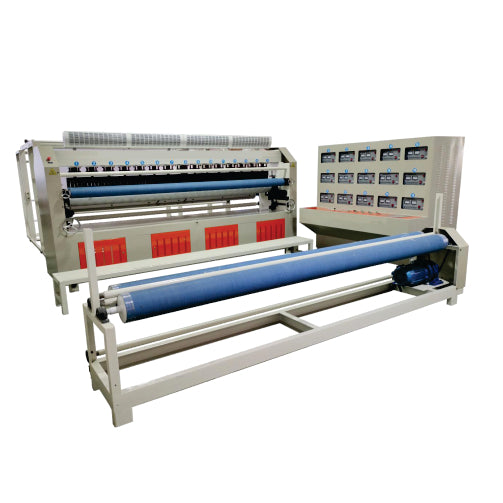
A quilting machine is used to join layers of fabric, wadding, foam, or other suitable materials through stitching or specialised bonding methods. Quilted materials are widely used in bedding, mattresses, comforters, quilts, cushions, upholstery, garments, and home furnishing products.
Ramana Machines offers a range of quilting machinery for businesses looking for equipment to support different fabric processing and production requirements. Our range includes computerised quilting machines, single-needle quilting machines, quilting embroidery machines, rotating-head precision quilting machines, and ultrasonic quilting machines.
Whether you are looking for a quilting sewing machine for regular stitching applications or a fabric quilting machine for patterned designs, selecting suitable equipment can help improve production consistency and manage repeat orders more efficiently.
Ramana Machines provides different quilting machine options for textile manufacturers and other businesses working with quilted materials.
Each machine serves different production requirements. The right option depends on the material being processed, the desired pattern, the required production capacity, and whether the application needs conventional stitching, embroidery, or ultrasonic bonding.
Modern quilting machinery can include computerised controls that allow operators to set and repeat compatible quilting patterns. Depending on the model, these controls may help manage stitching designs, machine movement, and other operating parameters.
Computer-controlled quilting machines are useful for manufacturers producing repeated patterns or handling orders that require consistent results. Automated functions can reduce some manual work and help operators manage production more efficiently.
Advanced quilting technology may offer:
Available features differ by machine model. Buyers should check the relevant product specifications to confirm the functions required for their applications.
Quilting machines are used across several industries where layered materials, decorative patterns, or bonded fabric structures are required.
Industry or application | Typical use |
| Bedding and mattresses | Quilting mattress panels, mattress covers, and related fabric layers |
| Comforters and quilts | Joining fabric layers with wadding or filling to create quilted products |
| Cushions and upholstery | Producing patterned or layered materials for furniture and interior products |
| Home furnishings | Manufacturing quilted bedspreads, covers, and decorative fabric products |
| Garments and padded clothing | Creating quilted panels for compatible jackets, linings, and other apparel |
| Decorative textiles | Producing quilting and embroidery patterns on suitable fabrics |
| Technical and layered materials | Processing compatible multi-layer materials according to the machine's capabilities |
The actual applications depend on the machine design, material composition, fabric thickness, and required finished result. Ultrasonic quilting, in particular, requires materials suitable for ultrasonic bonding.
Installing suitable quilting machinery can help textile and furnishing manufacturers improve workflow, handle repeat orders, and manage production more consistently.
Feature or benefit | How it supports production |
| Higher production output | Automated and repeatable operations can help process more pieces within a shift. |
| Reduced processing time | Computerised controls and supported automatic functions can reduce time spent on repetitive tasks. |
| Consistent quilting patterns | Programmed designs can help maintain repeatability across production batches. |
| Reduced manual effort | Machine-assisted operations can reduce some repetitive handling and operator workload. |
| Better production planning | Repeatable settings help businesses manage recurring orders and standardise processes. |
| Decorative design options | Quilting embroidery machines can support compatible decorative stitching requirements. |
| Multiple processing methods | Businesses can explore conventional sewing, computerised quilting, embroidery, or ultrasonic bonding based on the application. |
| Potential cost savings | Improved workflow and fewer avoidable errors may help reduce production costs over time. |
Actual improvements in output, processing time, and costs depend on the selected machine, production volume, operator skills, materials, and maintenance practices. Proper setup and suitable machine selection are important for achieving the expected results.
The right quilting machine depends on the type of products you manufacture and the process you need to complete. A bedding manufacturer may require equipment for large quilted panels, while a business producing decorative fabric products may prioritise computerised patterns or embroidery functions.
Before selecting quilting machinery, consider the fabric or material type, required working area, pattern complexity, production volume, and preferred processing method. It is also important to check whether you need single-needle quilting, a lifting-head arrangement, rotating-head precision, embroidery capabilities, or ultrasonic bonding.
Reviewing these requirements can help you identify machinery that suits your workflow and intended applications.
Ramana Machines supplies textile and industrial machinery for businesses with different manufacturing requirements. As a textile machinery supplier, we help customers explore suitable equipment options for fabric processing and related production applications.
If you are searching for a quilting machine supplier in India, our range includes several quilting and quilting embroidery machine options, including computerised and ultrasonic models. Businesses looking for a quilting machine distributor can review our product range and enquire about equipment suited to their production needs.
Based in the textile machinery market of Ludhiana, Ramana Machines serves businesses exploring machinery for textile and related manufacturing applications. Contact our team to discuss your requirements and find the relevant product information.
Visit Ramana Machines to explore our machinery range and make an enquiry.
Find answers to the most common questions about our machines, services and support.
A quilting machine joins layers of fabric and filling through stitching or a suitable bonding process. It is commonly used for quilts, comforters, mattress panels, upholstery, cushions, and other quilted products.
A quilting machine focuses on joining layers of material in a pattern, while a quilting embroidery machine can support decorative stitching as well as quilting-related functions, depending on its design.
A computerised quilting machine uses programmed controls to manage compatible patterns and operating settings. It can help improve pattern repeatability and reduce certain manual setup tasks.
An ultrasonic quilting machine uses high-frequency ultrasonic energy to bond compatible materials. It is different from conventional quilting machines that use needles and thread, and its suitability depends on the material and application.
Yes. Suitable quilting machinery can improve output by reducing repetitive manual work and making production processes more consistent. Actual results depend on the machine model, materials, pattern complexity, and production setup.
Consider the material type, working area, required patterns, production volume, operating speed, control system, and whether you need stitching, embroidery, or ultrasonic bonding. Confirm the exact specifications with the supplier.
You can contact Ramana Machines to explore available quilting machines, compare options for your application, and enquire about suitable equipment for your production requirements.