
Loading…
Loading…
Loading…
Loading category…
Category
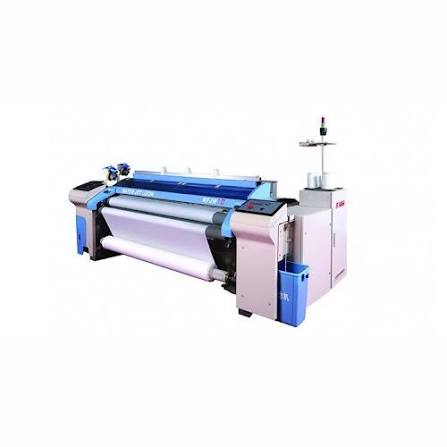
A water jet loom is a high-speed weaving machine that uses a controlled jet of water to insert weft yarn across the warp shed. This weaving method allows suitable yarns to be processed at high speeds while maintaining consistent fabric formation.
Ramana Machines supplies weaving machinery for textile businesses looking for efficient and reliable weaving solutions. A water jet loom machine can be considered for production environments where high-speed weaving, stable fabric formation, and continuous operation are important.
The right loom depends on yarn type, fabric construction, production requirements, fabric width, weaving speed, and the type of fabric being produced.
A water jet weaving machine uses a fine, controlled stream of water to carry the weft yarn through the warp shed.
The basic weaving process involves:
The machine continuously coordinates these operations to maintain the required weaving pattern and fabric construction.
Modern water jet weaving equipment is designed for continuous textile production and controlled fabric formation. Depending on the machine model, important features may include:
Machine specifications vary by model, so production requirements should be considered before selecting a particular water jet loom machine.
Water jet weaving is particularly associated with synthetic filament yarns and fabrics that are suitable for water-based weft insertion.
Application | How Water Jet Looms Are Used |
Polyester Fabrics | High-speed weaving of suitable polyester filament yarns |
Synthetic Fabrics | Continuous weaving of compatible synthetic materials |
Apparel Fabrics | Production of suitable lightweight and medium-weight woven fabrics |
Lining Fabrics | Weaving smooth synthetic fabrics used for garment linings |
Home Textiles | Production of selected woven materials for household textile applications |
Decorative Fabrics | Creating woven fabrics with required patterns and surface characteristics |
Industrial Textiles | Weaving suitable synthetic fabrics for selected industrial applications |
Lightweight Woven Fabrics | High-speed production where the fabric and yarn are compatible with water jet insertion |
A water jet system can provide fast weft insertion, making it suitable for production environments where weaving speed is important.
Controlled yarn tension, weft insertion, and fabric take-up help maintain consistent weaving conditions during production.
Water jet looms are designed
for continuous production, which can help textile units maintain steady output when the machine is correctly configured and operated.
Water jet weaving is commonly considered for suitable synthetic filament yarns, particularly where high-speed production is required.
Modern looms can include electronic monitoring and control features that help operators manage important weaving parameters.
Different weaving technologies are suited to different yarns and fabric applications.
A water jet loom uses water to carry the weft yarn, while an air jet loom uses compressed air for weft insertion. Rapier and projectile looms use different mechanical methods to insert the weft.
The selection should therefore be based on:
There is no single loom configuration suitable for every weaving application.
Before purchasing a water jet loom weaving machine, textile manufacturers and weaving units should evaluate the following factors.
Check whether the yarn is suitable for water jet insertion. Synthetic filament yarns are commonly associated with this weaving technology.
Select the appropriate working width according to the fabric widths you plan to produce.
Consider your required production volume and desired weaving speed. This helps determine the suitable machine configuration.
The intended fabric structure, density, weave pattern, and yarn characteristics should be considered when selecting the machine.
Review the control system, monitoring functions, electronic controls, and operator interface available with the machine.
Consider machine maintenance, spare parts availability, technical assistance, installation, and operator training when comparing equipment.
Ramana Machines supplies weaving machinery for textile businesses seeking suitable production equipment.
As a textile machinery supplier, we help customers evaluate weaving machinery according to their yarn, fabric, production capacity, and technical requirements.
Businesses considering a water jet loom machine should provide details such as:
This information helps in identifying a machine configuration suitable for the intended application.
A water jet weaving machine can be an important part of a modern weaving setup when the yarn and fabric are compatible with water-based weft insertion.
For textile businesses, the overall production system should be considered rather than looking at loom speed alone. Warp preparation, yarn quality, sizing, tension control, machine settings, maintenance, and fabric inspection can all influence the final result.
Proper machine selection and operating conditions can help maintain stable production and consistent fabric quality.
Regular maintenance is important for keeping a water jet loom operating reliably.
Important areas include:
Following the machine manufacturer's maintenance recommendations can help reduce unnecessary downtime and maintain stable weaving performance.
Ramana Machines provides textile machinery solutions for businesses involved in weaving and textile production.
We focus on understanding the customer's application before recommending machinery. Yarn type, fabric construction, production volume, machine width, automation requirements, and operating environment are important factors in the selection process.
Our approach includes:
Choosing the right weaving machine starts with understanding your yarn, fabric, production capacity, and weaving requirements. Ramana Machines can help you explore suitable water jet weaving solutions according to your application.
Find answers to the most common questions about our machines, services and support.
A water jet loom is a weaving machine that uses a controlled stream of water to insert weft yarn through the warp shed during the weaving process.
A water jet loom machine is used to produce woven fabrics, particularly fabrics made from suitable synthetic filament yarns. The exact applications depend on yarn and fabric characteristics.
A water jet loom uses water to insert the weft yarn, while an air jet loom uses compressed air. The suitable technology depends on the yarn, fabric, production requirements, and operating conditions.
Water jet weaving is commonly associated with suitable synthetic filament yarns. Yarn compatibility should be checked carefully because not every yarn is appropriate for water-based weft insertion.
Water jet looms are designed for high-speed weaving applications and can be suitable for continuous production when the yarn, fabric, and machine configuration are appropriate.
Consider yarn type, fabric construction, working width, weaving speed, production capacity, automation, water system, maintenance requirements, spare parts, and technical support.
Yes, depending on the machine configuration and weaving controls, different weave structures and fabric designs can be produced. The available designs depend on the machine's technical capabilities.
Water quality can affect the water circulation and weft insertion system. Proper filtration and regular maintenance of the water system are important for reliable machine operation.