Loading…
Loading…
Loading…
Loading category…
Category
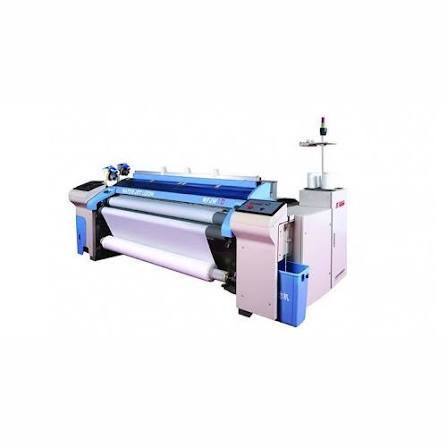
4 subcategories
A weaving loom machine is textile production equipment used to interlace warp and weft yarns to create woven fabric. Modern weaving technology offers different loom systems for different yarn types, fabric constructions, production speeds and design requirements.
Ramana Machines supplies a range of weaving loom machines for textile businesses looking for suitable equipment for different weaving applications. Our range includes water jet loom, rapier loom, electronic jacquard and air jet loom solutions.
Choosing the right weaving loom machine depends on factors such as fabric type, yarn characteristics, fabric width, required production capacity, pattern requirements and the type of weft insertion technology required.
A weaving loom machine is a machine used to produce woven fabric by interlacing two sets of yarns:
The loom creates a shed between the warp yarns, inserts the weft yarn and then beats the weft into position. This process is repeated continuously to form the finished fabric.
Modern weaving machines can use different weft insertion technologies, including air, water, rapier and other systems.
Different fabrics and production requirements need different weaving technologies. Ramana Machines offers a range of industrial weaving machines covering several major weaving systems.
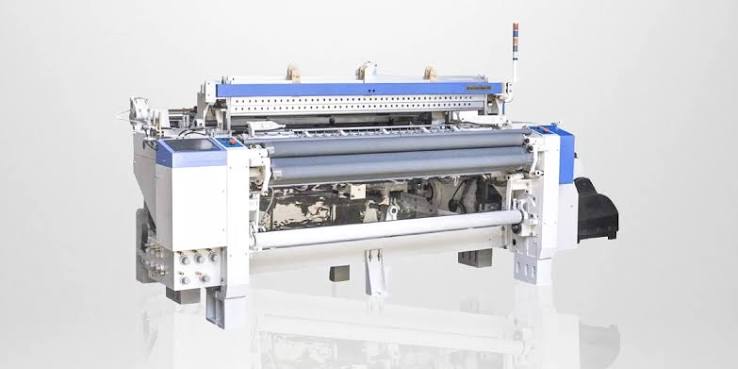
A water jet loom uses a controlled stream of water to carry the weft yarn across the warp shed.
Water jet weaving is commonly associated with suitable hydrophobic synthetic filament yarns and can support high-speed fabric production.
It can be considered for:
The suitability of a water jet loom depends on yarn characteristics, fabric construction and machine configuration.
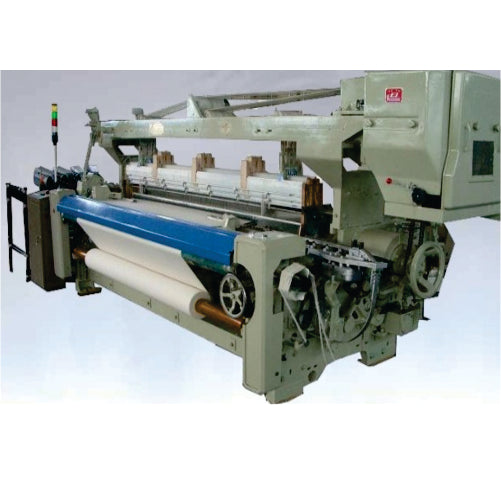
A rapier loom is a shuttleless weaving machine that uses a rapier mechanism to carry or transfer the weft yarn across the warp shed.
A rapier loom offers flexibility for different yarns and fabric constructions and can be suitable for:
A shuttleless rapier loom can also be combined with a jacquard system for fabrics requiring detailed woven patterns.
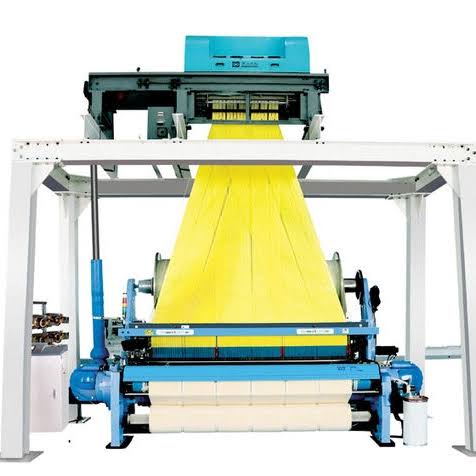
An electronic jacquard system provides electronic control over warp yarn selection to produce detailed and complex woven patterns.
An electronic jacquard weaving system can be used for:
The electronic control system allows suitable digital patterns to be programmed according to the machine configuration.
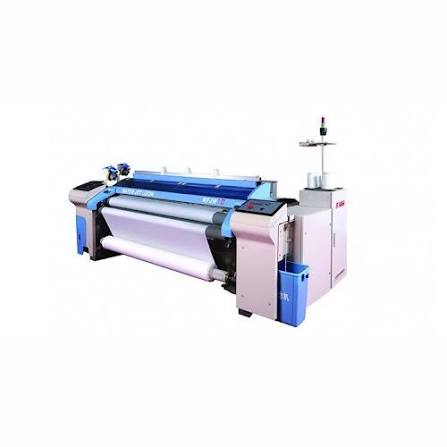
An air jet loom uses compressed air to carry the weft yarn across the warp shed.
An air jet weaving machine is designed for high-speed weaving and can be suitable for compatible cotton, polyester and other woven fabric applications.
It can be considered for:
The actual suitability depends on yarn properties, fabric construction and machine settings.
Ramana Machines provides different types of weaving loom machines to meet varying textile production requirements.
Weaving Loom Type | Weft Insertion / Main Technology | Typical Applications |
| Water Jet Loom | Water jet | Suitable synthetic fabrics and filament fabrics |
| Rapier Loom | Rapier system | Apparel, furnishing, cotton, blended and patterned fabrics |
| Electronic Jacquard | Electronic warp selection | Detailed and complex woven patterns |
| Air Jet Loom | Compressed air | High-speed weaving of suitable woven fabrics |
Each technology has different operating requirements. The correct machine should be selected according to the fabric, yarn, production volume and required fabric construction.
Although different loom technologies use different weft insertion systems, the basic weaving process remains similar.
Warp yarns are prepared and arranged according to the required fabric construction.
The machine separates the warp yarns to create an opening called the shed.
The selected weaving system inserts the weft yarn through the shed.
For example:
The reed pushes the inserted weft yarn into the fabric structure.
The finished fabric is continuously taken up and wound as the weaving process continues.
Modern textile weaving machines are designed to improve production control, fabric consistency and operational efficiency. Depending on the machine type and model, features may include:
Actual features vary between machines and configurations.
A weaving loom machine can be used across many textile production segments.
Application | Weaving Machine Use |
| Apparel Fabrics | Production of woven fabrics for garments |
| Home Textiles | Weaving materials for household textile products |
| Furnishing Fabrics | Production of fabrics for furniture and interiors |
| Curtain Fabrics | Manufacturing suitable decorative woven fabrics |
| Upholstery Fabrics | Production of durable woven furnishing materials |
| Fashion Fabrics | Creating woven fabrics with different structures and designs |
| Decorative Fabrics | Producing patterned and textured fabrics |
| Synthetic Fabrics | Weaving compatible synthetic yarns |
| Cotton Fabrics | Production of suitable cotton woven fabrics |
| Technical Textiles | Selected industrial and technical fabric applications |
Modern weaving systems are designed for continuous fabric production and can support high production volumes depending on the machine type.
Proper machine settings, yarn preparation and regular maintenance can help maintain consistent fabric construction.
The availability of air jet, water jet, rapier and electronic jacquard systems allows businesses to select technology according to their specific production requirements.
Different loom configurations can support different yarns, fabric widths and fabric constructions.
Modern automatic weaving machines can include electronic controls, monitoring systems and automatic functions that reduce some manual intervention.
Machines equipped with suitable jacquard systems can produce detailed woven patterns and complex fabric designs.
Choosing the right weaving loom machine requires consideration of the complete production requirement.
Identify the fabrics you intend to manufacture and determine which loom technology is compatible with them.
Consider yarn material, count, strength, filament or spun characteristics and other relevant properties.
Determine your expected production volume and operating schedule before selecting machine capacity.
Select a suitable loom width according to your required fabric range.
The type of weft insertion is one of the most important selection factors.
Consider electronic controls, monitoring functions, automatic stop systems and other automation requirements.
Installation, operator guidance, spare parts and after-sales support should also be considered before purchasing.
Selecting the right supplier is an important part of purchasing textile weaving equipment. A supplier should understand the relationship between the machine, yarn, fabric and production process.
When evaluating a weaving loom machine supplier, consider:
Ramana Machines supplies different textile machinery solutions and can help businesses evaluate weaving equipment according to their production requirements.
Ramana Machines operates as a textile machinery trading company in India, supplying machinery solutions for different textile production requirements.
For businesses looking to purchase a weaving loom machine, it is useful to discuss the intended fabric, yarn, production volume and machine application before selecting equipment.
A suitable weaving machinery solution should be based on the actual production process rather than machine speed alone.
An industrial weaving machine is generally selected for continuous and organized textile production. Modern weaving machinery can form part of a complete production line involving:
The weaving machine should be compatible with the other stages of production to support efficient workflow and consistent fabric quality.
Regular maintenance is important for reliable weaving operation and consistent fabric quality.
Basic maintenance practices include:
Maintenance requirements vary according to the specific loom technology and machine model.
Ramana Machines supplies a range of textile weaving equipment for different production requirements.
Our weaving loom range includes:
This range allows textile businesses to evaluate different weaving technologies according to their fabric, yarn, design and production requirements.
When selecting a weaving loom machine, Ramana Machines can help customers consider:
Explore a complete range of weaving loom machines from Ramana Machines, including water jet loom, rapier loom, electronic jacquard and air jet loom solutions.
Choose the right weaving technology according to your fabric, yarn, production volume, fabric width and design requirements.
Find answers to the most common questions about our machines, services and support.
A weaving loom machine is textile machinery used to interlace warp and weft yarns to produce woven fabric.
Both terms are commonly used for machinery used to produce woven fabric. A weaving loom machine specifically refers to the loom system used for interlacing warp and weft yarns.
Major types include air jet looms, water jet looms, rapier looms and jacquard-equipped weaving machines. Each technology has different applications and operating requirements.
The suitable loom depends on the type of synthetic yarn and fabric construction. Water jet looms are commonly considered for suitable hydrophobic synthetic filament yarns, while air jet and rapier looms can also be used for compatible synthetic fabrics.
Consider fabric type, yarn characteristics, fabric width, production capacity, weft insertion technology, pattern requirements, automation, technical support and spare parts availability.
Yes. Different types of industrial weaving machines are used for continuous fabric production. The appropriate machine depends on the fabric, yarn and production requirements.