Blog
Types of Flat Bed Knitting Machines: Complete Guide
By Ramana Machines · September 7, 2026
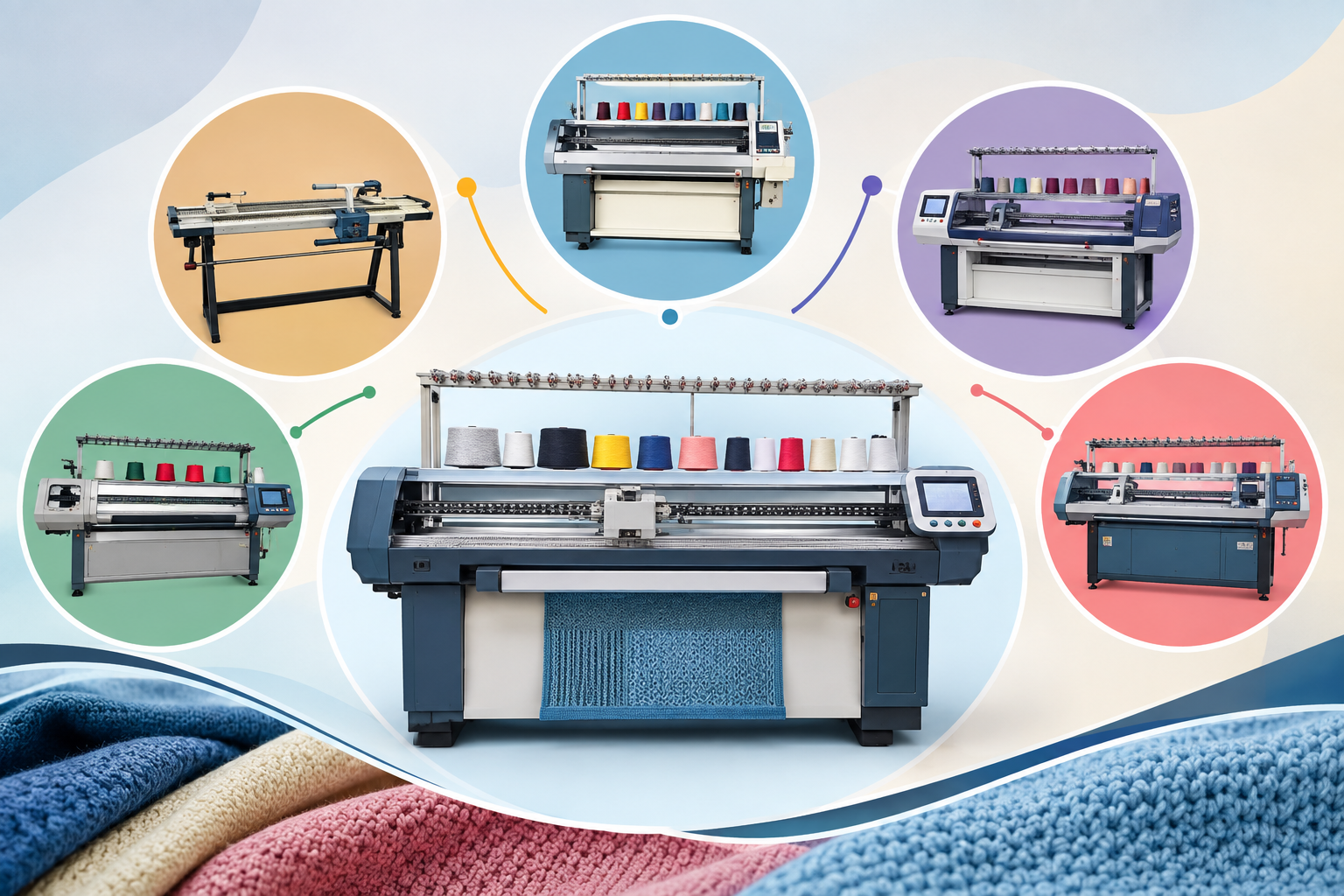
Explore the different types of flat bed knitting machines, including manual, computerized, single-bed, double-bed, automatic, and industrial models. Learn how each type differs and what to consider when choosing a machine for your production requirements.
Flat bed knitting machines are available in different designs and levels of automation. Choosing the right type depends on the product being made, production quantity, design requirements, operator skills, and the level of control needed.
For someone planning to purchase or use a knitting machine, understanding the main types is a useful first step. The following guide explains the common types of flat bed knitting machines and where each one can be used.
1. Manual Flat Bed Knitting Machine
A manual flat bed knitting machine requires the operator to manage a larger part of the knitting process. Machine settings and knitting operations are adjusted with direct operator involvement.
These machines can be suitable for smaller production requirements, basic designs, sampling, training, and businesses that prefer a simple operating system.
The operator's experience has an important role in maintaining consistent production quality.
2. Computerized Flat Bed Knitting Machine
A computerized flat bed knitting machine uses an electronic control system to manage different knitting functions and programmed designs.
The operator can enter or select production instructions through the machine's control system. Depending on the model, the machine can provide greater control over patterns, stitch settings, and other production parameters.
Computerized machines are commonly considered when manufacturers need:
- Detailed patterns
- Repeat production
- Consistent settings
- Greater automation
- More control over design changes
They are particularly useful for manufacturers producing a variety of designs or handling regular commercial production.
3. Single-Bed Flat Knitting Machine
A single-bed machine has one main needle bed. Its design is relatively straightforward and can be suitable for applications that do not require the knitting functions provided by two needle beds.
Single-bed machines can be used for selected fabrics, garment components, and other knitted products depending on the machine specifications.
Before choosing this type, manufacturers should check whether the required product and stitch structure are suitable for a single-bed configuration.
4. Double-Bed Flat Knitting Machine
A double-bed flat knitting machine has two needle beds positioned opposite each other. This configuration gives the machine greater flexibility for producing different stitch structures and knitted designs.
It can be useful for products where knitting from both needle beds is required. The exact capabilities depend on the machine model, gauge, and available functions.
Double-bed machines are often considered when product requirements are more varied than those handled by a basic single-bed setup.
5. Automatic Flat Bed Knitting Machine
Automatic flat bed knitting machines reduce the amount of manual work required during production. Several machine functions can be controlled automatically according to the machine's design and settings.
Automation can help manufacturers improve production consistency and reduce repetitive operator tasks.
However, automation does not remove the need for trained operators. Correct setup, yarn selection, machine monitoring, and regular maintenance are still important.
6. Industrial Flat Bed Knitting Machine
Industrial flat bed knitting machines are designed for professional textile and garment production. They are generally selected according to production volume, product requirements, machine gauge, automation, and required output.
These machines may include advanced controls and features designed for continuous commercial production.
When selecting an industrial machine, it is important to consider more than production capacity. Spare-parts availability, operator training, installation, maintenance, and technical support should also be considered.
How to Choose the Right Type?
The best type of flat bed knitting machine depends on what you plan to produce and how you plan to produce it.
Consider the following before making a decision:
- Type of knitted product
- Required production quantity
- Machine gauge
- Stitch and design requirements
- Yarn type and count
- Required level of automation
- Operator experience
- Available production space
- Maintenance requirements
- Spare-parts availability
- Technical support
For example, a small business producing simple knitted products may have different requirements from a garment manufacturer producing complex designs in regular quantities.
At Ramana Machines, we recommend evaluating the complete production requirement before selecting a machine. The right choice should provide a practical balance between machine capabilities, production needs, operating requirements, and long-term support.