
Blog
How Does a Flat Bed Knitting Machine Work?
By Ramana Machines · August 20, 2026
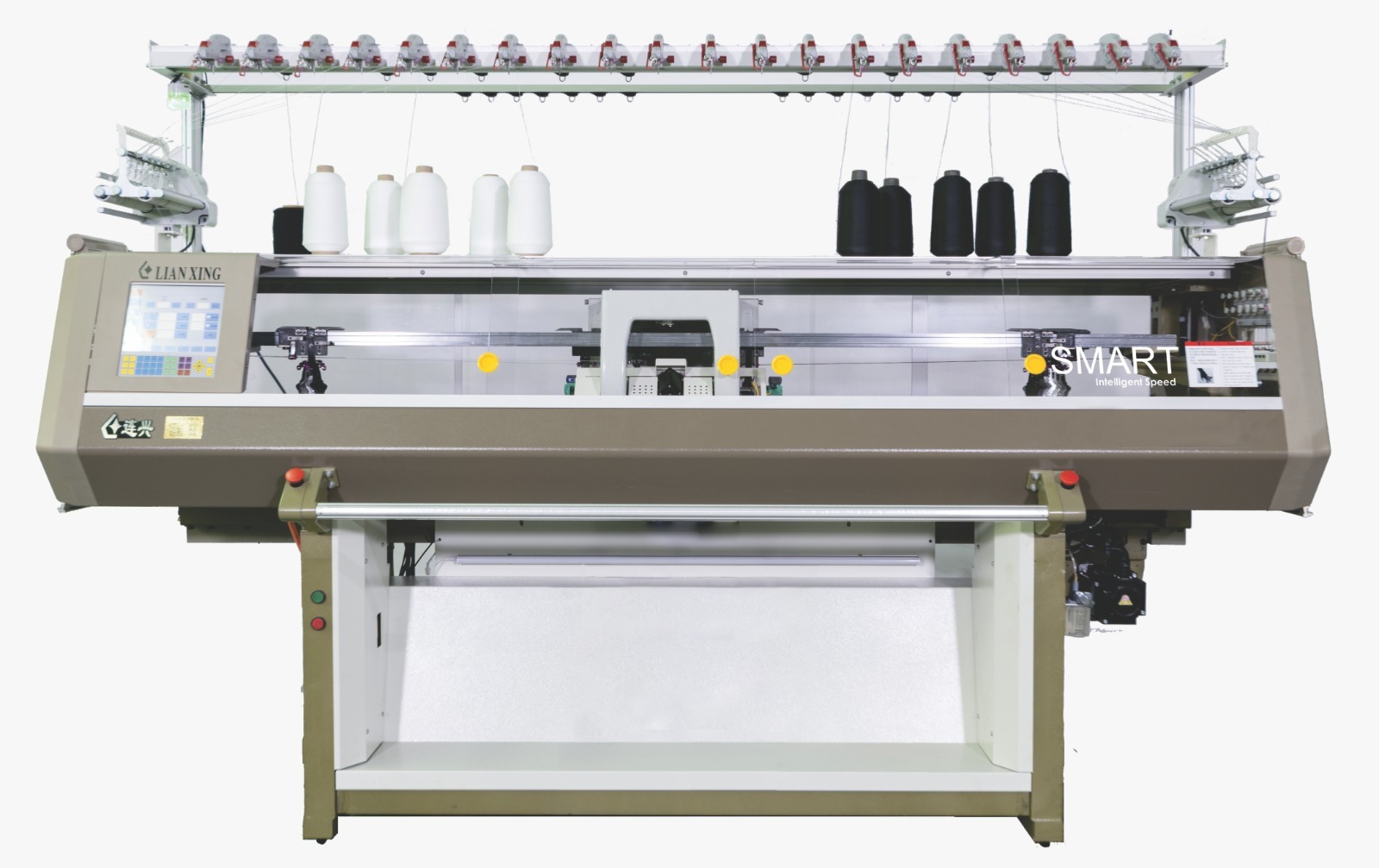
Learn how a flat bed knitting machine works, including yarn feeding, needle movement, carriage movement, and stitch formation.
Understanding how a flat bed knitting machine works is important for anyone involved in textile production. Whether you are an operator, manufacturer, or someone planning to purchase a knitting machine, knowing the basic knitting process makes it easier to understand machine settings, fabric quality, and common production problems.
Although modern computerized machines include advanced controls, the basic knitting process remains the same: yarn is fed to the needles, the needles form loops, and the loops are connected to create knitted fabric.
Let us look at this process step by step.
1. Yarn Feeding
The knitting process starts with yarn. The yarn is supplied from a yarn package and guided toward the knitting area through the yarn feeding system.
The yarn feeder delivers the yarn to the needles at the required position. Consistent yarn feeding is important because changes in yarn tension or feeding can affect stitch quality.
Before starting production, the operator should check that the yarn is suitable for the machine and that it can move smoothly through the yarn guide and feeder.
2. Needle Movement
Needles are one of the most important parts of a flat bed knitting machine. They are positioned in slots along the needle bed and are responsible for forming the yarn loops.
During knitting, each needle moves through a controlled path. It receives the yarn, pulls it through an existing loop, and helps create a new loop.
The movement and timing of the needles must remain accurate. A damaged needle, incorrect setting, or obstruction in the needle bed can result in dropped stitches, yarn breakage, or fabric defects.
3. Carriage Movement
The carriage moves from one side of the needle bed to the other. As it moves, it controls the needles and guides them through the required knitting actions.
The carriage contains parts that control how individual needles move. Depending on the machine and selected setting, some needles may knit while others may not.
In a computerized machine, these movements can be controlled according to a programmed pattern. In a manual flat bed knitting machine, the operator generally controls the knitting process more directly.
Smooth carriage movement is important for stable production. The needle bed and carriage should therefore be kept clean and maintained according to the machine manufacturer's instructions.
4. Stitch Formation
Stitch formation is the main part of the knitting process.
The needle receives the yarn and pulls it through an existing loop. The previous loop then moves off the needle as the new loop is formed.
This action is repeated across the needle bed to create a complete row of stitches. The next row is then formed in the same way.
By controlling the movement of the needles and the amount of yarn used in each stitch, the machine can produce different stitch sizes and fabric structures.
5. How the Knitting Process Continues
Once one row has been formed, the machine continues to the next row. The carriage moves across the needle bed again, the needles perform their selected movements, and new loops are created.
At the same time, the knitted fabric is gradually moved downward by the take-down system.
This continuous process allows the machine to produce the required length of knitted fabric or a shaped knitted component.
What Controls the Quality of the Knitted Fabric?
Several factors work together to produce consistent results:
- Yarn quality and suitability
- Yarn tension
- Needle condition
- Needle movement
- Carriage movement
- Stitch settings
- Machine gauge
- Take-down settings
- Proper machine maintenance
If one of these factors is not properly controlled, the result may include uneven stitches, holes, yarn breakage, or other fabric defects.
Manual vs Computerized Flat Bed Knitting
Factor | Manual Flat Bed Knitting Machine | Computerized Flat Bed Knitting Machine |
| Control Method | The operator manages most knitting activities directly. | Many knitting functions are managed through digital controls and programmed settings. |
| Design Requirements | Better suited to straightforward designs and smaller product variations. | Suitable for detailed designs, repeated patterns, and more complex product requirements. |
| Production Planning | Works well when production quantities and designs change frequently on a smaller scale. | Better suited to planned production where the same designs need to be produced consistently. |
| Pattern Management | Changes usually require more manual involvement. | Designs can be stored, adjusted, and reused through the control system. |
| Consistency | Results can depend more on operator experience and manual settings. | Digital settings can help maintain greater consistency between production runs. |
| Learning Requirement | Operators mainly need practical machine-handling skills. | Operators may also need training in digital controls and pattern settings. |
| Production Environment | Suitable for small workshops, sampling, training, and limited production. | Suitable for professional manufacturing environments with regular production requirements. |
| Initial Investment | Generally offers a simpler entry point for businesses with basic requirements. | Usually requires a higher investment because of its electronic and computerized features. |
| Product Development | Useful for developing simple products and testing knitting ideas. | Useful when manufacturers regularly develop detailed designs and multiple product styles. |
| Technical Support | Support mainly focuses on mechanical operation and adjustments. | Support may include mechanical, electrical, electronic, and software-related assistance. |
Which Type Is More Suitable?
There is no single machine that is right for every manufacturer. A flat bed knitting machine can be practical for businesses that need a straightforward setup, smaller production quantities, or greater hands-on control.
A computerized machine may be more appropriate for manufacturers handling regular commercial production, detailed designs, and multiple repeat orders.
The decision should be based on product requirements, production volume, design complexity, available operator skills, investment capacity, and long-term technical support rather than choosing a machine simply because it has more features.
Related
More insights
24 Sept 2026
Dropped Stitches in Circular Knitting Machines: Causes, Problems and Solutions
View24 Sept 2026
Dropped Stitches in Circular Knitting Machines: Causes, Problems and Solutions
Learn why dropped stitches occur in circular knitting machines and how to check needles, latches, yarn tension, feeding, sinkers, cams, and machine settings.
View
24 Sept 2026
Vertical Lines in Knitted Fabric: Causes and Solutions in Circular Knitting Machines
View24 Sept 2026
Vertical Lines in Knitted Fabric: Causes and Solutions in Circular Knitting Machines
Learn how to find and fix vertical lines in knitted fabric caused by damaged needles, needle alignment, cylinder issues, sinker problems, cam wear, and yarn tension.
View
21 Sept 2026
Why Do Needles Break in Circular Knitting Machines? 10 Causes and Solutions
View21 Sept 2026
Why Do Needles Break in Circular Knitting Machines? 10 Causes and Solutions
Learn the common causes of circular knitting machine needle breakage, including wrong needle selection, high yarn tension, worn cams, timing problems, yarn quality, machine speed, sinkers, and lubrication.
View