
Blog
How to Handle Stretchable Fabrics Without Distortion During Spreading
By Ramana Machines · November 16, 2026
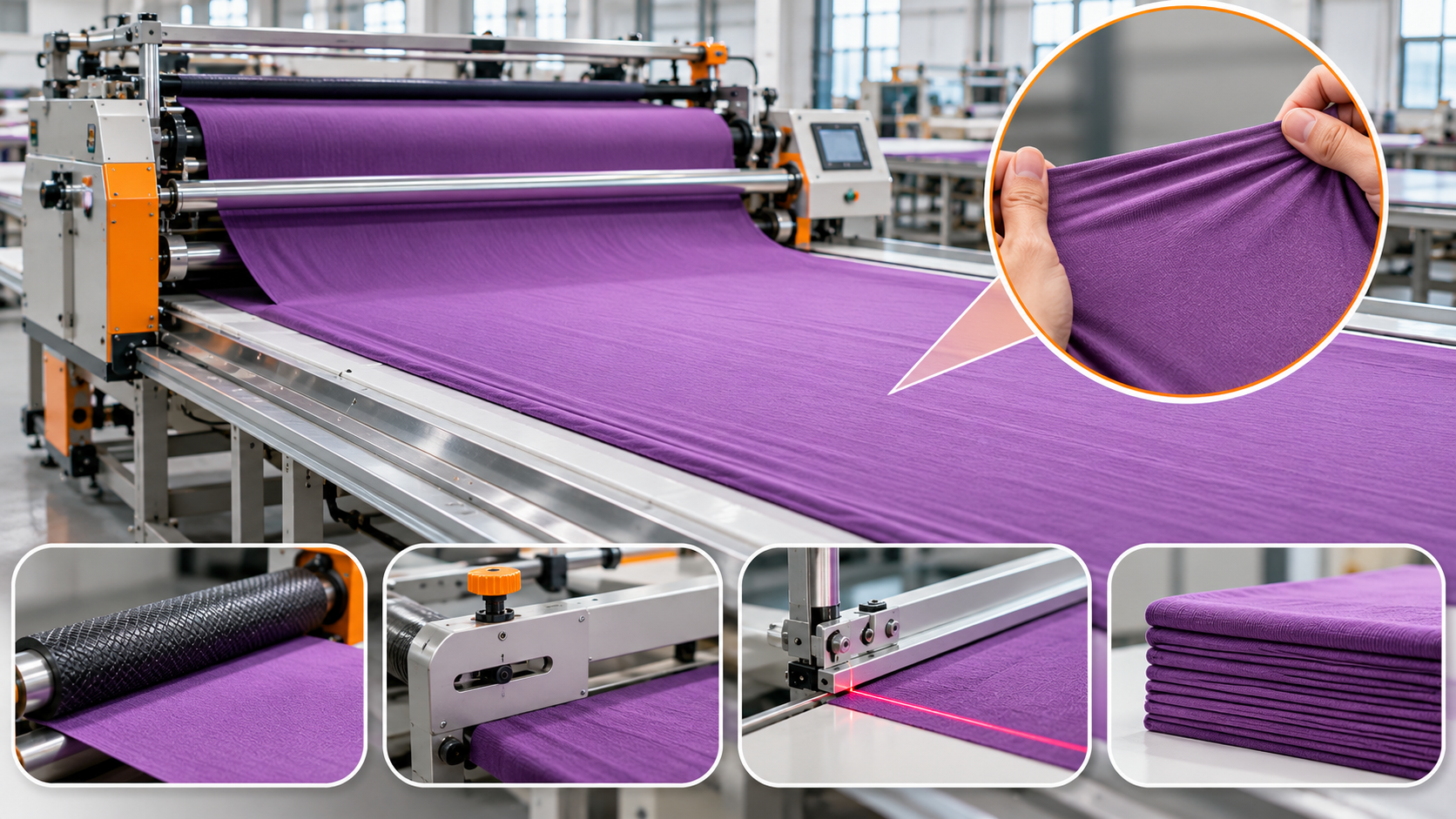
Stretchable fabrics need careful handling during spreading to prevent unwanted extension and dimensional changes. Explore practical techniques for fabric relaxation, tension control, alignment, and accurate cutting preparation.
Stretchable fabrics require careful handling during spreading because their structure can change when unnecessary tension is applied. Materials such as jersey, spandex blends, elastane fabrics, and knitted textiles can extend during handling and may not return to their original dimensions immediately. Even a small amount of unwanted stretching can affect fabric alignment, cutting accuracy, and the final garment dimensions.
Fabric spreading is therefore an important stage in garment manufacturing. The objective is to arrange multiple fabric layers evenly while preserving their original shape and dimensions. Understanding how stretchable materials behave and selecting the right spreading method can help manufacturers reduce material waste and achieve more consistent cutting results.
1. Understand the Stretch Behaviour of the Fabric
Before starting the spreading process, it is important to identify how the material responds to tension. Not all stretchable fabrics behave in the same way. Some stretch mainly in the width direction, while others extend more easily along their length or in both directions.
For example:
- Single jersey: Can curl at the edges and extend during handling.
- Rib fabric: Has considerable crosswise stretch and may change width under tension.
- Spandex blends: Can recover after stretching, but excessive tension may temporarily alter their dimensions.
- Knitted polyester: May stretch or shift depending on its construction and finishing.
- Lightweight stretch fabrics: Can move easily during spreading and require careful control.
Understanding the material's stretch and recovery characteristics helps determine suitable spreading conditions before production begins.
2. Allow Fabric to Relax Before Spreading
Some fabrics remain under tension during knitting, finishing, rolling, and transportation. If they are spread immediately after unrolling, they may gradually relax after spreading or cutting.
This can result in changes to the dimensions of individual layers.
Fabric relaxation allows the material to settle before it is placed on the spreading table. The required relaxation period depends on the fabric composition, construction, finishing process, and supplier recommendations.
During this stage:
- Keep fabric on a suitable flat surface or relaxation arrangement.
- Avoid pulling or stretching the material while unrolling.
- Follow the recommended relaxation time for the particular fabric.
- Check whether the fabric has settled before beginning spreading.
- Keep the fabric environment consistent where practical.
This step is particularly useful when working with knitted and elastane-based materials.
3. Control Fabric Tension During Spreading
Excessive tension is one of the main reasons stretchable fabric becomes distorted. When the material is pulled tightly while moving across the table, its original dimensions can change.
After spreading, the fabric may contract or recover, causing uneven layer lengths or differences between the cutting plan and the actual material.
To reduce this risk, fabric should move smoothly without being pulled from the roll. Operators should avoid forcing the material to remain stretched simply to make it appear flat.
A controlled spreading process should focus on:
- Smooth fabric movement.
- Consistent feeding.
- Minimal pulling during placement.
- Uniform layer arrangement.
- Proper handling at the beginning and end of each spread.
The objective is to place the fabric in a relaxed condition rather than stretching it to achieve a temporarily smooth appearance.
4. Select a Suitable Spreading Method
The spreading method should match the material's weight, width, stretch characteristics, and production requirements.
Different approaches may be suitable for different fabric categories.
Spreading method | Suitable application | Important consideration |
| Manual spreading | Small production quantities and specialised fabrics | Requires careful operator handling |
| Semi-automatic spreading | Medium-scale production | Offers assistance with fabric movement |
| Automatic spreading | Repetitive and larger-scale production | Requires appropriate feeding and tension settings |
| Face-to-face spreading | Selected garment cutting requirements | Fabric direction and layer arrangement must be controlled |
| One-way spreading | Fabrics with directional patterns or surface characteristics | Requires attention to fabric orientation |
The spreading method should be selected after considering both the material and the garment production process.
5. Use Appropriate Feeding and Tension Settings
Feeding arrangements influence how fabric moves from the roll to the spreading table. If the feeding mechanism pulls the material too strongly, stretchable fabrics may extend before reaching the spreading surface.
An automatic fabric spreading machine can help maintain a more controlled and repeatable spreading process when it is configured correctly for the material.
However, automation alone does not guarantee distortion-free spreading. The machine's feeding arrangement, fabric support, movement speed, and tension control should be suitable for the fabric being processed.
Before beginning a production run, manufacturers should conduct a trial using the actual fabric. This helps identify whether the material is being stretched, compressed, or shifted during movement.
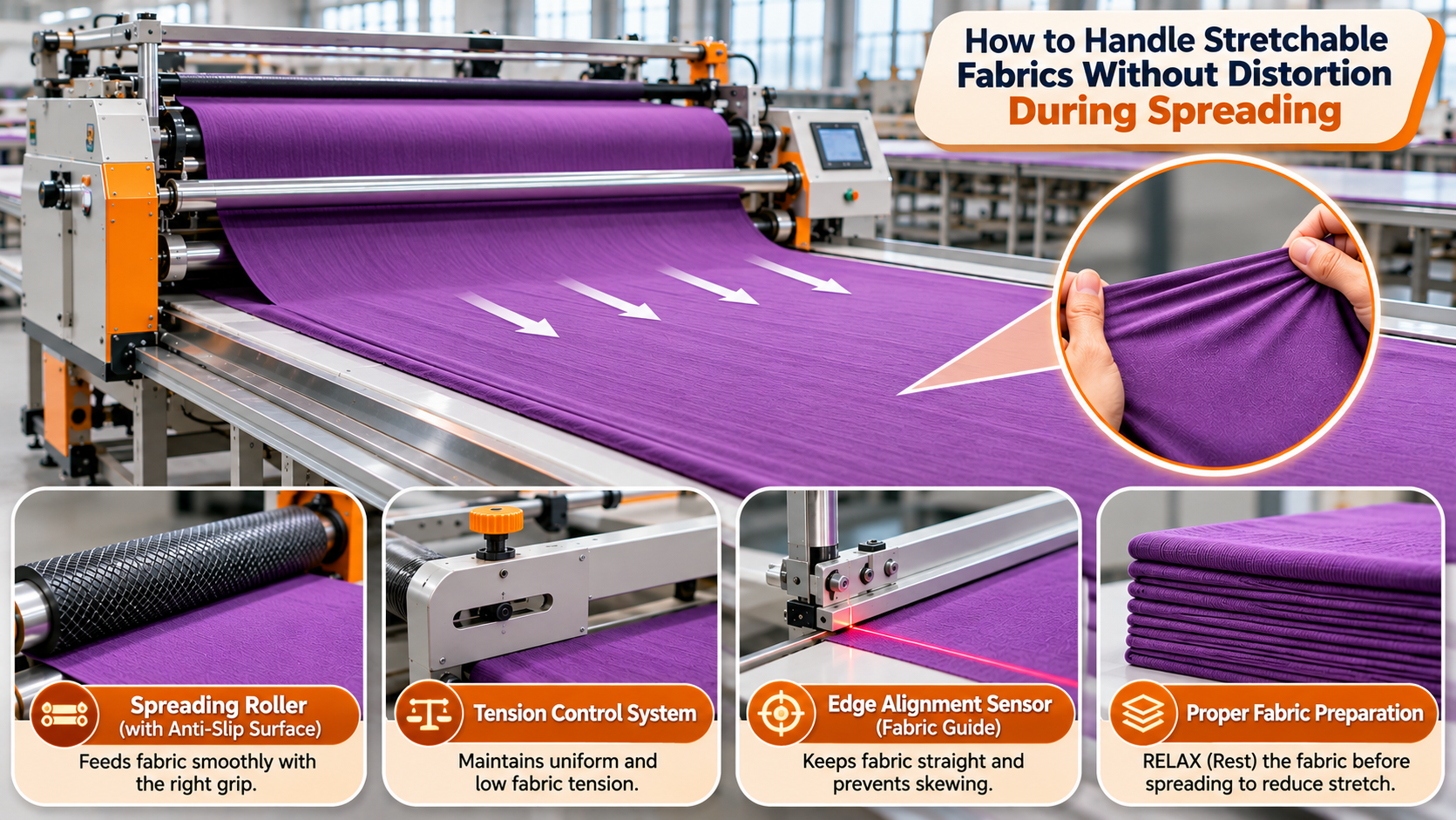
6. Maintain Proper Fabric Alignment Across Layers
Stretchable fabrics can move sideways or become uneven when placed on the spreading table. This may create differences in layer width, edge alignment, and cutting accuracy.
The problem can become more noticeable when several layers are stacked together.
To maintain alignment:
- Position the fabric roll correctly before spreading.
- Keep the spreading table clear and level.
- Avoid unnecessary manual pulling at the edges.
- Check the alignment of each layer.
- Ensure the fabric is not folded or twisted during placement.
Consistent alignment is especially important when cutting garments with fitted shapes, sleeves, waistbands, and other components that require accurate dimensions.
7. Consider Fabric Direction and Grainline
Fabric direction is another important consideration when handling stretchable materials. Depending on the fabric construction, the amount of stretch may vary between the lengthwise and crosswise directions.
If fabric layers are placed in the wrong direction, garment components may behave differently after cutting and stitching.
For example, a garment component designed to stretch across the body may lose its intended fit if the material is positioned incorrectly.
Before spreading, check:
- Lengthwise and crosswise stretch.
- Fabric grain direction.
- Pattern placement requirements.
- Print or design direction.
- Whether all layers must follow the same orientation.
Correct orientation helps preserve the intended fit and performance of the finished garment.
8. Avoid Distortion at the Beginning and End of Each Layer
Fabric distortion does not always occur throughout the spreading process. It can also happen when operators start or stop the fabric movement.
Pulling the material while positioning the first section or adjusting the final edge can create localised stretching. These differences may remain unnoticed until the cutting stage.
Operators should handle the beginning and end of each layer carefully. The fabric should be positioned without forcing it into place, and the edges should be checked before continuing with the next layer.
For materials with directional patterns or a tendency to curl, additional attention may be required to keep the layers properly arranged.
9. Check Fabric Dimensions Before Cutting
A visually smooth spread does not necessarily mean that the fabric has retained its original dimensions. Measurements should be checked before cutting, particularly when working with materials that have a high stretch and recovery rate.
A practical inspection can include:
- Comparing the spread length with the planned marker length.
- Checking the width at different points along the table.
- Looking for stretched or compressed sections.
- Checking whether the layers have shifted.
- Confirming that the fabric has settled before cutting.
If dimensional differences are found, the spreading method and fabric handling conditions should be reviewed before proceeding with the full production batch.
10. Common Spreading Mistakes That Cause Fabric Distortion
Common mistake | Possible effect | Better approach |
| Pulling fabric tightly | Excessive extension | Allow relaxed feeding |
| Spreading immediately after unrolling | Dimensional changes later | Follow fabric relaxation requirements |
| Incorrect feeding settings | Uneven fabric tension | Conduct material-specific trials |
| Poor edge alignment | Uneven cutting layers | Check alignment during spreading |
| Ignoring stretch direction | Incorrect garment dimensions | Verify grainline and stretch direction |
| Excessive manual adjustment | Localised distortion | Handle the fabric gently |
| Skipping dimensional checks | Cutting inaccuracies | Inspect the spread before cutting |
11. How to Improve Spreading Consistency in Production
Manufacturers can improve spreading consistency by establishing a process for each fabric category rather than using identical settings for every material.
A useful approach is to record the fabric type, width, spreading method, feeding conditions, and inspection results for each production batch.
This creates a reference for future orders involving similar materials.
Trial spreading is also valuable when introducing a new fabric. It allows the production team to evaluate how the material behaves before processing a larger quantity.
For factories handling a wide range of stretchable fabrics, selecting equipment with suitable feeding arrangements and adjustable operating controls can make the process easier to manage.
Explore Fabric Spreading Equipment with Ramana Machines
Choosing suitable equipment is an important part of achieving consistent fabric spreading results. The right machine should match the fabric types, working width, production volume, and operating requirements of the manufacturing unit.
Ramana Machines is a supplier and distributor of textile machinery, including fabric spreading equipment. We help businesses explore machinery options according to their production requirements and operational needs.
If you are looking for an automatic fabric spreading machine or want to discuss suitable equipment for your facility, connect with our team.
Visit www.ramanainternational.com or call +91 98159-02561 to discuss your machinery requirements.
Related
More insights
16 Nov 2026
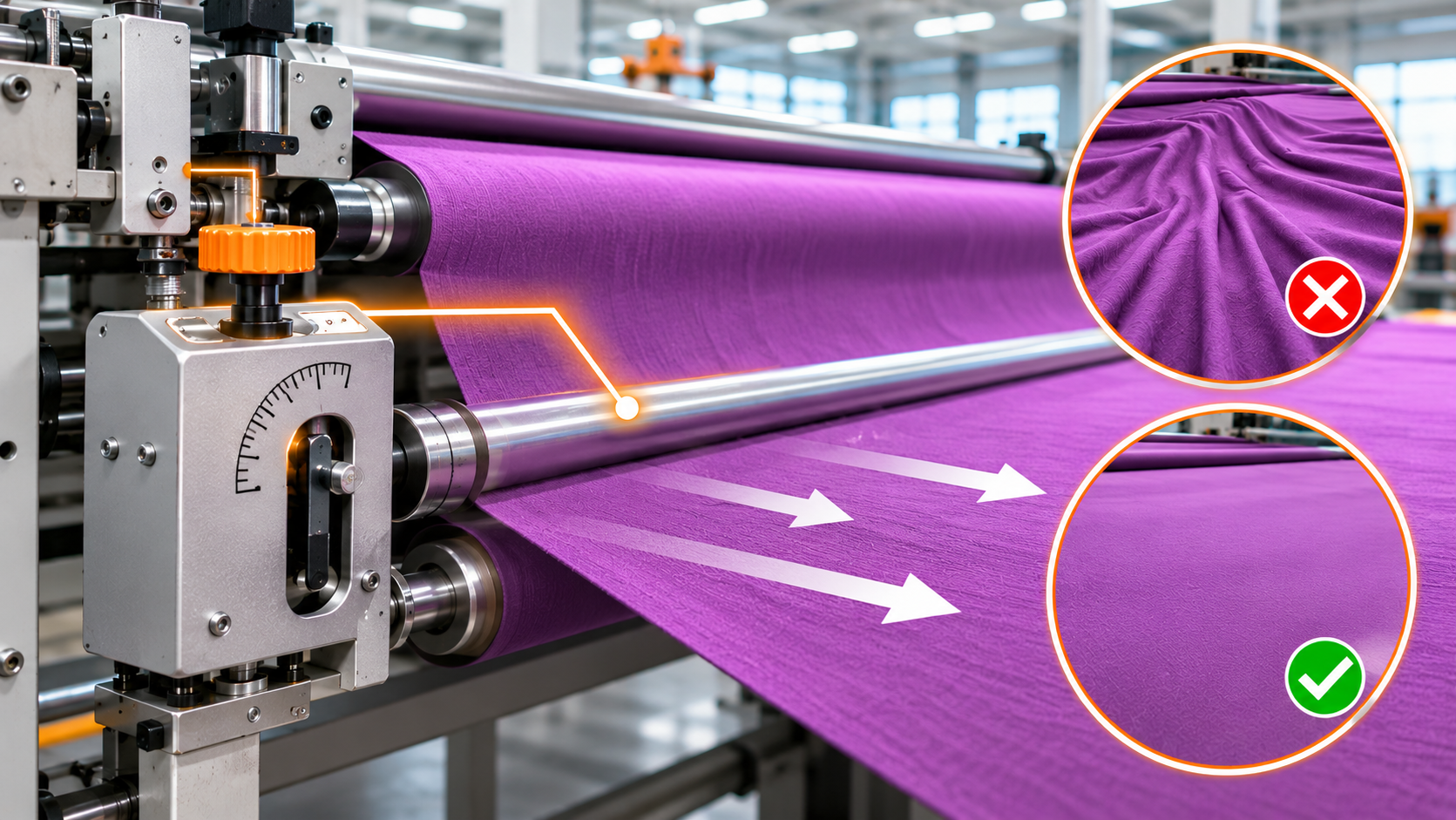
What Is the Function of the Fabric Tension Control System?
View16 Nov 2026
What Is the Function of the Fabric Tension Control System?
A fabric tension control system regulates the force applied during fabric feeding and spreading. Learn about its components, working process, and importance for maintaining consistent fabric movement.
View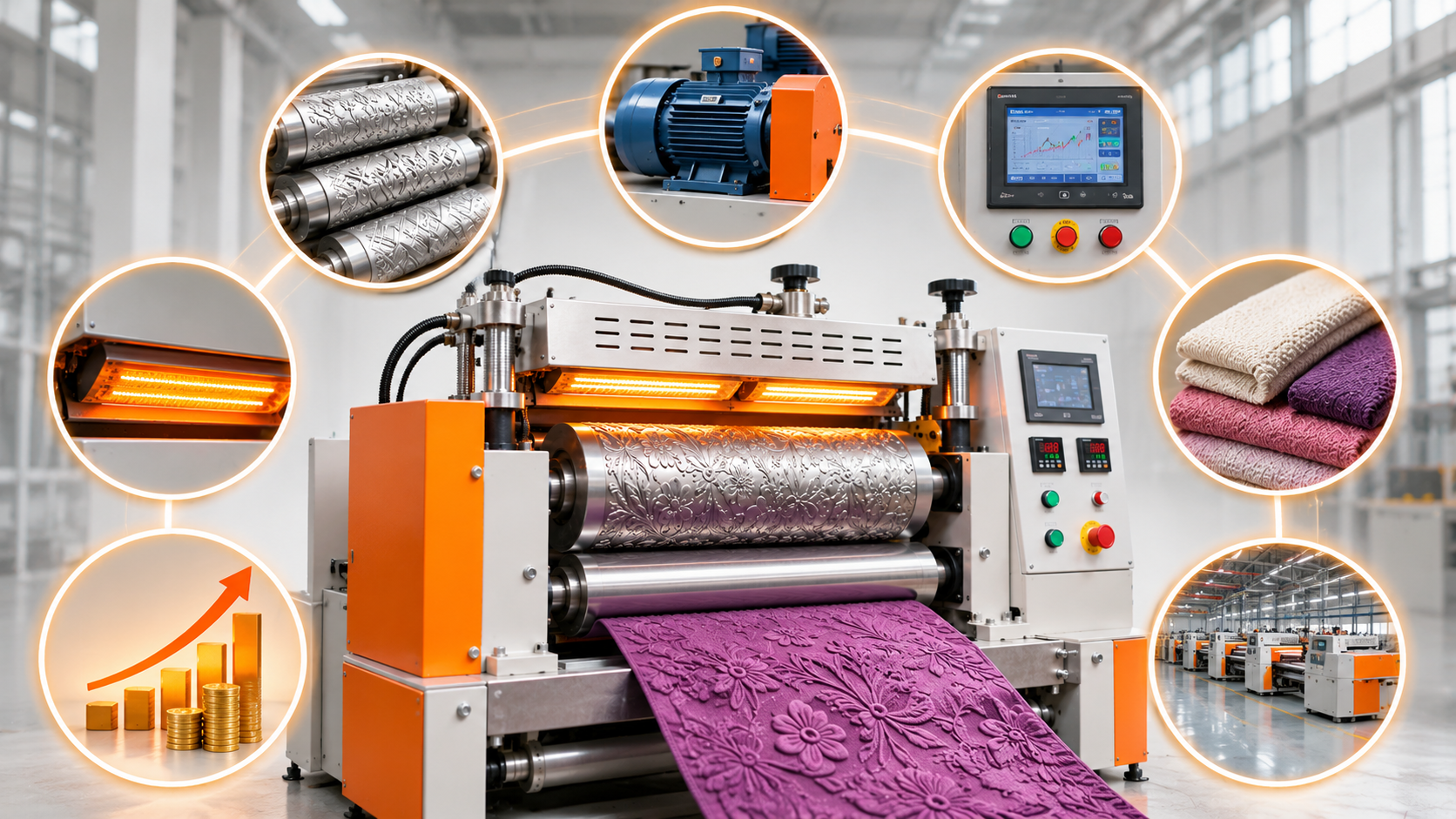
13 Nov 2026
What Factors Affect the Cost of an Embossing Machine?
View13 Nov 2026
What Factors Affect the Cost of an Embossing Machine?
Planning to invest in an embossing machine? Understand the key pricing factors, including production capacity, pattern tooling, automation, import expenses, installation, and long-term operating costs.
View
13 Nov 2026
How Temperature and Pressure Settings Affect Fabric Embossing Quality
View13 Nov 2026
How Temperature and Pressure Settings Affect Fabric Embossing Quality
Temperature and pressure play an important role in fabric embossing. Learn how different settings affect pattern clarity, fabric texture, surface appearance, and processing results across polyester, nylon, cotton, and blended fabrics.
ViewFrequently Asked Questions
Find answers to the most common questions about our machines, services and support.
Stretchable fabrics can become distorted when excessive tension is applied during unrolling, feeding, or placement. They may also change dimensions as they relax after spreading.
Allow the fabric to relax when required, avoid pulling it tightly, use suitable feeding settings, and check layer dimensions before cutting.
Relaxation allows fabric to recover from tension introduced during earlier processing, rolling, and transportation. This helps reduce dimensional changes after spreading.
Yes, suitable automatic spreading equipment can handle various knitted materials. However, the feeding arrangement and operating settings should match the fabric's stretch, weight, and construction.
Poor alignment can cause uneven fabric widths, inaccurate cutting, material waste, and differences in garment component dimensions.
Check the layer edges, spread length, fabric width, grain direction, and visible signs of stretching or compression before starting the cutting process.
It can. An unsuitable spreading speed may affect fabric movement and feeding consistency. Trial runs help identify appropriate operating conditions for each material.
Manufacturers should evaluate fabric compatibility, working width, feeding arrangements, tension control, production capacity, available automation, and technical support.