
Blog
What Is the Function of the Fabric Tension Control System?
By Ramana Machines · November 16, 2026
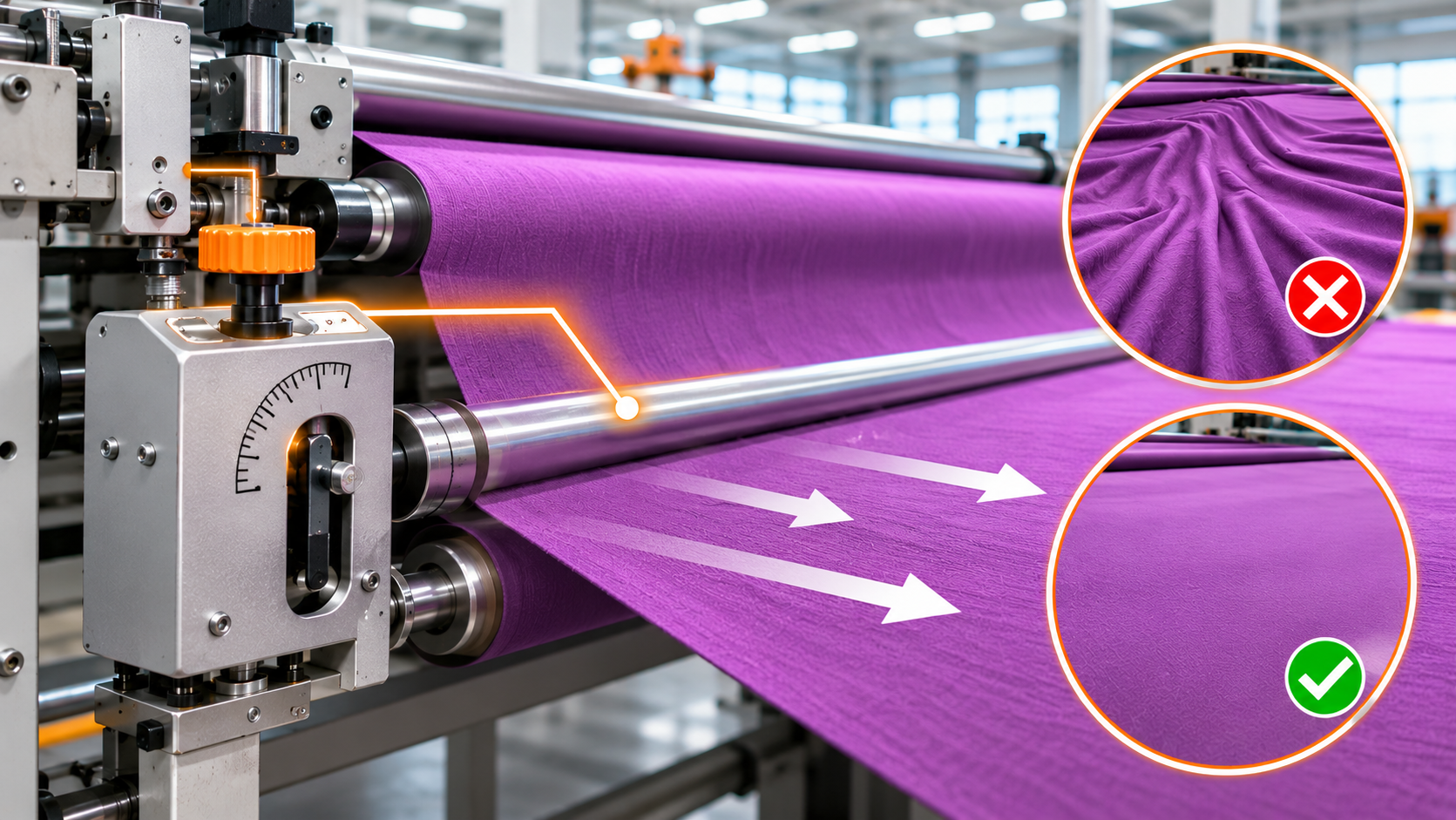
A fabric tension control system regulates the force applied during fabric feeding and spreading. Learn about its components, working process, and importance for maintaining consistent fabric movement.
Fabric tension control is an important part of textile processing and spreading operations. As fabric moves from a roll onto a spreading table or through a production line, it needs to remain stable without being pulled too tightly or allowed to move unevenly.
A fabric tension control system manages the pulling force applied to the material during this movement. Its purpose is to maintain suitable fabric tension so that the material can travel smoothly while preserving its original dimensions and surface condition.
This system is particularly useful when handling lightweight, knitted, elastic, and other materials that can change shape under excessive force. Understanding its function helps manufacturers achieve more consistent fabric handling and reduce problems during production.
1. What Is a Fabric Tension Control System?
A fabric tension control system is an arrangement that regulates the force applied to fabric while it is being unwound, fed, transported, or spread.
When fabric is taken from a roll, resistance can develop between the roll, feeding mechanism, and moving material. If the pulling force is too high, the fabric may stretch. If it is too low or inconsistent, the material may become loose, form wrinkles, or move irregularly.
The tension control system helps manage this movement according to the fabric type and machine requirements.
In a fabric spreading machine, it supports the controlled delivery of fabric from the roll to the spreading surface, helping maintain a more uniform layer arrangement.
2. Main Functions of a Fabric Tension Control System
The system performs several functions that contribute to stable fabric handling.
Maintaining Consistent Fabric Tension
Its primary function is to prevent unnecessary changes in the pulling force applied to the material. Consistent tension helps fabric move through the equipment without repeated stretching and loosening.
Preventing Unwanted Fabric Stretching
Some fabrics can extend when pulled, especially materials containing elastane or having knitted constructions. Proper tension regulation helps reduce excessive extension during feeding.
Supporting Smooth Fabric Unwinding
As the diameter of a fabric roll decreases, the conditions required to unwind it can change. A suitable control arrangement helps manage the feeding process as the roll becomes smaller.
Reducing Wrinkles and Loose Fabric
Uncontrolled fabric movement can result in folds, creases, or loose sections. Appropriate tension helps the material remain stable as it travels across the machine.
Improving Layer Consistency
During spreading, the fabric needs to be placed in a controlled condition. Stable tension helps reduce differences caused by uneven feeding, supporting more consistent layers before cutting.
3. Important Components Used in Tension Control
The exact arrangement depends on the machine design, but several components may contribute to tension regulation.
Component | Function |
| Tension sensor | Detects changes in fabric tension in systems equipped with sensors |
| Load cell | Measures applied force and provides feedback to the controller |
| Dancer roller | Moves in response to changes in fabric tension and helps absorb variations |
| Feeding roller | Supports controlled fabric movement |
| Motor drive | Regulates the movement of the feeding mechanism |
| Brake arrangement | Controls roll rotation and resistance during unwinding |
| Control panel | Allows operators to manage available tension settings |
| Controller | Processes feedback and coordinates adjustments in automatic systems |
Not every machine uses all these components. Some systems use mechanical arrangements, while advanced equipment may combine electronic sensing and motor-based control.
4. How Does the Tension Control System Work?
The working process depends on whether the equipment uses mechanical or automatic control. In an automatic arrangement, the process generally follows these stages:
Step 1: Fabric Feeding
The fabric roll is positioned on the machine, and the material is guided through the feeding arrangement.
Step 2: Tension Detection
Where sensors or load cells are installed, they measure changes in the force applied to the fabric.
Step 3: Signal Processing
The controller receives the measurement and compares it with the selected operating setting.
Step 4: Feeding Adjustment
The system can adjust the feeding motor, roller movement, or braking arrangement to correct the tension.
Step 5: Continuous Regulation
The process continues while the fabric moves, helping maintain more consistent feeding conditions.
In simpler machines, the operator may adjust the tension manually rather than relying on automatic feedback.
5. What Happens When Fabric Tension Is Too High or Too Low?
Incorrect tension can affect the fabric even when the machine appears to be operating normally.
Tension condition | Possible result |
| Excessively high tension | Fabric stretching and dimensional changes |
| Very low tension | Loose fabric and unstable feeding |
| Fluctuating tension | Uneven material movement |
| Uneven tension across the width | Wrinkles, skewing, or edge distortion |
| Sudden tension changes | Irregular fabric placement |
The correct tension depends on the material's construction, weight, elasticity, and intended application. There is no single setting suitable for every fabric.
6. Why Is Tension Control Important for Different Fabric Types?
Different materials respond differently to pulling forces. Therefore, the tension control arrangement should be suitable for the fabrics being processed.
- Knitted fabrics: Their loop construction can make them more sensitive to stretching and dimensional changes.
- Stretch fabrics: Materials containing elastane require careful tension regulation to avoid unwanted extension.
- Lightweight fabrics: These may wrinkle or shift if feeding is inconsistent.
- Heavy fabrics: They may require sufficient controlled force to ensure stable movement.
- Woven fabrics: Proper feeding helps maintain alignment and reduce skewing during handling.
Understanding these differences helps operators select suitable settings instead of applying the same tension to every material.
7. Manual and Automatic Tension Control Systems
Tension regulation can be handled manually or through automatic control, depending on the machine's design.
Feature | Manual tension control | Automatic tension control |
| Adjustment | Operator-controlled | System-controlled or feedback-assisted |
| Tension monitoring | May require operator observation | May use sensors or load cells |
| Response to changes | Depends on operator adjustment | Can respond automatically in feedback-based systems |
| Operating involvement | Higher | Can reduce repeated manual adjustments |
| Configuration | Generally simpler | May involve electronic and motor control components |
An automatic system can improve repeatability, but its performance depends on correct configuration, suitable sensors, and compatibility with the material.
8. How Does Tension Control Affect Fabric Spreading Accuracy?
During fabric spreading, the objective is to arrange layers according to the required length and width without changing the material's original dimensions unnecessarily.
If fabric is stretched while being placed on the table, it may contract after spreading. This can create differences between the planned dimensions and the actual fabric dimensions.
A suitable tension control system helps by:
- Supporting consistent fabric feeding.
- Reducing unwanted material extension.
- Helping maintain layer length.
- Supporting more stable edge alignment.
- Reducing variations between successive layers.
These benefits can contribute to better cutting preparation and more predictable material usage.
9. What Should Operators Consider When Setting Fabric Tension?
Tension settings should be based on actual material behaviour rather than assumptions. Before starting a full production run, operators should consider:
- Fabric composition: Natural fibres, synthetic fibres, and blended materials can behave differently.
- Fabric construction: Knitted and woven materials may respond differently to the same pulling force.
- Material weight: Lightweight and heavyweight fabrics can require different handling conditions.
- Elasticity: Stretch and recovery characteristics influence suitable tension.
- Roll condition: Roll diameter and unwinding resistance can affect fabric feeding.
- Machine configuration: The available control mechanism determines how tension can be adjusted.
A short production trial can help identify whether the fabric is being stretched, left too loose, or fed unevenly.
10. Signs That the Tension Control System Needs Attention
Changes in fabric behaviour may indicate that the tension control arrangement is not working as intended.
Some signs include:
- Fabric repeatedly stretching during feeding.
- Uneven movement from the roll.
- Wrinkles appearing during spreading.
- Different layer lengths.
- Sudden changes in feeding behaviour.
- Inconsistent results when processing the same material.
When these issues appear, operators should review the fabric path, feeding arrangement, selected settings, and relevant control components. If the machine uses electronic feedback, sensor readings and controller operation may also need to be checked.
Choosing Suitable Fabric Spreading Equipment
Fabric tension control plays an important role in maintaining stable material movement during spreading operations. A suitable system helps regulate feeding force, reduce unwanted stretching, and support consistent layer placement.
When selecting a fabric spreading machine, manufacturers should consider the types of materials they process, the available tension control arrangement, operating requirements, and production volume.
Ramana Machines is a supplier and distributor of knitting and textile machinery, helping businesses explore equipment options according to their production needs. To discuss fabric spreading equipment and suitable machinery configurations, visit www.ramanainternational.com or contact our team at +91 98159-02561.
Related
More insights
16 Nov 2026
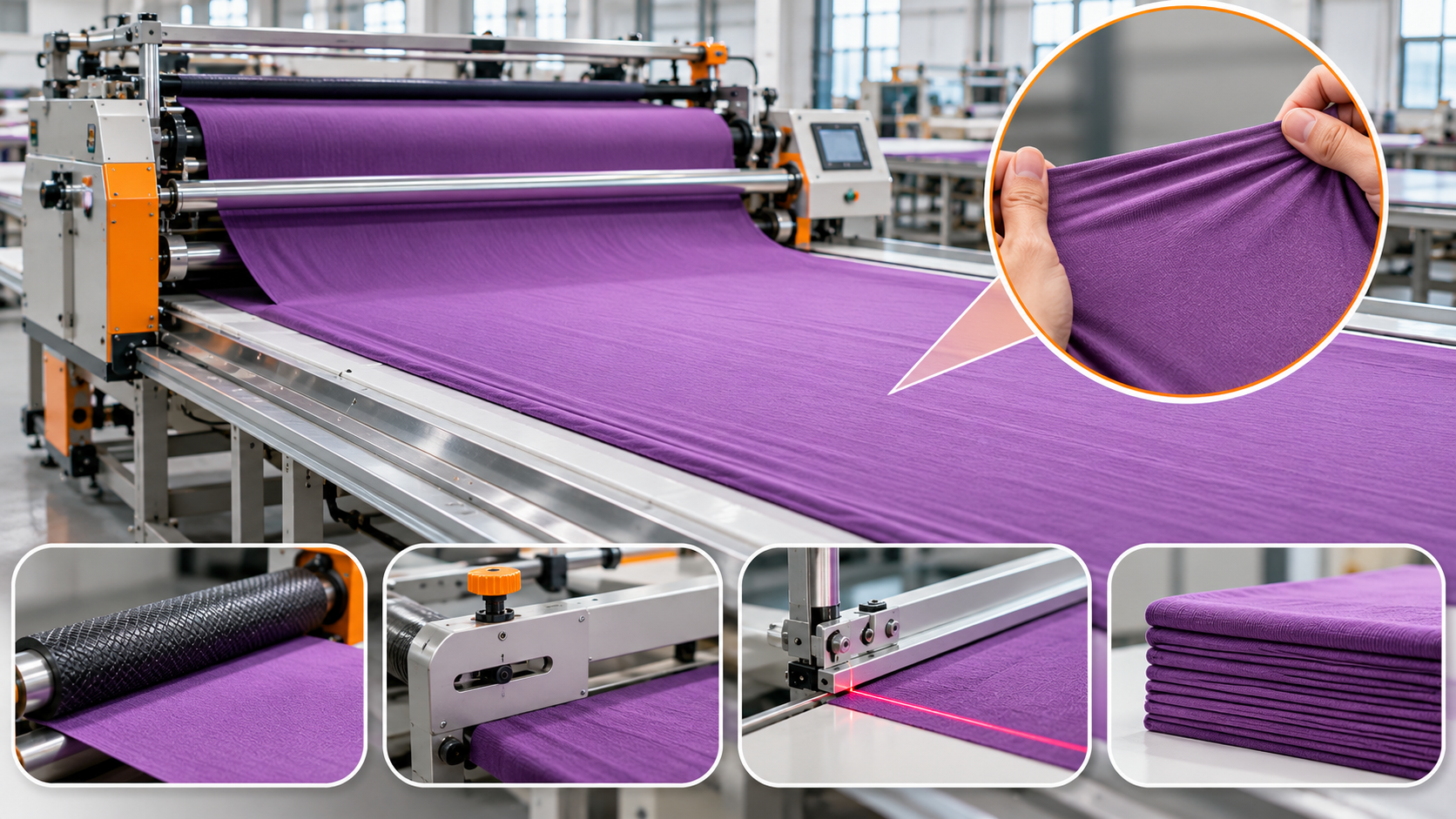
How to Handle Stretchable Fabrics Without Distortion During Spreading
View16 Nov 2026
How to Handle Stretchable Fabrics Without Distortion During Spreading
Stretchable fabrics need careful handling during spreading to prevent unwanted extension and dimensional changes. Explore practical techniques for fabric relaxation, tension control, alignment, and accurate cutting preparation.
View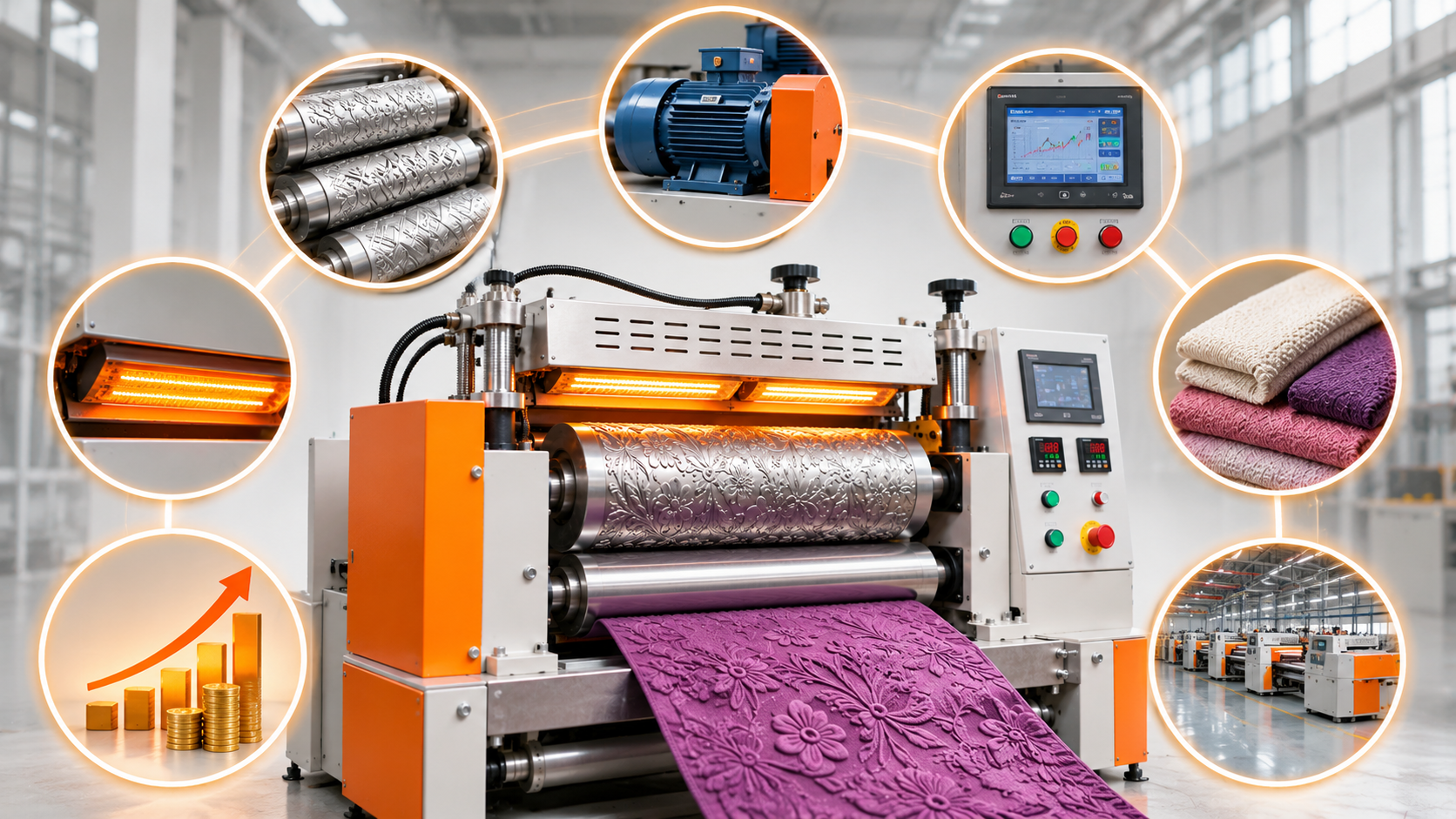
13 Nov 2026
What Factors Affect the Cost of an Embossing Machine?
View13 Nov 2026
What Factors Affect the Cost of an Embossing Machine?
Planning to invest in an embossing machine? Understand the key pricing factors, including production capacity, pattern tooling, automation, import expenses, installation, and long-term operating costs.
View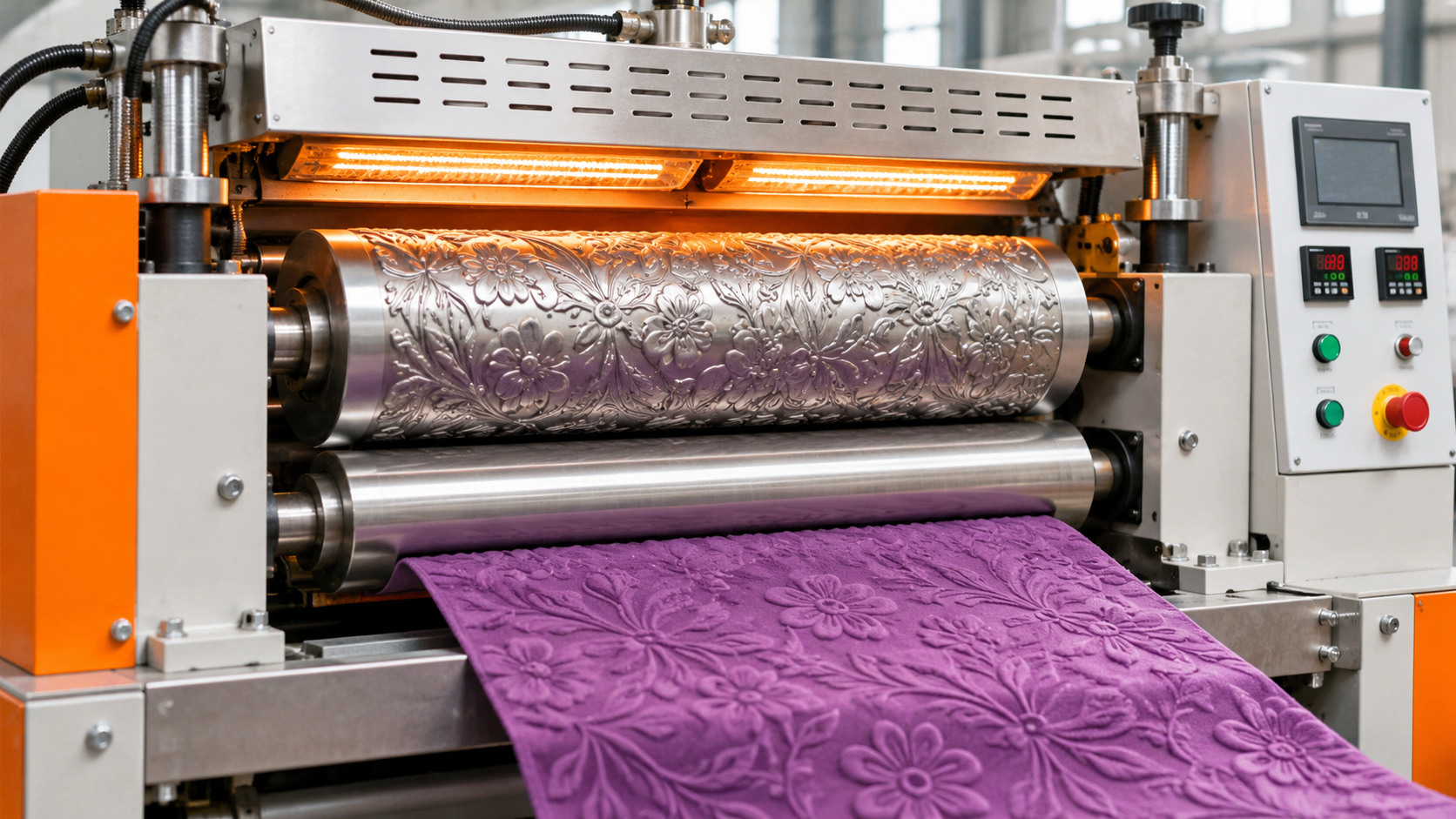
13 Nov 2026
How Temperature and Pressure Settings Affect Fabric Embossing Quality
View13 Nov 2026
How Temperature and Pressure Settings Affect Fabric Embossing Quality
Temperature and pressure play an important role in fabric embossing. Learn how different settings affect pattern clarity, fabric texture, surface appearance, and processing results across polyester, nylon, cotton, and blended fabrics.
ViewFrequently Asked Questions
Find answers to the most common questions about our machines, services and support.
Its main purpose is to regulate the pulling force applied to fabric during feeding, unwinding, and spreading so that the material moves smoothly without unnecessary stretching or slack.
Depending on the machine, components may include tension sensors, load cells, dancer rollers, feeding rollers, motor drives, brakes, and electronic controllers.
Incorrect tension can cause stretching, wrinkles, uneven layers, dimensional changes, and inconsistent fabric alignment.
Automatic tension control can provide more consistent adjustments and reduce repeated operator intervention. However, the best option depends on the machine configuration, fabric types, and production requirements.
Stretchable fabrics can extend under pulling force and may change dimensions when they recover. Proper tension regulation helps minimise unwanted extension during spreading.
No. Some machines use manual or mechanical tension arrangements, while others have automatic or feedback-based systems. Features vary by model.
Common signs include fabric stretching, loose sections, wrinkles, uneven layer lengths, and inconsistent feeding. Operators can conduct trial runs and inspect the material before full production.
It can contribute to better cutting preparation by helping maintain consistent fabric dimensions and layer placement before cutting begins.