
Blog
What Warranty and Technical Support Should You Expect When Buying a Multi Head Embroidery Machine?
By Ramana Machines · October 26, 2026
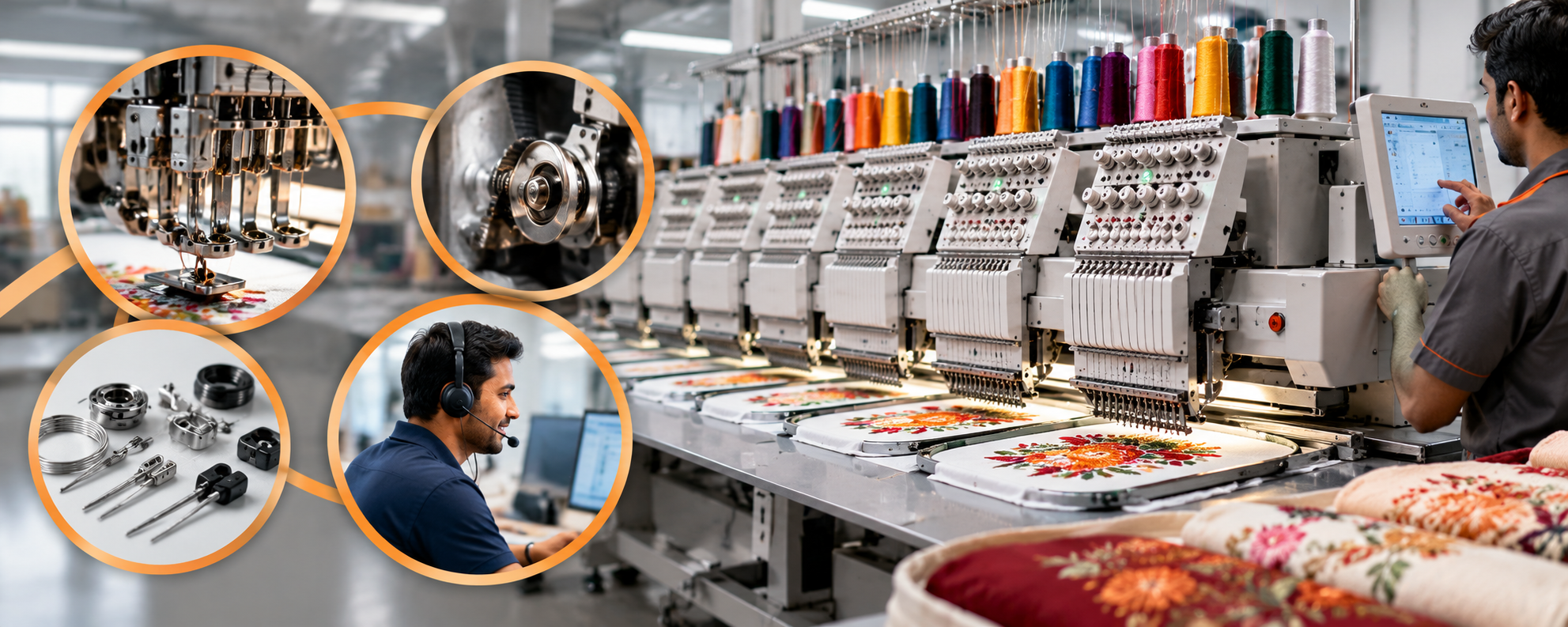
Warranty coverage and technical support can make a major difference to your embroidery production. Learn what to check before buying a multi head embroidery machine, from repair coverage and operator training to spare parts availability and overseas supplier support.
Buying a multi head embroidery machine is a significant investment for any embroidery business. Whether you manufacture garments, uniforms, caps, home textiles, or customized products, the right machine can help increase production capacity and maintain consistent embroidery quality. However, the machine's purchase price is only one part of the decision. Warranty coverage, technical support, spare parts availability, and operator training are equally important.
Before finalizing your purchase, understand what the supplier offers after installation and how quickly they can help if your machine develops a problem. Reliable after-sales support can reduce downtime, prevent unnecessary repair costs, and help your business maintain smooth production.
1. Check What the Machine Warranty Covers
A warranty provides protection against certain manufacturing defects and component failures during a specified period. However, warranty terms differ between manufacturers and suppliers, so always request the details in writing.
Before buying a multi head embroidery machine, check whether the warranty covers:
- Mechanical components: Confirm the coverage for major mechanical parts and assemblies.
- Electrical and electronic systems: Ask about control boards, motors, sensors, displays, and other electronic components.
- Embroidery heads and drive systems: Understand which parts are covered and whether any exclusions apply.
- Manufacturing defects: Check the procedure for reporting defects and receiving replacement parts or repairs.
- Labour and service charges: Confirm whether repair labour, technician visits, and transportation costs are included.
Do not assume that every component is covered under the same warranty. Some parts may have separate terms, and consumables such as needles, bobbins, and certain wear-prone components may be excluded.
2. Understand the Warranty Period and Conditions
The length of the warranty matters, but the conditions attached to it matter just as much. A longer warranty is not necessarily better if the coverage is limited or difficult to claim.
Ask the supplier these questions before placing your order:
- When does the warranty period begin: at dispatch, delivery, installation, or commissioning?
- Does the warranty cover parts only, or does it also include labour?
- What documents are required to make a claim?
- Are there conditions relating to installation, maintenance, voltage stability, or operator training?
- What happens if a machine needs repairs during the warranty period?
- Who is responsible for shipping defective components and replacement parts?
Get clear written answers in the quotation, warranty certificate, or purchase agreement. This helps avoid confusion when service is needed.
3. Evaluate Technical Support Availability
Technical support is especially important when operating a multi head embroidery machine because one fault can affect several heads and delay an entire production order.
A dependable supplier should explain how customers can access technical assistance. Look for support options such as:
- Phone support: For quick guidance on common machine errors and operating problems.
- Video calls: To help technicians understand the issue and guide your operator through basic checks.
- Remote troubleshooting: Where supported, remote assistance can help identify certain control-system or parameter issues.
- On-site service: Ask whether a technician can visit your factory when remote troubleshooting is insufficient.
- Maintenance guidance: Clear instructions for cleaning, lubrication, inspection, and routine servicing.
Before buying, ask about service working hours, expected response times, technician availability in your area, and whether additional charges apply. Avoid relying on verbal promises without a clear support arrangement.
4. Confirm Installation and Operator Training
Even a well-built embroidery machine may not perform efficiently if it is installed incorrectly or operated without proper training. Installation and commissioning support can help ensure that the machine is ready for production.
Ask whether your purchase includes guidance on:
- Machine setup and initial testing.
- Threading and thread-tension adjustment.
- Needle selection and replacement.
- Embroidery design loading and parameter settings.
- Hoop positioning and fabric preparation.
- Identifying common thread breaks, skipped stitches, and thread trimming problems.
- Routine cleaning, lubrication, and preventive maintenance.
Training should cover practical operation as well as basic troubleshooting. When operators understand the machine's settings and maintenance requirements, they can often resolve minor issues sooner and know when to contact a technician.
5. Check Spare Parts Availability
Access to genuine and compatible spare parts is essential for maintaining production. A machine may remain idle for an extended period if a critical component is unavailable.
Before purchasing, ask the supplier about the availability of commonly required parts, including:
- Needles, bobbin cases, and other consumables.
- Hook assemblies and thread-trimming components.
- Sensors and electronic components.
- Motors, belts, and drive-related parts.
- Control-system components and other model-specific spares.
Also confirm the estimated delivery time, pricing, and ordering process for replacement parts. If you are importing equipment, ask how international shipping and customs procedures may affect delivery.
It is useful to identify critical spare parts in advance and maintain a suitable stock based on your production volume and the supplier's recommendations.
6. Understand the Difference Between Remote and On-Site Service
Not every machine issue requires an on-site visit. Some problems can be resolved through a phone call or video consultation, while others require physical inspection by a trained technician.
Support type | Best suited for | What to confirm |
| Phone or video support | Basic operating questions and simple troubleshooting | Availability and response time |
| Remote technical assistance | Supported software, parameter, or control-system issues | Whether the machine supports remote diagnosis |
| On-site technician visit | Complex mechanical or electrical faults | Visit charges, travel costs, and service coverage |
| Spare parts replacement | Worn, damaged, or defective components | Availability, warranty eligibility, and delivery time |
| Operator training | Setup, production operation, and maintenance | Training duration, format, and included cost |
A supplier should explain when each type of support is available and whether the service is included in the purchase price.
7. Compare After-Sales Support When Buying from an Overseas Supplier
Many embroidery businesses consider imported equipment to access different machine configurations, production capacities, and price options. However, buying from overseas requires additional attention to communication, parts logistics, and service arrangements.
If you are evaluating a China multi head embroidery machine supplier, do not compare suppliers on machine price alone. Ask how technical queries are handled after delivery, whether manuals and training materials are available in a language your operators understand, and how replacement components are shipped.
You should also confirm who will provide local assistance if the overseas manufacturer cannot send a technician promptly. A clear service arrangement can make a significant difference when your business depends on uninterrupted production.
Before making payment, request the machine specifications, warranty terms, installation requirements, spare parts list, and support contact details. Verify that the supplier's commitments are documented and apply to the exact model you intend to purchase.
8. Look Beyond the Warranty: Consider Total Ownership Costs
The initial purchase price does not represent the full cost of owning a multi head embroidery machine. Maintenance, spare parts, operator training, repairs, and production downtime can all affect your long-term operating costs.
Consider these factors when comparing quotations:
- Warranty duration and actual coverage.
- Cost of servicing after the warranty expires.
- Availability and price of replacement parts.
- Installation and training charges.
- Technician travel and emergency service fees.
- Expected response time when a production issue occurs.
- Availability of manuals, troubleshooting guides, and maintenance schedules.
A supplier offering transparent terms and practical technical assistance may provide better long-term value than one offering a lower initial price but limited support.
9. Use a Pre-Purchase Support Checklist
Before confirming your order, use this checklist to compare suppliers:
- Written warranty certificate and exclusions received.
- Warranty start date and claim procedure confirmed.
- Technical support channels and working hours verified.
- Installation and operator training arrangements clarified.
- Spare parts availability and delivery estimates checked.
- On-site service charges and geographical coverage confirmed.
- Machine manuals and maintenance instructions provided.
- Service commitments documented in the purchase agreement.
Taking these steps before purchase can help you make a more informed decision and reduce the risk of unexpected service costs later.
Choose a Supplier That Supports Your Production Goals
A multi head embroidery machine should deliver more than production capacity. Reliable warranty coverage, practical technical assistance, accessible spare parts, and proper operator training are essential for maintaining consistent output and controlling downtime.
At Ramana Machines, we understand that machinery performance and after-sales support are important considerations for embroidery businesses. When evaluating your next machine, discuss your production requirements, machine configuration, installation needs, and technical support expectations with your supplier before making a final decision. Choosing equipment with a clear support plan can help you build a more dependable and efficient embroidery operation.
Related
More insights
26 Oct 2026
How to Reduce Thread Breakage During Embroidery Production
View26 Oct 2026
How to Reduce Thread Breakage During Embroidery Production
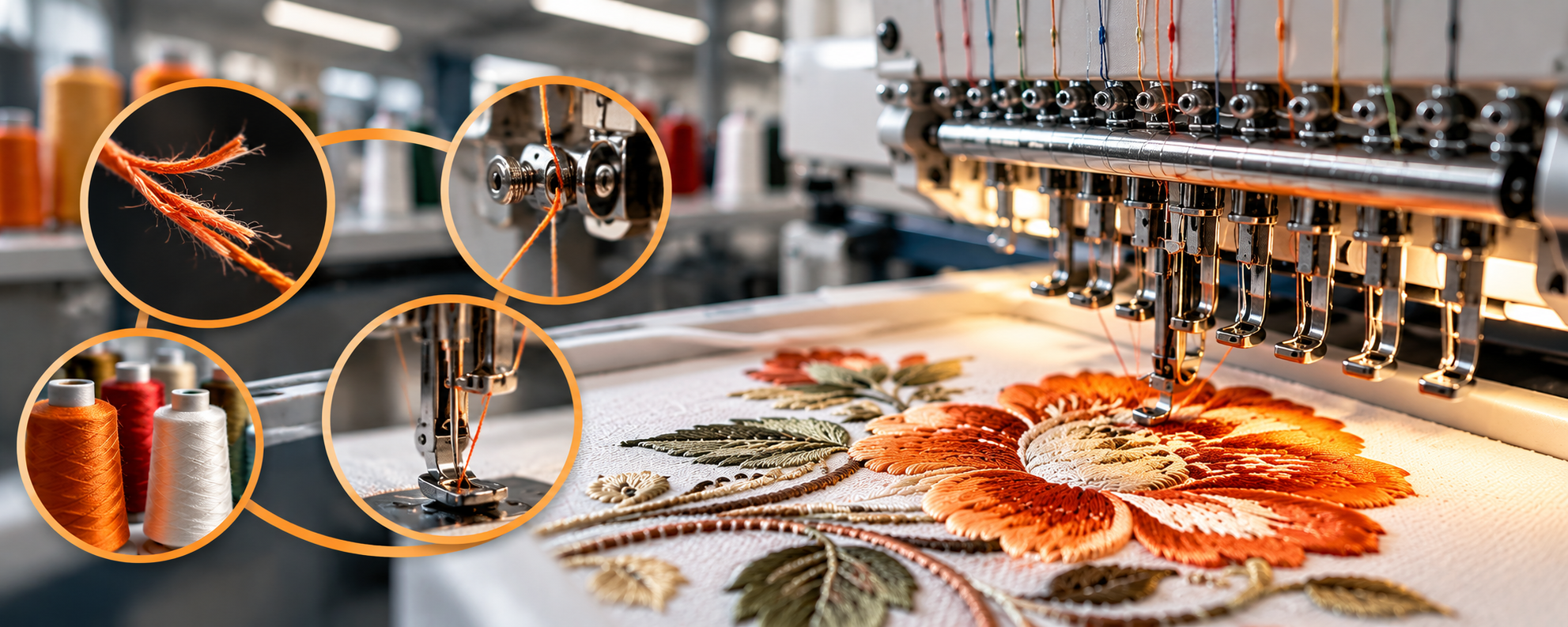
Frequent thread breaks can slow embroidery production, increase rework, and affect stitch quality. Learn how to identify common causes and improve performance through correct tension, suitable needles, better digitizing, proper fabric preparation, and regular machine maintenance.
View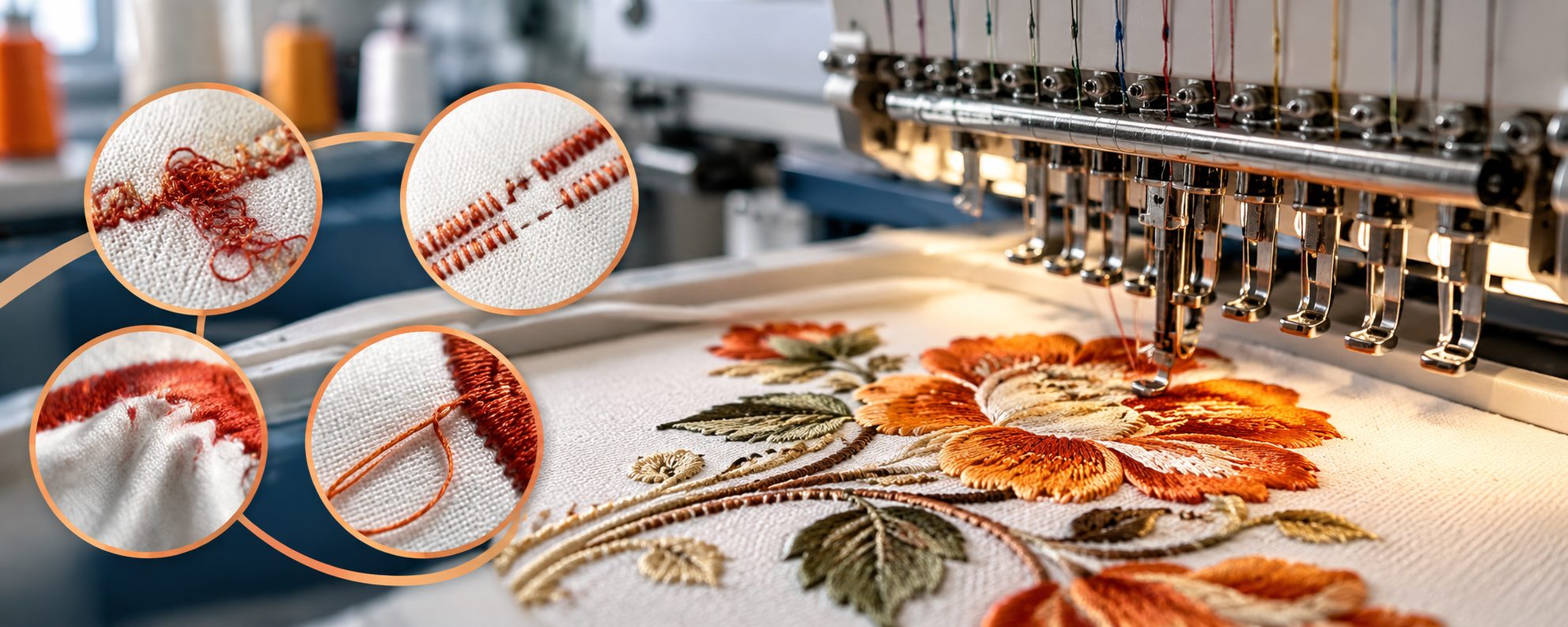
26 Oct 2026
How to Identify and Fix Common Embroidery Design Errors
View26 Oct 2026
How to Identify and Fix Common Embroidery Design Errors
Embroidery design errors can cause thread breaks, fabric puckering, missing stitches, and uneven lettering. Learn how to identify common problems, correct digitizing and machine settings, and improve embroidery quality before starting bulk production.
View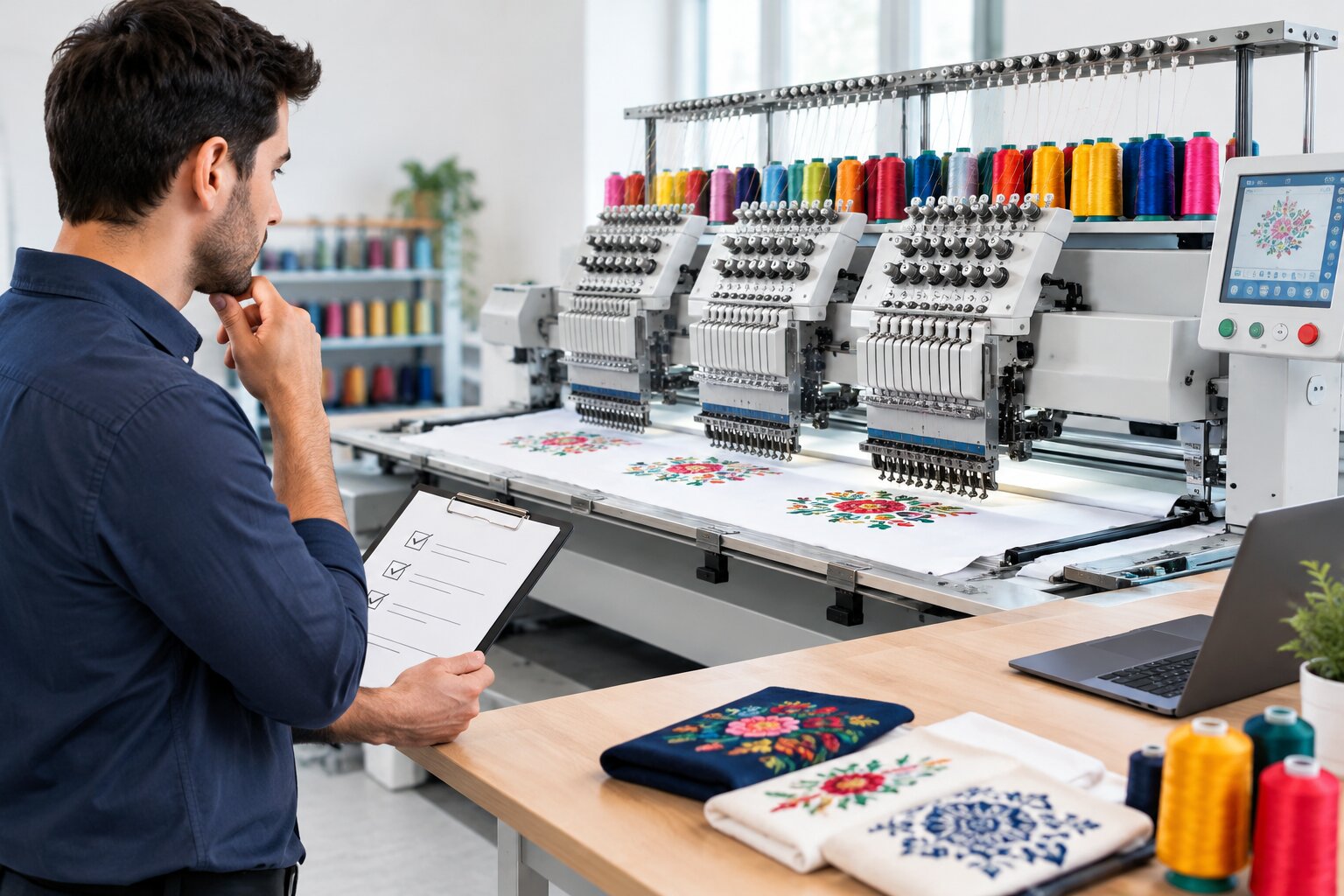
19 Oct 2026
What to Check Before Buying a Multi Head Embroidery Machine
View19 Oct 2026
What to Check Before Buying a Multi Head Embroidery Machine
Learn what to check before buying a multi head embroidery machine, including machine speed, heads, fabric compatibility, price, maintenance, and supplier support.
ViewFrequently Asked Questions
Find answers to the most common questions about our machines, services and support.
Warranty coverage varies by manufacturer and supplier. Check the warranty period, covered mechanical and electronic components, exclusions, labour charges, and the process for claiming repairs before purchasing.
Not necessarily. Consumables and wear-prone components may be excluded, while other parts may have specific coverage conditions. Always request a written list of covered and excluded components.
Support may include phone or video assistance, remote troubleshooting, installation guidance, operator training, maintenance instructions, and on-site technician visits where available.
Timely access to replacement parts can reduce machine downtime and help maintain production schedules. Ask about stock availability, delivery times, prices, and access to model-specific components.
Confirm the warranty terms, technical support arrangements, spare parts shipping process, installation and training options, machine documentation, and availability of local service assistance.
It depends on the supplier and purchase agreement. Basic guidance may be included, while on-site visits, travel, advanced repairs, or extended service plans may incur additional charges. Confirm these costs before ordering.
Yes. Training helps operators understand threading, tension adjustment, machine settings, routine maintenance, and basic troubleshooting, which can help prevent avoidable errors and reduce production interruptions.