Blog
Single-Bed vs Double-Bed Flat Knitting Machine: What Is the Difference?
By Ramana Machines · September 14, 2026
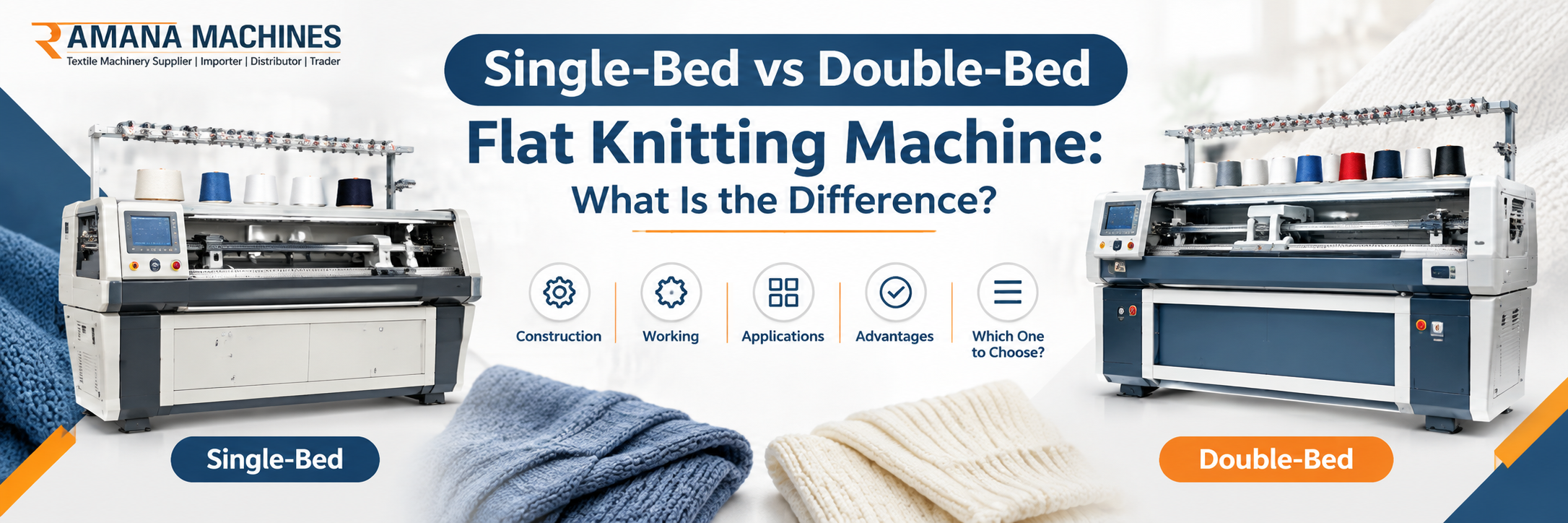
Compare single-bed and double-bed flat knitting machines, including their construction, working, applications, advantages, and key factors to consider when choosing the right machine for your production needs.
Choosing between a single-bed and double-bed machine is an important decision when setting up or expanding a knitting operation. Both machine types use needles arranged on a flat bed, but their construction and knitting capabilities are different.
Understanding these differences can help you select a machine based on the type of fabric, product design, and production requirements.
Single-Bed Flat Knitting Machine
A single-bed machine has one needle bed where the knitting needles are arranged in a straight line. The needles work from one bed to form the fabric.
Construction
The machine has one main needle bed, carriage, yarn feeding system, and other supporting components required for knitting. Its comparatively simple arrangement makes it suitable for applications where knitting from one needle bed is sufficient.
Working
During operation, the carriage moves across the needle bed and controls the movement of the needles. Yarn is supplied through the feeder, and the selected needles form new loops to build the fabric row by row.
Single-bed machines are commonly used for simpler knitted structures and products where complex interaction between two needle beds is not required.
Applications
Single-bed machines can be suitable for products and components such as:
- Basic sweater panels
- Scarves
- Simple fashion knitwear
- Certain collars and cuffs
- Flat knitted components
- Other products with relatively straightforward structures
Advantages
Some key benefits include:
- Simpler machine construction
- Easier operation for basic knitting requirements
- Suitable for straightforward fabric structures
- Generally easier to understand for new operators
- Useful for specific products that do not require two-bed knitting
Double-Bed Flat Knitting Machine
A double-bed machine has two needle beds positioned opposite each other. The needles from both beds can work together, allowing the machine to produce a wider range of knitted structures.
Construction
The two needle beds are the main difference in construction. Along with the carriage, yarn feeders, and control systems, the second bed provides additional needle positions and knitting possibilities.
Working
During knitting, needles from either or both beds can be selected according to the required fabric structure. The interaction between the two beds allows different stitch arrangements, shaping techniques, and fabric effects.
This makes a double-bed machine more flexible when the production requires more advanced knitting structures.
Applications
Double-bed machines are commonly considered for products such as:
- Sweaters and pullovers
- Cardigans
- Ribbed fabrics
- Shaped garment panels
- Collars and cuffs
- Fashion knitwear
- Structured knitted components
Advantages
The main advantages include:
- Greater knitting flexibility
- Ability to create more complex structures
- Suitable for rib and other two-bed constructions
- More options for shaping and fabric design
- Better suited to varied production requirements
Single-Bed vs Double-Bed: Key Differences
Feature | Single-Bed | Double-Bed |
| Needle beds | One | Two |
| Construction | Simpler | More complex |
| Knitting options | More basic | More versatile |
| Fabric structures | Suitable for simpler structures | Suitable for more complex structures |
| Product flexibility | Limited compared with double-bed | Higher |
| Learning requirement | Generally simpler | Requires understanding of both beds |
| Best suited for | Specific, straightforward products | Varied and more advanced production |
Which One Should You Choose?
The right choice depends on what you plan to produce rather than simply choosing the machine with more features.
A single-bed machine may be appropriate when your production mainly involves straightforward knitted products and you want a simpler machine setup.
A double-bed machine can be a better option when you need greater flexibility, rib structures, shaping, or a wider range of garment designs.
Before making a decision, consider the products you plan to manufacture, required fabric structures, production volume, operator experience, available space, and future product plans.
It is also useful to discuss your requirements with an experienced textile machinery supplier who can help you compare suitable machine configurations and specifications.
What to Check Before Buying
Before selecting a machine, pay attention to:
- Required product and fabric structure
- Number of needle beds
- Machine gauge
- Knitting width
- Level of automation
- Pattern and stitch control
- Yarn compatibility
- Production requirements
- Spare parts availability
- Installation and operator training
- Technical and after-sales support
For businesses comparing different options, working with a reliable machinery supplier or distributor can also make machine selection, installation, and ongoing support easier.
Choosing the Right Machine for Your Production
Single-bed and double-bed machines both have an important place in flat knitting. The better choice depends on the type of products you want to make, the fabric structures required, and your expected production needs.
If you are comparing different models or configurations, Ramana Machines can help you understand the available options and identify suitable machinery based on your production requirements, along with support for sourcing, installation, training, spare parts, and technical assistance.
Related
More insights
September 14, 2026
How to Choose the Right Flat Knitting Machine for Your Production
Learn how to choose the right flat bed knitting machine by comparing gauge, production needs, yarn compatibility, specifications, automation, budget, and technical support.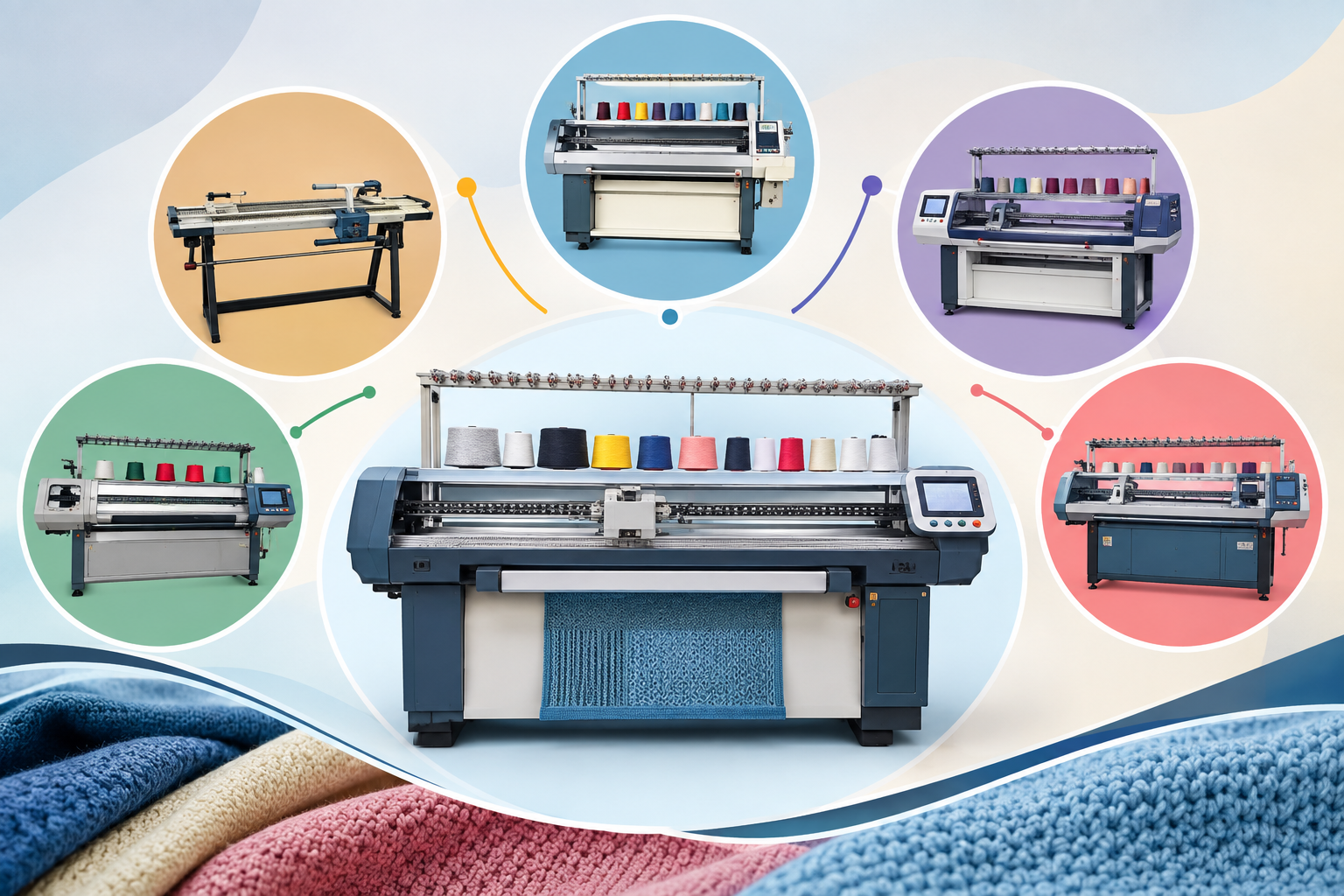
September 7, 2026