Blog
What Specifications Should You Check Before Buying a Stenter Machine?
By Ramana Machines · October 16, 2026
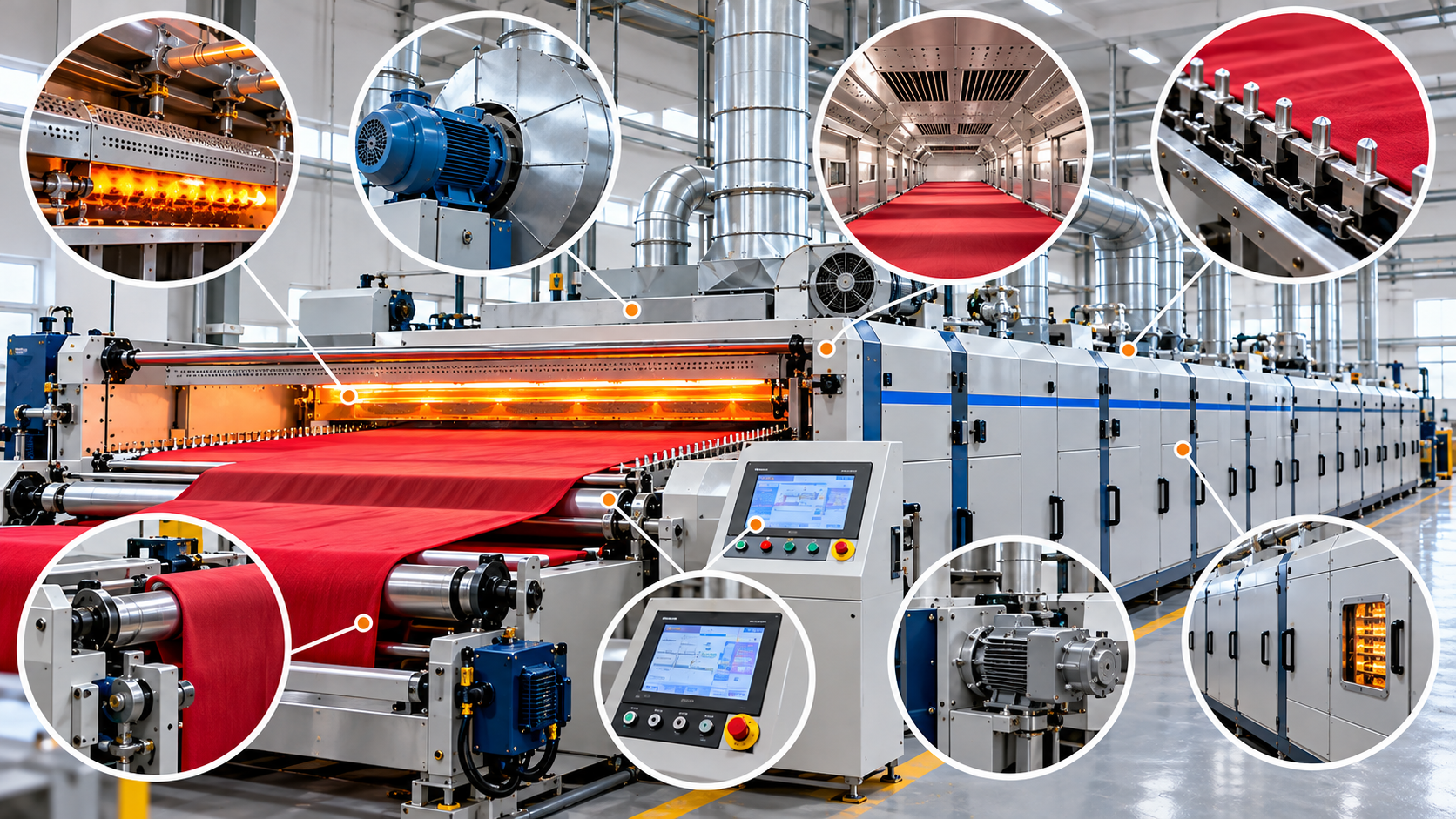
Planning to buy a stenter machine? Learn how to compare working width, temperature control, heating systems, production speed, airflow, energy consumption, safety features, and maintenance support to find the right machine for your textile production needs.
A stenter machine plays an important role in textile processing. It helps dry fabric, control fabric width, improve dimensional stability, and prepare materials for further finishing. Choosing the right machine can help textile manufacturers maintain fabric quality, reduce waste, and manage production costs.
However, buying a stenter machine involves more than comparing prices. You need to check its working width, heating system, temperature control, production speed, energy consumption, and compatibility with your fabrics.
This guide explains the key specifications to review before investing in a stenter machine.
1. Working Width and Fabric Width Range
Working width is one of the first specifications to check. It refers to the width of fabric the machine can process under its operating conditions.
A machine with the wrong working width may limit your production or make it difficult to achieve the required finished fabric dimensions.
Before buying, check:
- The minimum and maximum fabric width the machine can handle.
- Whether the width can be adjusted for different fabrics.
- The finished fabric width required by your customers.
- The machine's chain adjustment and width-control system.
Choose a working width that matches your current production needs while allowing reasonable flexibility for future orders.
2. Heating System and Temperature Range
The heating system affects drying performance, energy consumption, and fabric quality. Stenter machines may use different heating methods, including gas, thermal oil, or electrical heating, depending on the machine design.
The correct temperature range depends on fabric composition, finishing chemicals, moisture content, and the process being carried out.
Check these specifications:
- Maximum operating temperature.
- Temperature control accuracy.
- Heating method and fuel requirements.
- Heat distribution across the machine.
- Temperature monitoring and safety controls.
Uneven heating can cause inconsistent drying, shade variation, or other fabric defects. Ask the manufacturer how temperature is controlled across the fabric width and between different chambers.
3. Number of Chambers and Machine Length
A stenter machine may have several heating chambers. Each chamber helps control the fabric's processing conditions as it moves through the machine.
The required number of chambers depends on fabric thickness, moisture content, production speed, and the finishing process.
When comparing machines, consider:
- Number of heating chambers.
- Length of each chamber.
- Available space in your factory.
- Required drying time.
- Expected production capacity.
More chambers do not automatically mean better performance. The complete machine design and its suitability for your process are more important than chamber count alone.
4. Production Speed and Capacity
Production speed determines how quickly fabric moves through the machine. However, the highest possible speed may not always deliver the best results.
Thick fabrics, high moisture levels, and demanding heat-setting processes may require a slower line speed to achieve the desired finish.
Ask the supplier for details about:
- Adjustable operating speed.
- Expected output for your fabric types.
- Production capacity under normal working conditions.
- Speed control system.
- Performance at different temperatures and fabric widths.
Request practical production figures for your specific fabric rather than relying only on the machine's maximum rated speed.
5. Fabric Holding System: Pin-Type or Clip-Type
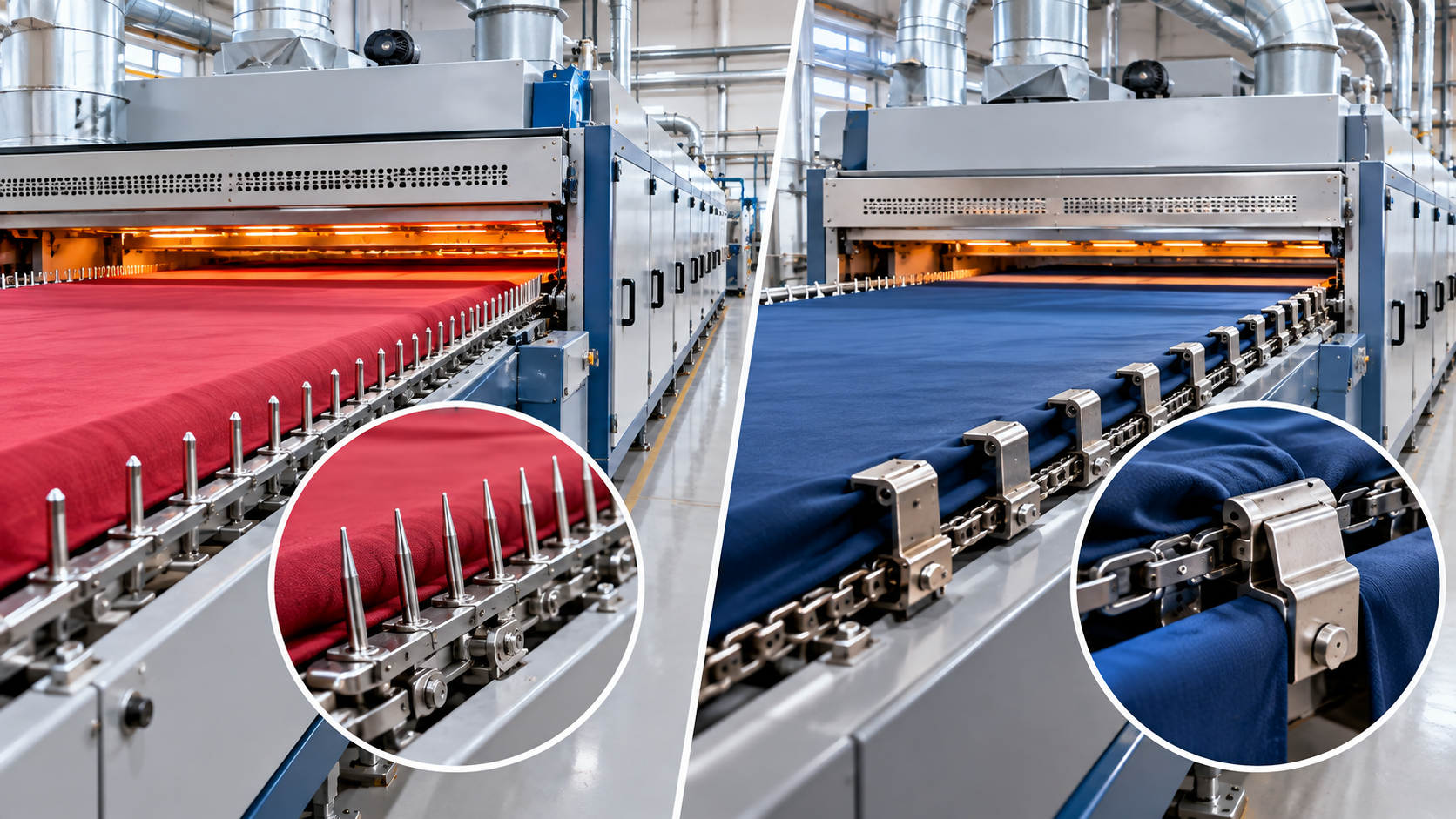
The fabric holding system keeps the fabric edges in position as the material passes through the machine. Two common options are pin-type and clip-type systems.
Specification | Pin-Type System | Clip-Type System |
| Holding method | Pins penetrate the fabric selvedge | Clips grip the fabric edge |
| Edge effect | May leave small pin holes | Avoids holes caused by pins |
| Main consideration | Fabric must tolerate pin penetration | Clip pressure must be set correctly |
| Maintenance | Check pin condition and alignment | Inspect clip condition and gripping pressure |
Your choice should depend on fabric construction, edge quality requirements, and the finishing process. If your factory processes several types of fabric, discuss compatibility with the manufacturer before selecting a system.
6. Airflow and Nozzle Design
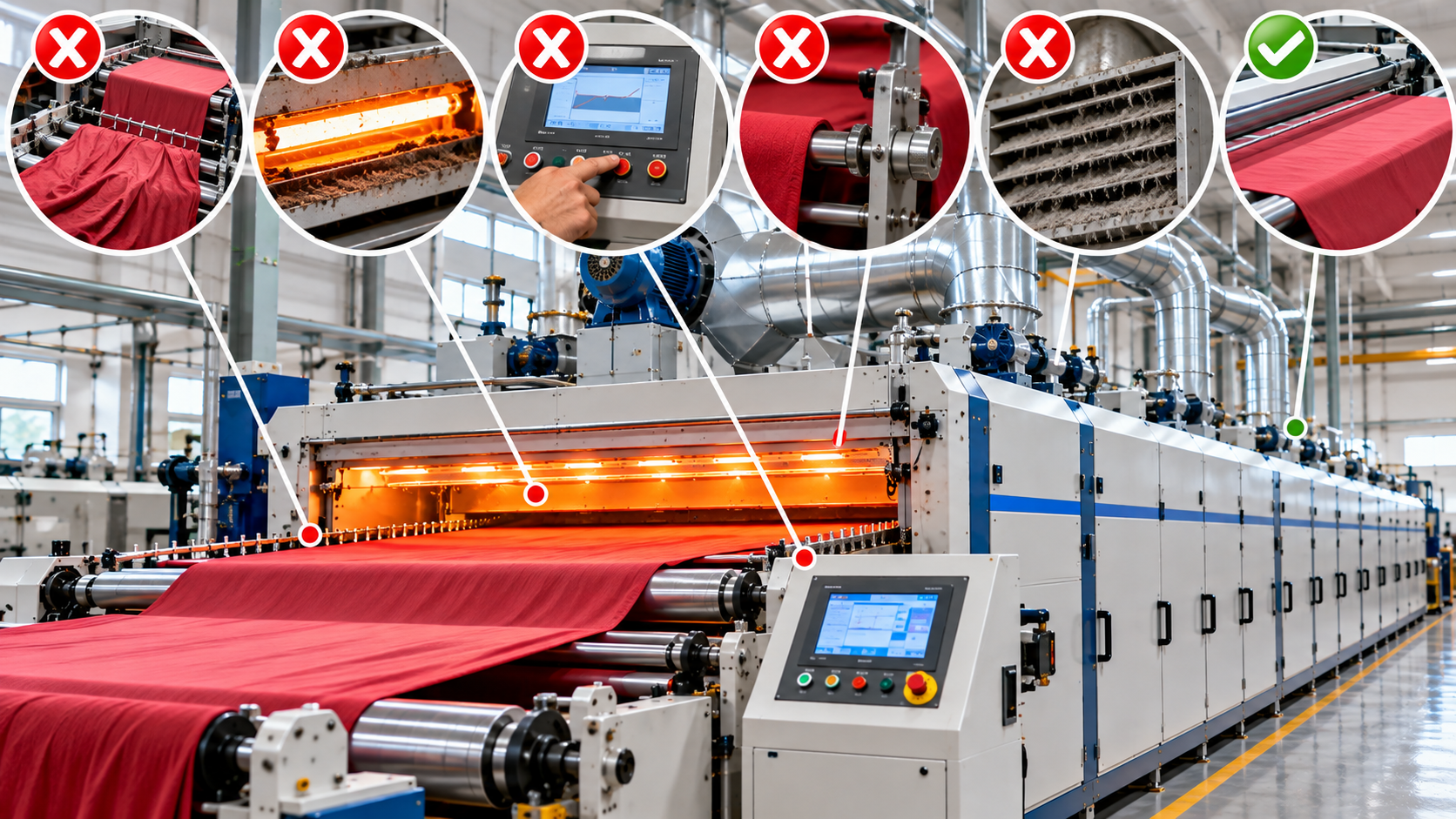
Air circulation inside a stenter machine helps transfer heat to the fabric and remove moisture. Poor or uneven airflow can lead to inconsistent drying and fabric quality problems.
Check the following:
- Airflow distribution across the fabric width.
- Nozzle design and adjustability.
- Air circulation and exhaust arrangements.
- Fan performance and energy use.
- Accessibility for cleaning and maintenance.
Ask whether the airflow system can be adjusted for different fabric thicknesses and processing requirements. Regular cleaning of filters, nozzles, and air passages can also help maintain performance.
7. Temperature and Process Control System
Modern textile processing equipment may include digital controls, sensors, and automated settings. These features help operators manage temperature, speed, and other processing parameters.
Before buying, check whether the control system offers:
- Digital temperature monitoring.
- Adjustable line speed.
- Separate settings for individual chambers.
- Alarms for abnormal operating conditions.
- Process setting storage or recipe management, where available.
- Easy-to-understand controls for operators.
A user-friendly control system can help reduce operating errors and make it easier to repeat production settings for similar fabric batches.
8. Energy Consumption and Operating Costs
The purchase price is only one part of the total cost of owning a stenter machine. Energy, labour, maintenance, and spare parts also affect long-term expenses.
Ask the supplier about:
- Fuel or electricity consumption.
- Heat recovery options.
- Insulation quality.
- Fan and motor efficiency.
- Exhaust heat management.
- Routine maintenance costs.
Where possible, compare energy consumption under similar production conditions. A machine with a lower initial price may cost more to operate over time.
9. Exhaust System and Moisture Removal
The exhaust system removes moist air and process fumes from the heating chambers. Proper exhaust management helps maintain suitable drying conditions and supports a safer working environment.
Review the exhaust fan capacity, moisture removal arrangements, ducting, and access for cleaning. If the process involves chemicals or special finishing treatments, confirm that the exhaust system meets the applicable factory safety and environmental requirements.
10. Fabric Tension and Width Control
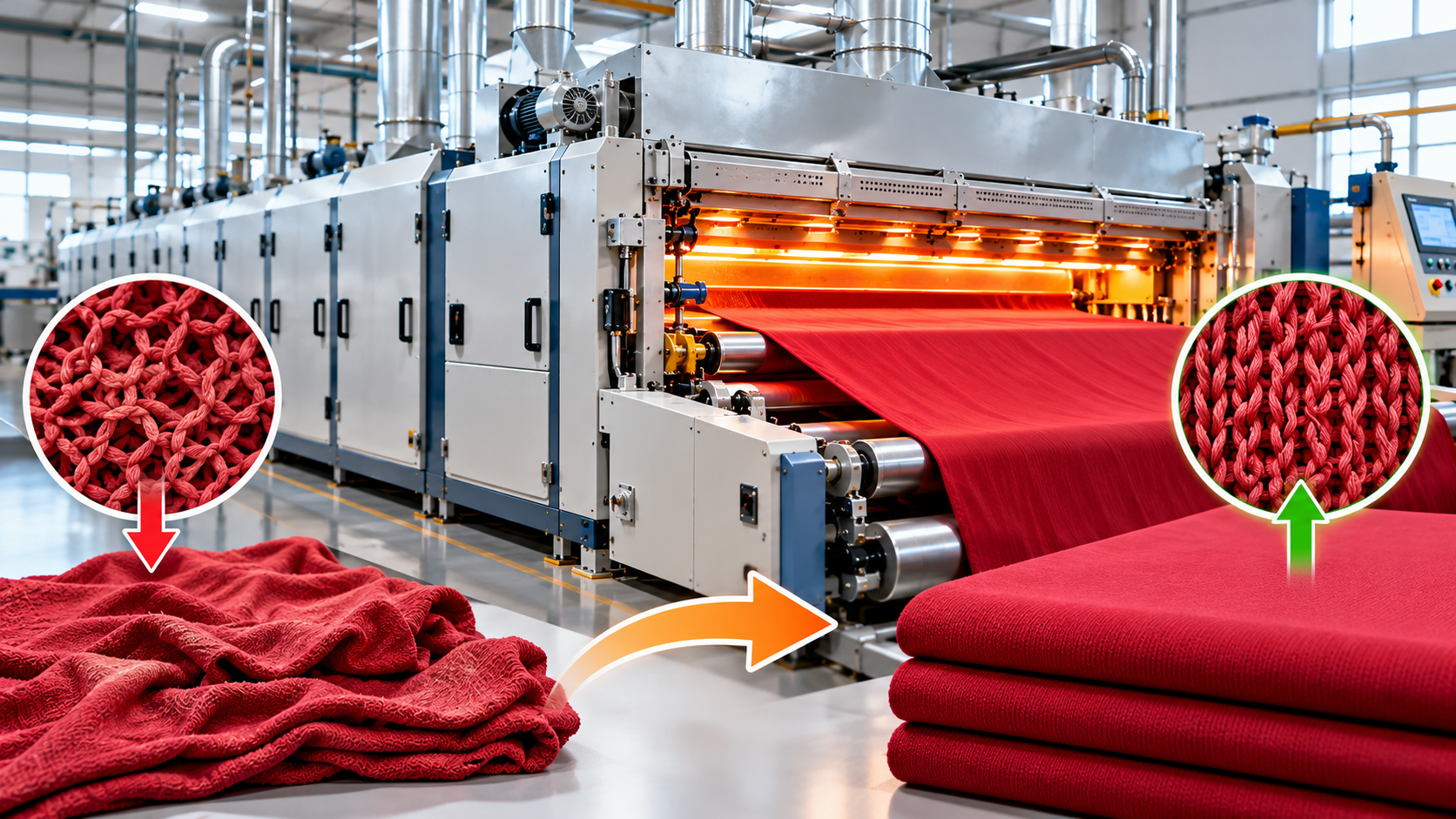
Correct fabric tension helps maintain consistent width and reduces the risk of stretching, creasing, or distortion.
A stenter machine should provide suitable control over fabric feeding, chain movement, overfeed, and fabric tension, depending on its design.
Before purchasing, ask how the machine handles stretch fabrics, knitted materials, and other fabrics that may be sensitive to tension. If possible, test the machine using your regular production materials.
11. Safety Features and Operator Access
Safety should be part of the purchasing decision, not an afterthought. Stenter machines operate with high temperatures, moving chains, fans, and other mechanical components.
Check for:
- Emergency stop controls.
- Suitable guards around moving parts.
- Over-temperature protection.
- Safety interlocks where required.
- Clear operating and maintenance instructions.
- Safe access for cleaning and inspection.
Also consider whether operators can access important components for routine checks without unnecessary difficulty. Follow the manufacturer's safety procedures during installation, operation, and maintenance.
12. Maintenance Requirements and Spare Parts Availability
Regular maintenance helps keep a textile stenter machine running reliably. Before buying, understand which components need frequent inspection and how easily replacement parts can be obtained.
Important components may include chains, pins, clips, bearings, fans, motors, sensors, filters, and control-system parts.
Ask the supplier about:
- Recommended maintenance intervals.
- Availability of genuine spare parts.
- Warranty coverage.
- Installation and commissioning support.
- Operator training.
- Troubleshooting and after-sales service.
Reliable support can help reduce downtime when a component needs repair or replacement.
13. Installation Space and Utility Requirements
A machine may meet your production needs but still be unsuitable if your factory cannot accommodate it or provide the required utilities.
Before placing an order, confirm:
- Overall machine dimensions and service clearance.
- Foundation and floor-loading requirements.
- Electrical supply and connected load.
- Fuel, thermal oil, compressed air, or other utility requirements, as applicable.
- Exhaust ducting and ventilation arrangements.
- Material handling and fabric feeding space.
Ask for the machine layout and utility requirements before preparing the installation area.
Stenter Machine Buying Checklist
Use this checklist when comparing different models and suppliers.
Specification | What to confirm |
| Working width | Compatible with your fabric range |
| Heating system | Suitable for your process and available utilities |
| Temperature range | Meets fabric and finishing requirements |
| Chambers | Sufficient for required drying or heat-setting |
| Production speed | Appropriate for your target output |
| Holding system | Pin-type or clip-type suits your fabric |
| Airflow | Provides suitable heat and moisture distribution |
| Controls | Easy to adjust, monitor, and operate |
| Energy use | Acceptable under expected production conditions |
| Safety | Appropriate guards, alarms, and emergency controls |
| Maintenance | Parts and service support are accessible |
| Installation | Factory space and utilities are sufficient |
How to Choose the Right Stenter Machine for Your Factory
The best machine is the one that suits your fabric range, production targets, finishing requirements, and operating budget. Before making a final decision, share your fabric types, required working width, target output, and processing conditions with the supplier.
Ask for a technical specification sheet and, wherever practical, arrange a trial with your own fabric. Check the finished width, drying quality, fabric appearance, and actual operating requirements before committing to a purchase.
Working with an experienced textile machinery supplier can also help you compare suitable machine configurations, understand installation requirements, and plan for spare parts and technical support.
Choose a Stenter Machine That Meets Your Production Needs
Selecting the right stenter machine starts with understanding your fabric, finishing process, and production targets. Comparing working width, heating, airflow, controls, energy consumption, and maintenance requirements can help you make a more informed investment.
Ramana Machines supports textile manufacturers in exploring textile processing machinery suited to their production needs. Contact the team to discuss machine specifications, spare parts, and technical support before choosing your next stenter machine.