
Blog
How Does a Stenter Machine Help Control Fabric Shrinkage?
By Ramana Machines · October 16, 2026
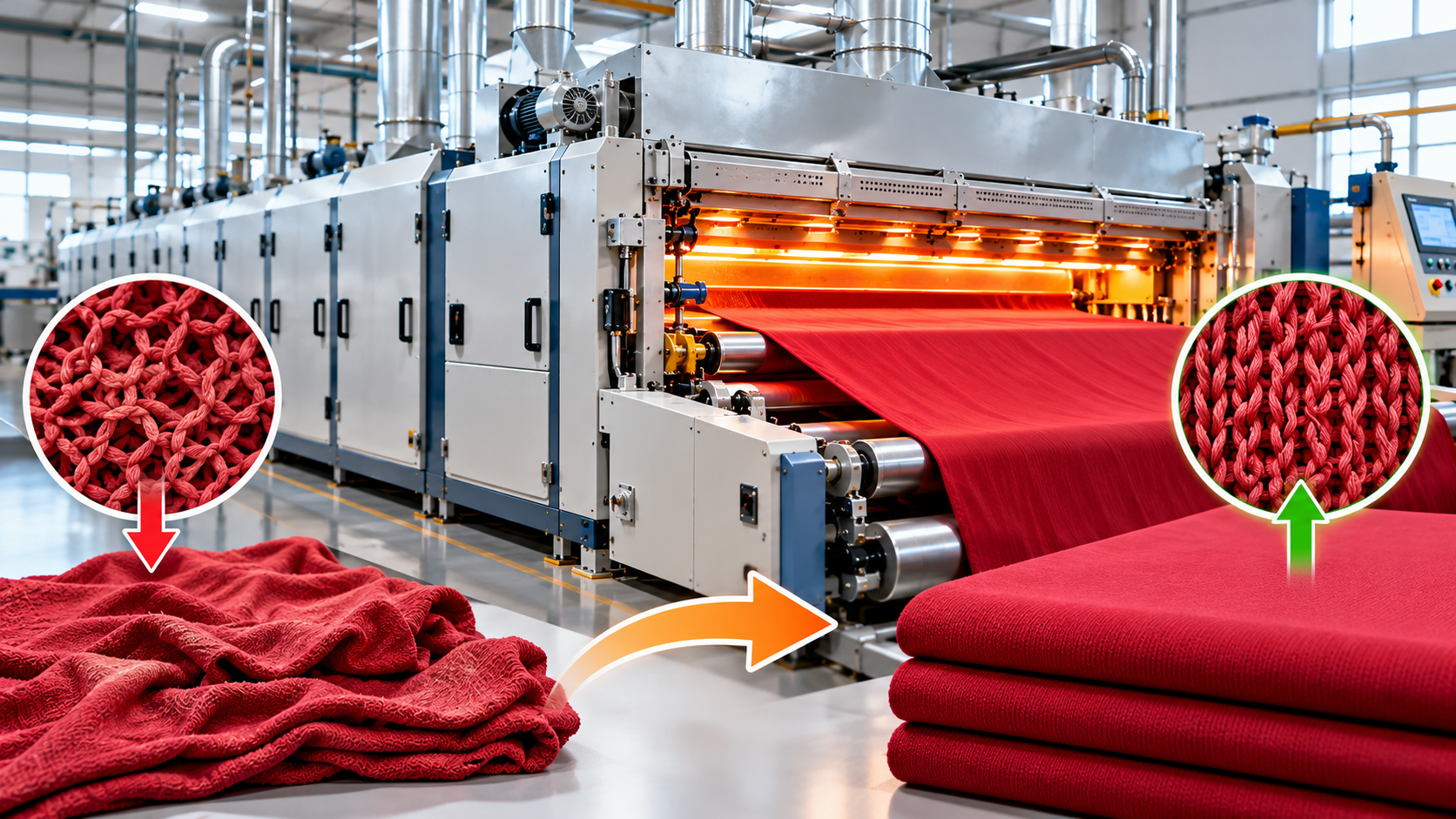
A stenter machine helps textile manufacturers control fabric width, manage tension, and apply controlled heat during finishing. Learn how temperature, overfeed, airflow, and proper machine settings support dimensional stability and help reduce unwanted shrinkage.
Fabric shrinkage is a common problem in textile manufacturing. After washing, drying, or finishing, fabric may become shorter or narrower than its original size. This can affect garment fitting, fabric dimensions, product quality, and customer satisfaction.
A stenter machine helps control this problem by setting the fabric width, managing tension, and applying controlled heat during textile finishing. It is widely used to improve dimensional stability and prepare fabric for further processing.
However, a stenter machine does not prevent every type of shrinkage. The results depend on the fabric material, knitting or weaving structure, previous processing, and the settings used during finishing.
What Is Fabric Shrinkage?
Fabric shrinkage is the reduction in fabric length or width after processing, washing, drying, or exposure to heat. It occurs when the fibres or fabric structure relax and return towards a less stretched condition.
There are different types of fabric shrinkage:
- Lengthwise shrinkage: The fabric becomes shorter along its length.
- Widthwise shrinkage: The fabric becomes narrower across its width.
- Relaxation shrinkage: Fabric contracts after the tension applied during manufacturing is released.
- Heat-related dimensional change: Heat can cause certain fibres or fabric structures to change dimensions.
- Washing shrinkage: Fabric dimensions change during washing and drying due to fibre and structure behaviour.
For textile manufacturers, controlling shrinkage is important because fabric must maintain suitable dimensions during garment production and after customer use.
How Does a Stenter Machine Control Fabric Shrinkage?
A stenter machine supports shrinkage control through several important functions.
1. Controls Fabric Width
During knitting, weaving, dyeing, and other processing stages, fabric may stretch or become narrower than required. A stenter machine uses chains fitted with pins or clips to hold the fabric edges and guide it through the machine.
The machine can spread the fabric to a set width during finishing. This helps manufacturers achieve consistent fabric dimensions from one batch to another.
However, setting the width too high can stretch the fabric excessively and may increase the risk of shrinkage later. The target width should match the fabric's construction and required finished dimensions.
2. Applies Controlled Heat
Heat helps prepare fabric for drying and, where appropriate, heat-setting. The effect depends on the fibre type and the purpose of the process.
For example, suitable heat-setting conditions can help stabilise certain synthetic fabrics, such as polyester, and reduce unwanted dimensional changes during later use.
The operator must select the correct temperature for the fabric. Excessive heat may cause yellowing, shade changes, fibre damage, or other quality problems.
3. Manages Fabric Tension
Excessive tension during processing can stretch fabric beyond its relaxed dimensions. When that tension is released, the fabric may contract.
A stenter machine helps control the fabric's movement and width as it passes through the finishing chamber. Correct feeding, overfeed settings, and chain speed can help reduce unnecessary stretching.
This is especially important for knitted fabrics, which can be sensitive to tension and may shrink after washing if they are processed incorrectly.
4. Helps Set the Required Dimensions
A fabric stenter can help manufacturers bring fabric to a target width and maintain that width during the finishing process.
Operators adjust the machine according to the fabric type, required width, temperature, and production speed. When these settings are correct, the finished material is more likely to meet the required dimensional specifications.
The machine's ability to control lengthwise shrinkage depends on the fabric structure and process settings. A stenter machine alone may not be enough to control lengthwise shrinkage in every fabric.
5. Supports Consistent Drying
Uneven drying can lead to differences in fabric dimensions and finishing quality. A properly maintained stenter machine distributes heated air across the fabric and removes moisture as the material moves through the chambers.
Consistent airflow and temperature help reduce variations between different parts of the fabric. Operators should monitor the drying conditions and avoid running the machine faster than the process can support.
Important Stenter Machine Settings for Shrinkage Control
Correct machine settings are essential for obtaining stable fabric dimensions.
Setting | How it helps |
| Working width | Helps achieve the required finished fabric width |
| Temperature | Supports drying and suitable heat-setting |
| Overfeed | Helps manage fabric length and reduce excessive tension |
| Chain speed | Controls how long fabric remains inside the machine |
| Airflow | Supports even heat distribution and moisture removal |
| Fabric tension | Helps reduce unwanted stretching during processing |
| Exhaust and moisture removal | Helps maintain suitable drying conditions |
The correct values vary according to fabric composition, weight, structure, moisture level, and finishing requirements. Operators should follow tested process recipes rather than using the same settings for every fabric.
Which Fabrics Benefit from Stenter Shrinkage Control?
Stenter machines are used for different textile materials, but the required settings vary.
Cotton Fabrics
Cotton fabric can shrink when moisture and processing release stresses in its structure. Stenter finishing helps control width and drying, but it does not always provide sufficient shrinkage control on its own.
For cotton fabrics requiring low residual shrinkage, manufacturers may need additional processes, such as mechanical compaction or sanforizing, depending on the fabric and product requirements.
Polyester Fabrics
Polyester fabrics may require heat-setting to improve dimensional stability. A stenter machine can apply controlled heat while holding the fabric at the required width.
Temperature and processing time must be suitable for the polyester type and any blends, dyes, or finishes used.
Knitted Fabrics
Knitted fabrics often stretch during production and wet processing. Correct overfeed, low and controlled tension, and suitable width settings can help reduce unwanted dimensional changes.
For some cotton knitted fabrics, compacting may also be needed to achieve the required washing-shrinkage performance.
Blended Fabrics
Cotton-polyester and other blended fabrics behave differently depending on their fibre ratios and construction. The finishing process must account for the properties of each fibre and the fabric's intended use.
Common Stenter Machine Problems That Can Affect Shrinkage
Incorrect settings or poor maintenance can affect the finished fabric dimensions.
- Excessive fabric tension: May stretch fabric during processing and increase later contraction.
- Incorrect overfeed: Can affect fabric length and dimensional stability.
- Uneven temperature: May cause inconsistent finishing across the fabric.
- Poor airflow: Can lead to uneven drying and differences between fabric sections.
- Incorrect width setting: May result in fabric that becomes narrower after relaxation or washing.
- Unstable machine speed: Can change the time fabric spends in the heating chambers.
- Worn pins or clips: May cause fabric slippage or uneven edge holding.
To identify the cause, check machine settings, fabric condition, and the process used before stenter finishing. Record the results so that successful settings can be repeated.
How to Check Whether Shrinkage Is Under Control
Manufacturers should measure shrinkage rather than judging fabric quality by appearance alone.
A simple test can help estimate dimensional change:
- Mark a known length and width on a fabric sample.
- Measure the sample before washing or testing.
- Wash and dry the sample using the required test method.
- Measure the same marked areas again.
- Calculate the percentage change in each direction.
Use this formula:
Shrinkage percentage = (Original dimension − Final dimension) ÷ Original dimension × 100
For example, if a fabric sample measures 100 cm before testing and 97 cm afterwards, its shrinkage is 3%.
Test results should be compared with the product's required limits. Use a recognised testing method appropriate for the fabric and intended end use.
Tips for Better Shrinkage Control
- Check the fabric's fibre composition and construction before selecting machine settings.
- Set the width according to the required finished dimensions.
- Avoid unnecessary tension during feeding and processing.
- Adjust overfeed and chain speed according to the fabric.
- Maintain consistent temperature and airflow across the chambers.
- Inspect pins, clips, chains, sensors, and fans regularly.
- Test finished fabric for shrinkage before approving large production batches.
- Consider additional processes such as compacting when the required shrinkage limit cannot be achieved by stenter finishing alone.
Choose the Right Stenter Machine for Your Fabric
Effective shrinkage control depends on the right combination of fabric preparation, machine settings, temperature, tension, and finishing methods. Manufacturers should test each fabric type and maintain records of successful process settings to achieve consistent results.
Ramana Machines supports textile manufacturers in exploring textile processing equipment suited to their production requirements. If you are looking for a textile machinery supplier in India, contact Ramana Machines to discuss suitable stenter machine options, spare parts, and technical support for your finishing operations.
Related
More insights
16 Oct 2026
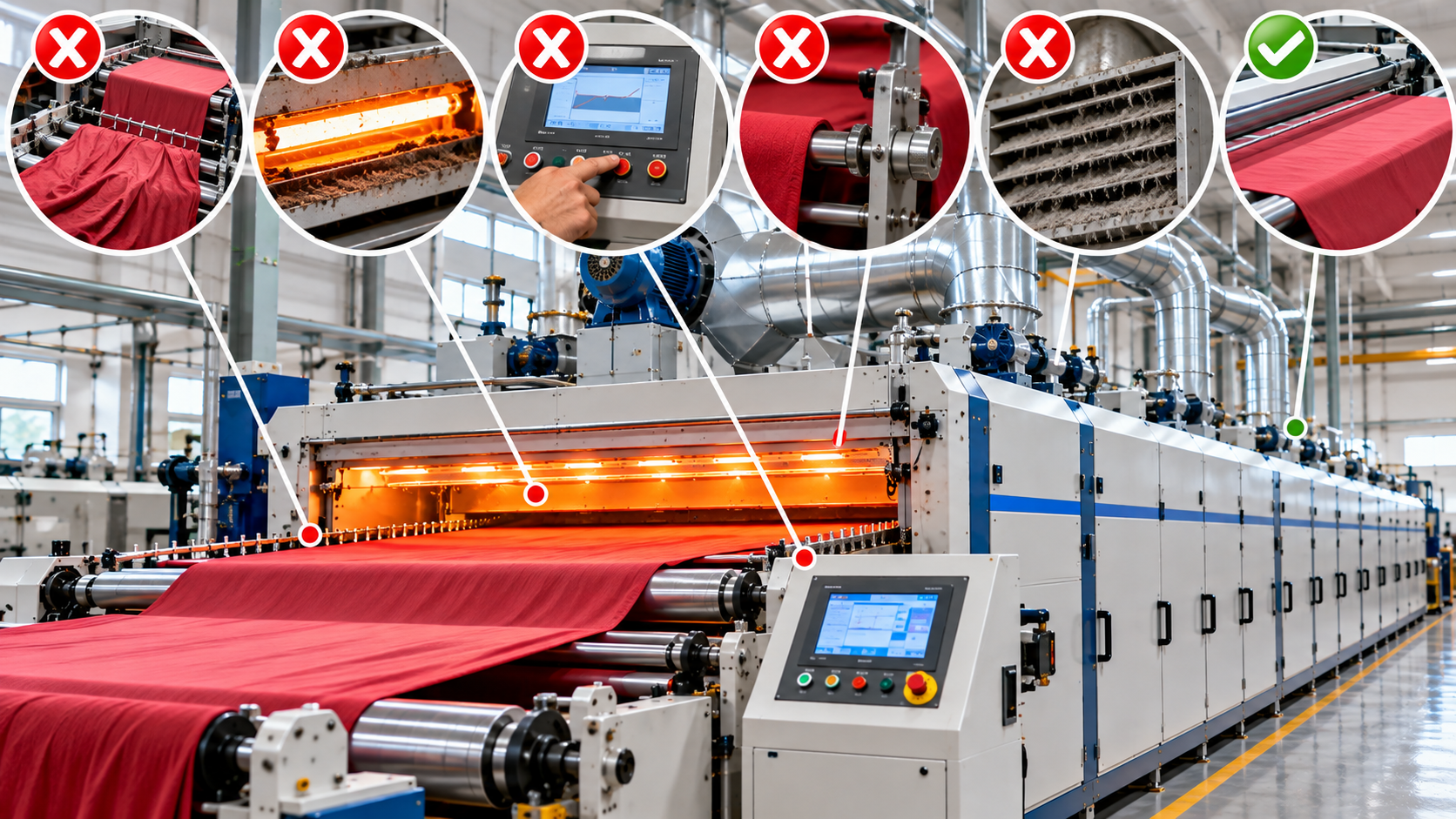
Common Operating Mistakes to Avoid When Using a Stenter Machine
View16 Oct 2026
Common Operating Mistakes to Avoid When Using a Stenter Machine
Incorrect temperature, fabric tension, overfeed, and airflow settings can affect stenter machine performance and fabric quality. Learn the common operating mistakes to avoid and how regular maintenance and correct settings can improve textile finishing results.
View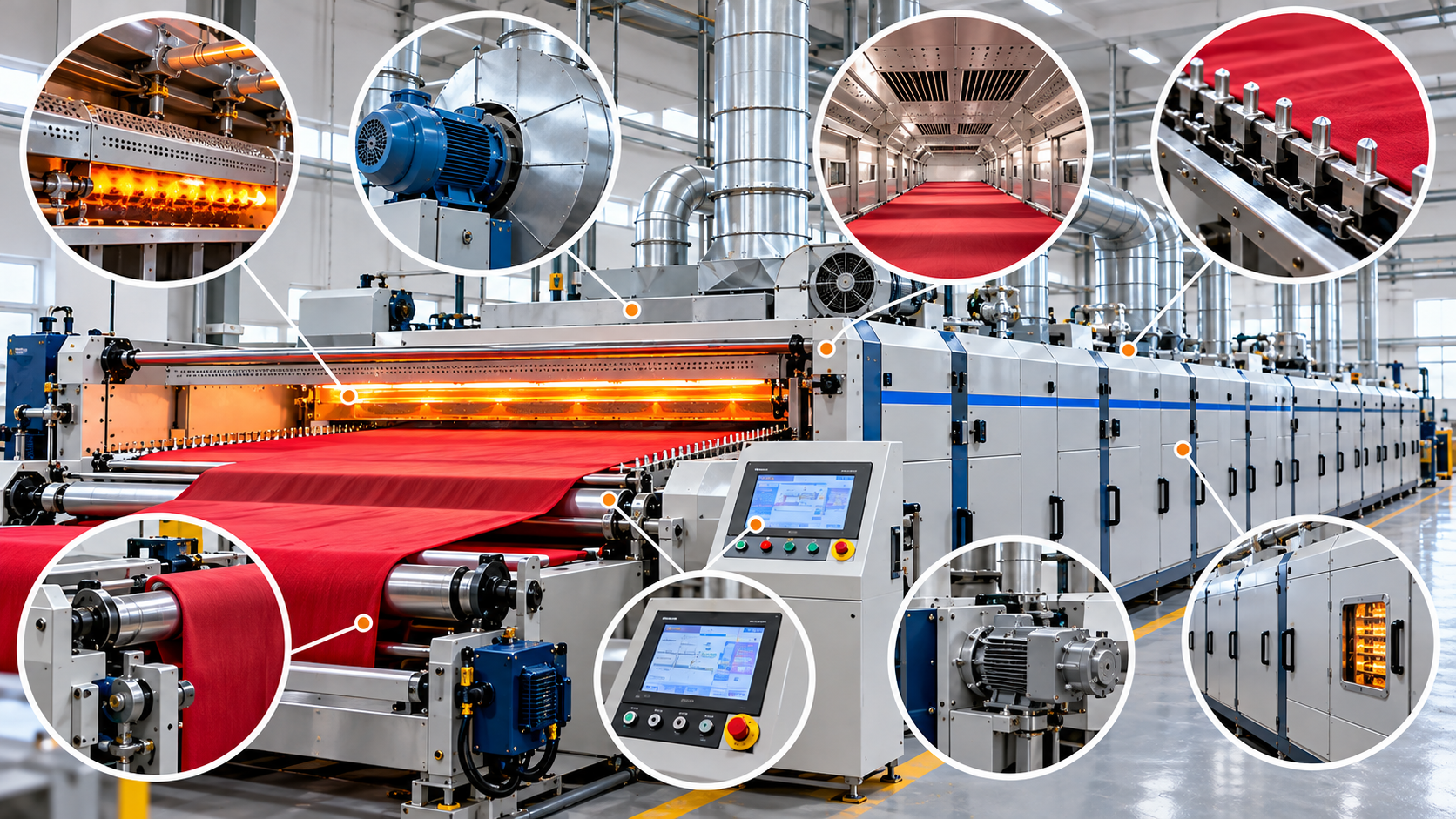
16 Oct 2026
What Specifications Should You Check Before Buying a Stenter Machine?
View16 Oct 2026
What Specifications Should You Check Before Buying a Stenter Machine?
Planning to buy a stenter machine? Learn how to compare working width, temperature control, heating systems, production speed, airflow, energy consumption, safety features, and maintenance support to find the right machine for your textile production needs.
View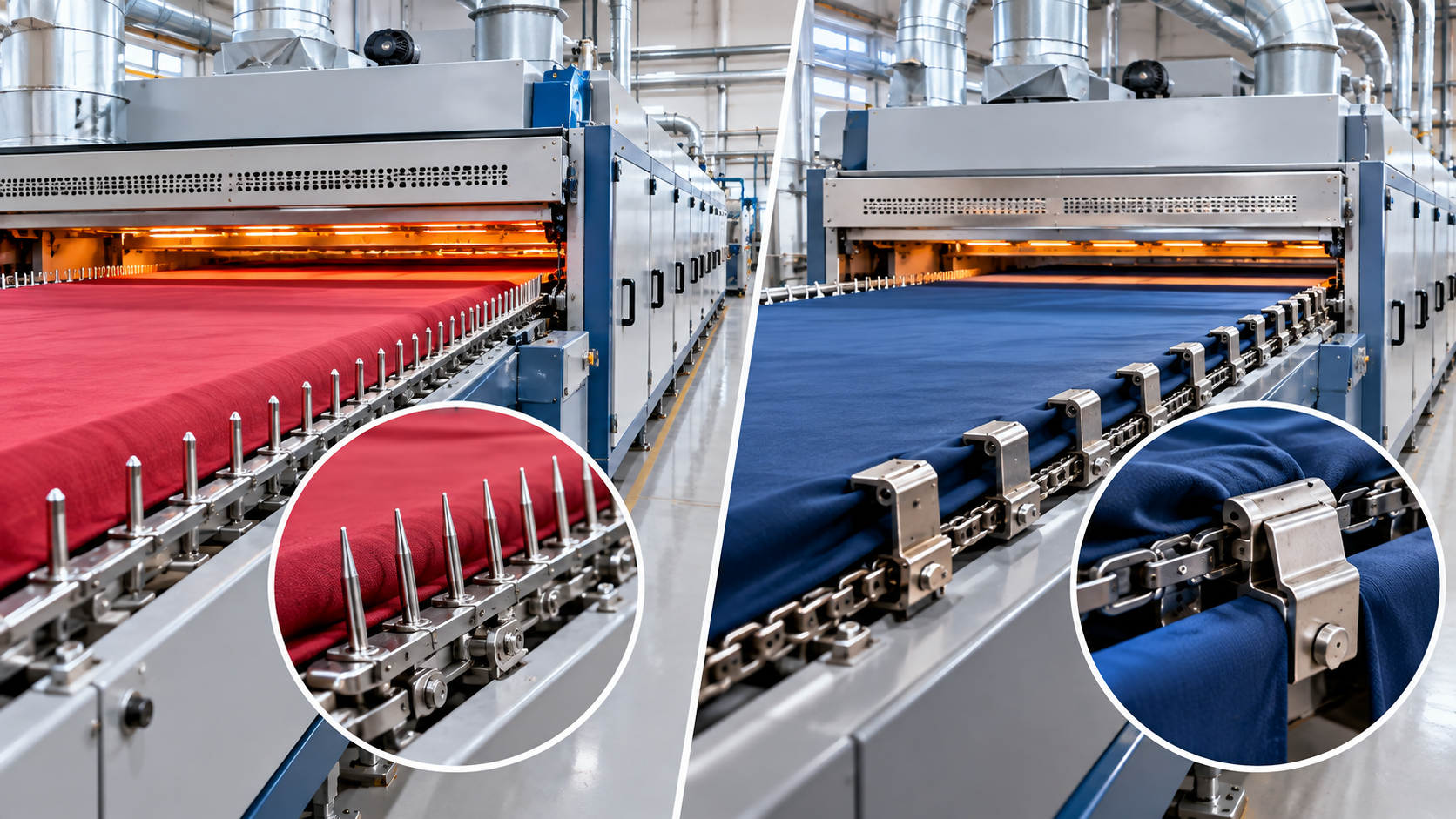
16 Oct 2026
What Is the Difference Between Pin-Type and Clip-Type Stenter Machines?
View16 Oct 2026
What Is the Difference Between Pin-Type and Clip-Type Stenter Machines?
Pin-type and clip-type stenter machines hold fabric edges differently during drying and heat-setting. Learn how they compare in fabric handling, edge quality, maintenance, and machine selection.
ViewFrequently Asked Questions
Find answers to the most common questions about our machines, services and support.
No. It can help improve dimensional stability, control width, and apply suitable heat-setting, but it cannot eliminate every type of shrinkage. Some fabrics require additional finishing processes.
Pins or clips hold the fabric edges while chains carry the material through the machine. The chain spacing can be adjusted to achieve the target width.
It can help control width and processing tension, but cotton may still shrink during washing. Mechanical compaction or other suitable finishing methods may be required to meet low-shrinkage specifications.
Overfeed helps control how much fabric enters the machine relative to the speed at which it moves through the finishing section. Correct adjustment can reduce excessive lengthwise tension.
Excessive temperature may cause shade changes, yellowing, fibre damage, or other defects. The correct temperature depends on the fibre, fabric construction, and finishing process.
Measure a marked fabric sample before and after washing or testing, then calculate the percentage change in length and width. Compare the results with the required product specifications.