Blog
Types of Collar Knitting Machines: Features, Gauges & Applications
By Ramana Machines · September 19, 2026
Explore the types of collar knitting machines, available gauges, machine configurations, collar designs, knitting functions, and applications. Learn how gauge, working width, systems, and production requirements affect machine selection.
Types of Collar Knitting Machines: Features, Gauges and Applications
Collars are an important component of sweaters, shirts, uniforms, sportswear, and other knitted garments. Different products require different collar structures, widths, yarns, and levels of production flexibility. For this reason, choosing the right collar knitting machine depends on more than just machine size or price.
The machine gauge, knitting width, number of systems, automation, yarn feeding arrangement, knitting functions, and production requirements all influence the type of collar that can be produced.
This guide explains the main types, features, gauges, and applications to consider when selecting equipment for collar production.
What Are Collar Knitting Machines?
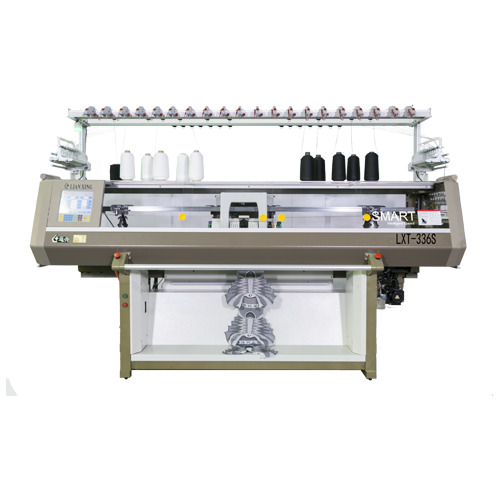
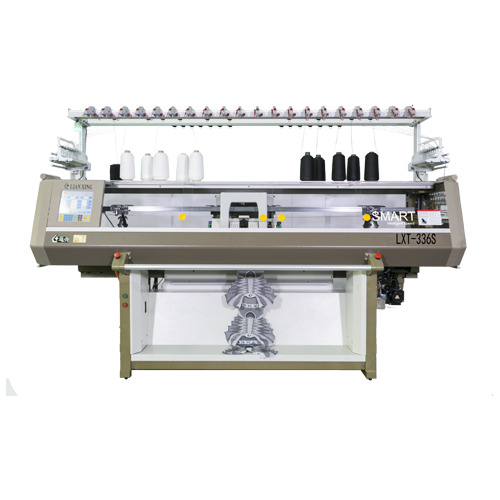
Collar knitting machines are designed for producing knitted collars and other narrow knitted components such as cuffs, borders, tapes, and garment trims.
They work using needles arranged along a needle bed. Yarn is supplied through feeders, while the carriage controls needle movement and stitch formation. Depending on the machine configuration, different knitting structures, widths, patterns, and finishing effects can be produced.
Modern computerized machines provide greater control over stitch settings, needle selection, transfers, racking, take-down, and other knitting functions.
Main Types of Collar Knitting Machines
There is no single configuration suitable for every collar application. Machines can differ according to gauge, knitting system, working width, automation, and knitting functions.
1. Single-System Collar Knitting Machines
A single-system configuration is designed around one knitting system. It can be suitable for production requirements where the required collar structures and production volume do not require multiple systems.
Single-system machines can be considered for straightforward collar designs and applications where consistent production is the main requirement.
2. Multiple-System Collar Knitting Machines
Machines with two or more systems can provide additional knitting flexibility and may support more complex production requirements.
Depending on the configuration, systems can work separately or together for different knitting operations. This can be useful when producing different collar designs, transfer structures, or products requiring more than one knitting operation.
The specifications you shared include configurations such as 1 Sys, 1+1 Sys, 2 Sys, 2+2 Sys, and 3 Sys.
The required number of systems should be selected according to the collar designs, production volume, and knitting functions required.
Collar Knitting Machine Gauges
Gauge is one of the most important specifications when selecting a collar knitting machine.
Gauge refers to the spacing of the needles on the needle bed. Different gauges are suitable for different yarns, stitch structures, fabric appearances, and applications.
The GLX specifications shared for this guide include:
- 14G
- 16G
- 18G
14G Collar Knitting Machine
A 14G collar knitting machine can be considered for applications requiring a comparatively finer knitted structure while still providing flexibility for various garment components.
The suitable yarn and final collar structure should always be checked against the machine specifications before production.
16G Collar Knitting Machine
A 16G collar knitting machine provides another commonly used gauge option for knitted garment components. It can be suitable for different collar designs depending on yarn selection, stitch settings, and production requirements.
18G Collar Knitting Machine
An 18G collar knitting machine is suitable for applications where a finer gauge is required. It can be considered for finer collar structures and detailed knitted components when the yarn and product specifications are compatible.
How to Choose the Right Gauge?
The correct gauge should not be selected simply because one gauge is considered more advanced than another.
Consider:
- Yarn thickness
- Collar structure
- Required fabric appearance
- Stitch density
- Product type
- Collar dimensions
- Production requirements
- Required pattern detail
For example, a production unit working with different yarns and collar designs may need a different gauge from a unit producing one standard collar design continuously.
Knitting Width and Collar Applications
Working width is another important specification.
The specifications shared for the GLX machine include knitting widths of:
52", 60", 66", 72", and 80".
The required knitting width depends on the products being produced and the desired production flexibility.
A suitable knitting width can support different collar sizes and related knitted components. When evaluating applications, consider both your current requirements and the types of products you may produce in the future.
Collar Designs and Knitting Structures
Different collar applications can require different knitting structures.
Depending on machine configuration and programming capabilities, collar production may include:
- Plain knitted collars
- Rib-style structures
- Patterned collars
- Jacquard designs
- Striped designs
- Decorative structures
- Different edge constructions
- Narrow and wider knitted components
The machine specifications you provided include functions such as single needle control, no-dash jacquard, and 3D knitting structures.
These functions can provide additional flexibility when developing different collar designs.
Racking and Transfer Functions
Racking and transfer functions are important when producing certain knitted structures.
The shared specifications include an AC servo motor-controlled racking system with fine micro-adjustment. The machine can also use a combined transfer cam arrangement for different transfer operations.
These functions can help support more varied collar designs and knitting structures.
When comparing machines, it is useful to understand exactly which transfer and racking functions are available rather than comparing systems only by their names.
Small Carriage System
The specifications provided include a 5.2-inch carriage per system and a total carriage size of approximately 17.5 inches.
A smaller carriage configuration can support fast carriage movement and quick reversing, depending on the machine design and operating conditions.
Carriage design can affect production efficiency, especially when the machine is being used for repeated collar production.
Dynamic Stitch and Stitch Control
Stitch control is important for maintaining consistent collar dimensions and appearance.
The shared specifications include a closed-loop stitch motor control system designed to help control stitch conditions during knitting.
This type of control can be useful when different tightness or stitch requirements are needed within a production program.
For collar applications, consistent stitch control is important because changes in stitch length or tightness can affect the final dimensions and appearance of the collar.
Sinker and Take-Down Systems
The sinker system and take-down system also influence knitted fabric formation.
The specifications provided include a stepper-motor-controlled sinker system with adjustment for different knitwear requirements. An additional take-down arrangement includes a compound main roller and torque motor control, with adjustable high-speed and low-speed operation.
These systems can be important for applications where stable fabric movement and consistent stitch formation are required.
Yarn Feeding and Collar Production
Yarn feeding must remain consistent throughout the knitting process.
The shared specifications include multiple yarn feeders positioned along the guide rail, with options for switching between feeders at different positions on the needle bed.
Depending on the collar application, yarn feeding flexibility can be useful for different colours, yarn types, patterns, and knitting structures.
Operators should always match yarn type, yarn tension, feeder settings, and machine gauge with the production requirement.
Protection and Automatic Alarms
Modern knitting equipment can include protection systems that monitor operating conditions.
The specifications shared include automatic alarms for conditions such as:
- Yarn breakage
- Floating knots
- Rewinding
- End of knitting
- Racking failure
- Needle jack crash
- Programming errors
Such protection features can help operators identify problems quickly and reduce the risk of continuing production under unsuitable conditions.
Applications of Collar Knitting Machines
Collar knitting equipment can be used across several garment and textile applications.
Common applications include:
- Sweater collars
- Polo shirt collars
- T-shirt collars
- Sportswear collars
- School and corporate uniform collars
- Fashion garment collars
- Rib collars
- Garment cuffs
- Knitted borders
- Decorative garment components
- Narrow knitted parts
The appropriate gauge, knitting width, system configuration, and knitting functions depend on the specific application.
Choosing a Machine According to Production Requirements
Before selecting equipment, define your production requirements clearly.
Consider:
Product: What type of collar or knitted component will you produce?
Gauge: Which gauge is compatible with your yarn and required structure?
Width: What working width is required?
Systems: Do you need a single-system or multiple-system configuration?
Design: Do you need plain, rib, jacquard, transfer, or other structures?
Volume: What quantity do you expect to produce?
Automation: How much computerized control and programming flexibility do you require?
Yarn: Which yarn types, thicknesses, and colours will be used?
Support: Is installation, operator training, technical support, and spare parts assistance available?
A machine that matches the application and production requirements can be more practical than selecting equipment based only on a higher specification.
What to Check When Comparing Collar Knitting Machines
When comparing different machines, create a specification checklist covering:
- Gauge
- Knitting width
- Knitting speed
- Number of systems
- Carriage configuration
- Knitting functions
- Racking system
- Transfer cam
- Stitch control
- Sinker system
- Take-down system
- Yarn feeders
- Safety protection
- Control system
- Power requirements
- Software and programming
- Spare parts availability
- Technical support
This makes it easier to compare machines according to actual production needs.
Spare Parts and After-Sales Support
Machine selection should also include consideration of long-term support.
Components such as needles, feeders, sensors, cams, electronic parts, and other wear components may eventually require inspection or replacement.
Working with a reliable textile machinery spare parts supplier can help reduce delays when replacement components are needed.
Technical support is also useful for installation, commissioning, operator training, troubleshooting, and maintenance.
How to Identify the Best Collar Knitting Machines for Your Application
Instead of looking for one machine that is described as the best collar knitting machines, compare equipment according to your actual production requirements.
The right choice depends on the required gauge, yarn, collar design, knitting width, production volume, automation level, available knitting functions, and after-sales support.
A machine suitable for high-volume production of one collar design may not have the same requirements as equipment intended for multiple collar designs and smaller production batches.
Why Choose GLX Collar Knitting Machines from Ramana Machines
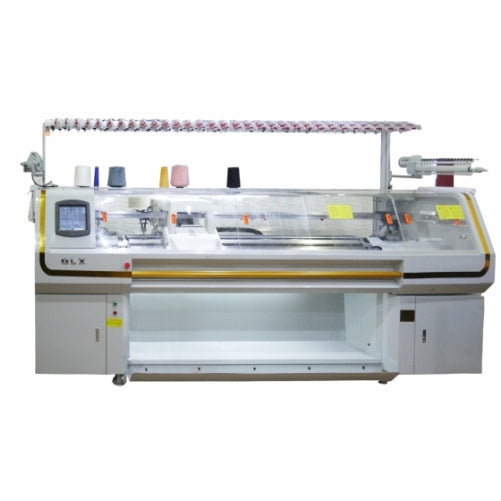
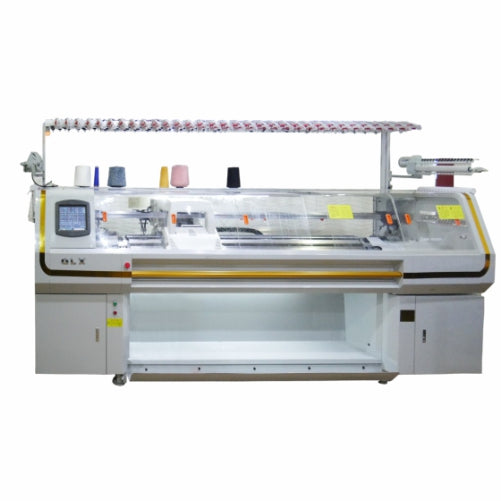
Ramana Machines offers GLX collar knitting machines for businesses looking for equipment for collar and related knitted-component production.
Based on the GLX specifications shared for this guide, the available configurations include 14G, 16G, and 18G gauges, with knitting widths of 52", 60", 66", 72", and 80". Depending on configuration, the machines are available with 1 Sys, 1+1 Sys, 2 Sys, 2+2 Sys, and 3 Sys options.
The specifications also include features such as servo-controlled knitting speed, small carriage systems, single-needle control, jacquard and 3D knitting functions, racking and encoder control, transfer cam systems, dynamic stitch control, sinker adjustment, intelligent traction control, additional take-down, multiple yarn feeders, and automatic protection and alarm functions.
Ramana Machines supports customers with machine selection based on their production requirements, along with sourcing, import and distribution, installation assistance, operator training, spare parts, and after-sales technical support.
If you are planning collar production, expanding your garment production line, or comparing different gauge and machine configurations, Ramana Machines can help you evaluate suitable GLX options according to your required applications and production needs.