
Blog
Warp Knitting Machine Maintenance Checklist: Daily, Weekly, and Monthly Guide
By Ramana Machines · October 10, 2026
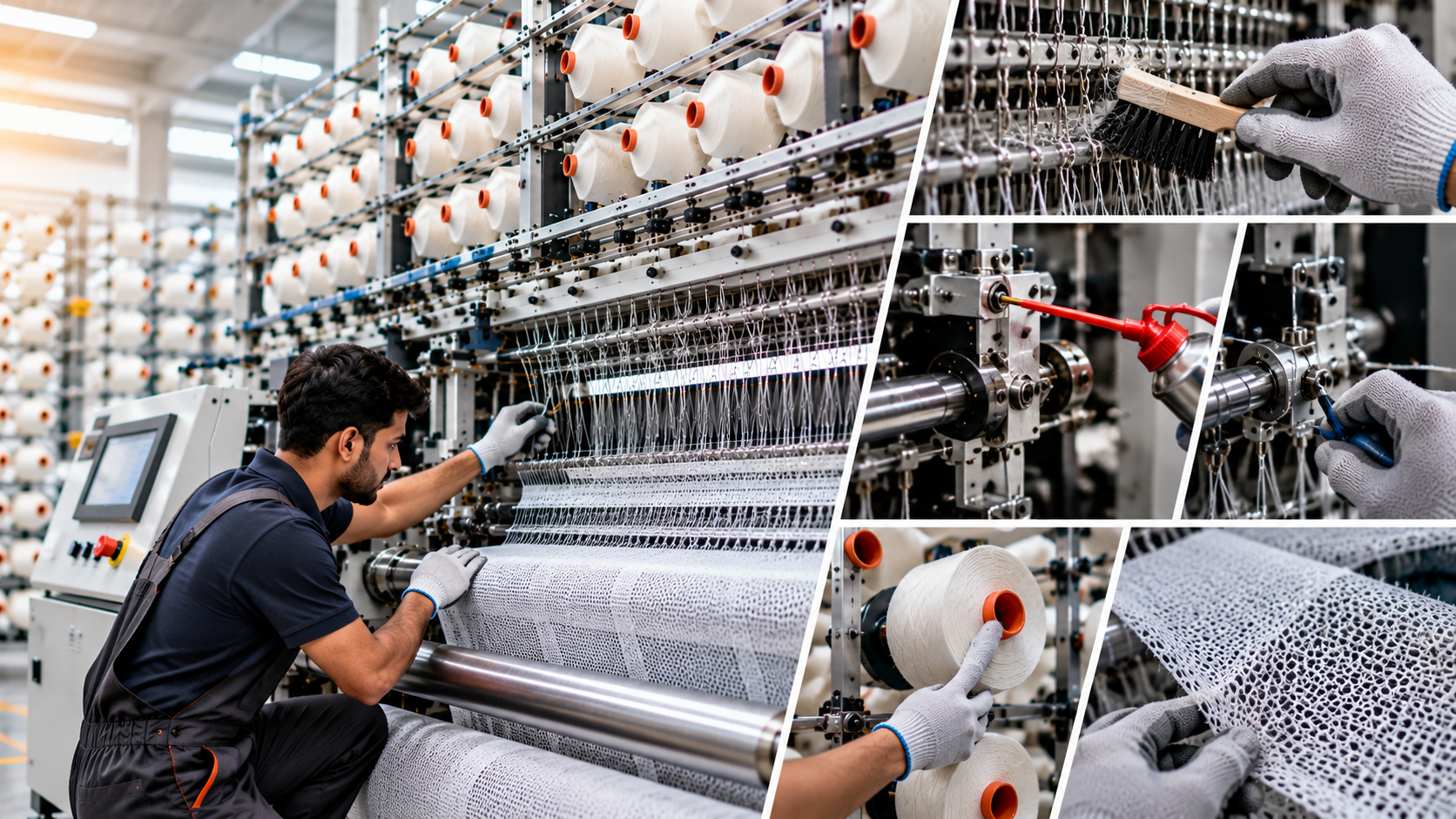
Keep your warp knitting machine in excellent operating condition with a practical daily, weekly, and monthly maintenance checklist. Learn how to inspect needles, clean yarn paths, check lubrication, tighten fasteners safely, identify mechanical wear, and maintain accura
Daily Warp Knitting Machine Maintenance Checklist
Daily maintenance helps identify minor mechanical issues before they develop into production interruptions. Operators should inspect the machine at the beginning and end of each shift, following the manufacturer's safety and maintenance instructions.
1. Clean the Machine and Remove Lint
Lint, loose fibres, dust, and yarn waste can accumulate around the knitting zone, guide bars, yarn feeders, and other moving components. Excessive buildup can interfere with machine movement, obstruct inspection, and contribute to yarn feeding problems.
Daily cleaning tasks include:
- Remove lint and loose fibres from accessible machine surfaces.
- Clean around needle beds, guide bars, yarn feeders, and yarn tensioning components.
- Remove waste from accessible take-down and fabric collection areas.
- Check for oil deposits, dust accumulation, and contamination near moving components.
- Keep the surrounding production area clean to reduce airborne fibre contamination.
Use suitable cleaning tools and follow the machine manufacturer's instructions. Do not direct compressed air into sensitive bearings, lubrication passages, or electrical components unless the approved procedure specifically permits it.
2. Check the Lubrication System and Oil Levels
Proper lubrication reduces friction, limits premature wear, and supports smooth movement of the machine's mechanical components. Inadequate lubrication may contribute to overheating, abnormal noise, excessive wear, and unplanned downtime.
During daily inspection:
- Check the oil level in the designated reservoir or sight glass.
- Verify that the automatic lubrication system, if fitted, is operating correctly.
- Inspect accessible oil lines for leaks, damage, or blockage.
- Look for unusual oil consumption or lubricant contamination.
- Confirm that specified lubrication points receive oil as required by the maintenance schedule.
Use only the lubricant grade and quantity recommended for the particular machine model. Excessive lubrication can be as problematic as insufficient lubrication because oil may contaminate yarn or fabric and attract lint.
3. Inspect Needles and Knitting Elements
Needles and other knitting elements directly influence loop formation and fabric quality. Damaged, bent, worn, or contaminated components may cause yarn breakage, dropped stitches, holes, and irregular fabric structures.
Check for:
- Bent or damaged needles.
- Worn needle hooks, latches, or other relevant working surfaces.
- Burrs or rough surfaces that may catch yarn.
- Abnormal movement or resistance in knitting elements.
- Visible damage to guide needles, sinkers, or related components where applicable.
Inspect accessible areas before production and investigate recurring defects during operation. Replace damaged components with the correct specifications rather than continuing to run the machine with visibly defective parts.
Detailed needle removal, replacement, timing, and alignment should be performed by trained personnel according to the machine manual.
4. Check the Yarn Path and Feeding System
A clean and correctly aligned yarn path is essential for stable warp knitting production. Yarn passes through several contact points before reaching the knitting zone, and a small obstruction or damaged guide can increase friction or cause repeated yarn breaks.
Daily yarn path inspection should include:
- Yarn guides and guide eyes.
- Tensioning devices and yarn brakes, where fitted.
- Yarn feeders and delivery components.
- Warp beam alignment and visible yarn winding condition.
- Yarn ends for tangling, abrasion, fuzziness, or breakage.
- Correct yarn routing after a beam change or machine setup.
Also verify that yarn moves smoothly without unnecessary rubbing or sudden tension changes. If the same yarn end repeatedly breaks, trace its complete path and inspect each contact point.
5. Check Fasteners, Guards, and Safety Devices
Loose fasteners and damaged guards can create mechanical instability and safety risks. Daily visual checks help operators identify obvious abnormalities before production begins.
Inspect accessible mounting bolts, covers, guards, and components for looseness or visible damage. Check that emergency-stop devices and relevant machine stop-motion systems function according to the approved testing procedure.
Do not tighten precision assemblies indiscriminately. Use the manufacturer's specified torque values and maintenance procedure where applicable. Never bypass a safety interlock to keep production running.
6. Monitor Noise, Vibration, and Fabric Quality
A warp knitting machine may show early signs of mechanical problems through changes in sound, vibration, temperature, or fabric appearance.
During each shift, observe:
- Unusual knocking, grinding, or friction noises.
- Abnormal vibration or unexpected heating.
- Frequent yarn breakage or machine stoppages.
- Dropped stitches, holes, bars, or other fabric defects.
- Irregular fabric take-down or changes in yarn tension.
Record abnormalities and investigate their causes. Stop the machine when a fault creates a safety risk or when the manufacturer's instructions require immediate shutdown.
Weekly Warp Knitting Machine Maintenance Checklist
Weekly maintenance involves a more detailed inspection of components that may gradually wear, accumulate contamination, or develop alignment problems during continuous production.
1. Perform Detailed Cleaning
Clean areas that are not fully accessible during routine daily cleaning. This may include designated sections around guide bars, feeding mechanisms, take-down components, and other accessible assemblies.
Remove accumulated lint and residue using approved methods. Pay particular attention to areas where contamination could interfere with moving parts or yarn movement.
Before removing covers or accessing internal components, isolate the machine as required and follow the manufacturer's maintenance procedure.
2. Inspect Needles, Guide Bars, and Related Components
Examine the knitting elements more closely for wear, misalignment, and mechanical damage.
The weekly inspection should include:
- Needle condition and consistency across the working width.
- Guide bar movement and visible alignment.
- Yarn guide condition and mounting security.
- Sinker or other loop-forming components where fitted.
- Signs of abnormal wear, rubbing, or repeated contact.
- Recurring fabric defects associated with specific machine positions.
Where the machine design requires precision measurement or adjustment, use the manufacturer's specified tools and tolerances. Do not apply universal needle replacement intervals to all machines because component life depends on machine design, production hours, yarn type, and operating conditions.
3. Check Yarn Tension and Feeding Consistency
Uneven yarn tension can contribute to yarn breakage, inconsistent loop formation, and fabric defects. Weekly maintenance provides an opportunity to compare yarn delivery across beams and working positions.
Check yarn tension using a suitable tension meter at the specified measurement points. Review whether the readings remain consistent with the approved production settings.
Inspect the feeding system for slipping, contamination, uneven delivery, or excessive friction. Confirm that tensioning devices and relevant control settings remain suitable for the yarn and fabric construction.
If tension varies significantly, identify the source before adjusting multiple machine settings.
4. Inspect Belts, Drive Components, and Moving Assemblies
The condition of drive components affects machine movement and operating stability.
Weekly inspection may include:
- Drive belts for visible cracks, wear, or damage.
- Pulleys and accessible transmission components.
- Bearings and mounting points for unusual noise or movement.
- Accessible fasteners and machine covers.
- Abnormal vibration or signs of mechanical interference.
- Take-down rollers and associated drive components.
Check belt tension, alignment, and bearing condition according to the manufacturer's procedure. Replace damaged components and investigate recurring mechanical noise rather than treating it as a normal operating condition.
5. Inspect Lubrication Lines and Filters
Where the machine has a central or automatic lubrication system, inspect accessible lines, connections, filters, and indicators according to the prescribed maintenance schedule.
Look for leaks, contamination, blocked passages, and unusual changes in oil consumption. Clean or replace filters only at the intervals and by the methods specified for the particular lubrication system.
6. Review Weekly Maintenance Records
Maintenance records are useful only when they help the production team identify and correct recurring problems.
Review the following information each week:
- Number and duration of machine stoppages.
- Frequency and location of yarn breaks.
- Needle and guide replacements.
- Lubrication issues and oil leakage.
- Fabric defects and quality complaints.
- Outstanding repair work and repeated maintenance findings.
If the same fault appears repeatedly, investigate the underlying cause instead of repeatedly correcting the visible symptom.
Monthly Warp Knitting Machine Maintenance Checklist
Monthly maintenance should focus on deeper inspection, wear assessment, system condition, and planned corrective work. The exact tasks depend on the machine model, operating hours, and manufacturer's recommendations.
1. Inspect Mechanical Alignment and Fasteners
Inspect accessible structural and mounting components for looseness, wear, or movement. Check designated fasteners, mounting brackets, guide bar supports, and other relevant assemblies.
Verify alignment where required by the manufacturer's maintenance schedule. Precision adjustments should be completed by trained technicians using the appropriate measuring equipment.
Do not tighten all fasteners to an assumed torque or alter alignment settings without reference to the machine specifications.
2. Assess Needle Wear and Replace Components Where Necessary
Review needle and knitting-element condition across the working width. Look for recurring damage, uneven wear, burrs, and changes in fabric quality that may indicate a component problem.
Use inspection findings, operating hours, and maintenance history to determine whether replacement is necessary. Replace defective needles or related components with parts that match the machine's specifications.
If damage repeatedly occurs at the same position, investigate the associated yarn path, guide alignment, timing, and other relevant mechanical conditions.
3. Service the Lubrication System
Monthly lubrication maintenance may include a detailed inspection of the oil reservoir, distribution lines, filters, lubrication indicators, and accessible connections.
Check lubricant condition and look for contamination, leaks, or unusual consumption. Carry out oil or filter replacement only when required by the machine manufacturer's schedule or the applicable condition-based procedure.
Record the lubricant type, quantity, replacement date, and any abnormal findings. These records help identify changes in lubrication performance over time.
4. Inspect Motors, Bearings, and Transmission Components
Review motor operation, bearing condition, transmission performance, and other relevant mechanical systems.
Look for abnormal heating, vibration, unusual noise, and signs of wear. Electrical inspections, bearing measurements, and detailed transmission adjustments should be performed by appropriately trained personnel.
For machines with electronic controls or variable-speed drives, inspect relevant fault histories and operating indicators as part of the approved maintenance procedure.
5. Check Sensors, Stop-Motion Systems, and Electrical Components
Warp knitting machines may incorporate sensors, yarn-break detectors, monitoring systems, and other electrical controls. Their correct operation supports reliable production and safe machine operation.
Monthly inspection should cover the applicable items in the manufacturer's maintenance plan, including:
- Yarn-break detection and relevant stop-motion devices.
- Accessible sensor mounting and cleanliness.
- Electrical cables and connectors for visible damage.
- Control-panel indicators and recorded faults.
- Safety devices and interlocks.
- Cooling and ventilation arrangements where fitted.
Electrical cabinets should be cleaned and serviced only by qualified personnel using the specified isolation and cleaning procedures. Do not use liquids or compressed air on sensitive electrical equipment unless expressly permitted.
6. Review Machine Performance and Maintenance History
Monthly maintenance should conclude with a review of machine condition and production performance.
Compare yarn breakage, stoppage duration, fabric defects, maintenance costs, and replacement-part usage over the previous month. Identify recurring faults and plan corrective action.
This review helps maintenance teams decide whether a problem requires a process adjustment, additional inspection, component replacement, or specialist service.
Warp Knitting Machine Maintenance Checklist at a Glance
Maintenance task | Daily | Weekly | Monthly |
| Remove lint and loose fibres | ✓ | ✓ | ✓ |
| Check lubrication level and indicators | ✓ | ✓ | ✓ |
| Inspect visible needles and knitting elements | ✓ | ✓ | ✓ |
| Check yarn path and yarn guides | ✓ | ✓ | ✓ |
| Observe yarn tension and feeding | ✓ | ✓ | ✓ |
| Check visible fasteners and guards | ✓ | ✓ | ✓ |
| Inspect belts and drive components | — | ✓ | ✓ |
| Perform detailed guide bar inspection | — | ✓ | ✓ |
| Inspect lubrication lines and filters | ✓ | ✓ | ✓ |
| Assess component wear and replacement needs | — | ✓ | ✓ |
| Review sensors and electrical fault history | ✓ | ✓ | ✓ |
| Review maintenance records and recurring faults | ✓ | ✓ | ✓ |
Important: This table is a general maintenance framework, not a replacement for the machine's official service schedule. Tasks should be performed at the frequency prescribed by the manufacturer, with immediate inspection whenever an abnormal condition is detected.
How to Maintain a Yarn Warping Machine Alongside a Warp Knitting Machine
Warp preparation is closely connected to knitting performance. A yarn warping machine prepares yarn for beam winding, and variations in winding tension, package condition, or beam preparation can affect the consistency of yarn delivery during subsequent knitting.
To support consistent warp preparation:
- Inspect warping guides and yarn tensioning components.
- Check for damaged yarn ends, crossed yarns, and irregular winding.
- Verify beam condition and mounting arrangements.
- Maintain clean yarn paths and functional tension-control devices.
- Record warping defects that later appear as knitting problems.
An automatic yarn warping machine can improve repeatability when its controls and settings are correctly configured. However, automation does not eliminate the need for cleaning, inspection, tension monitoring, and preventive maintenance.
When yarn breakage repeatedly occurs during knitting, maintenance teams should review both the knitting machine and the upstream warping process to determine where the problem originates.
Common Warp Knitting Machine Maintenance Mistakes to Avoid
Even when a maintenance schedule exists, a few common mistakes can reduce its effectiveness.
Using the wrong lubricant: Incorrect oil or grease can affect lubrication performance, component wear, and fabric cleanliness. Always follow the machine specifications.
Overlooking small yarn guide defects: Minor scratches or misalignment can increase friction and cause repeated yarn breakage.
Ignoring unusual noise and vibration: These may indicate developing mechanical problems that require inspection.
Applying excessive lubrication: Excess oil can contaminate fabric and attract lint.
Replacing parts without identifying the cause: If the same component fails repeatedly, investigate alignment, operating conditions, and related parts.
Skipping maintenance records: Without accurate records, recurring faults and gradual deterioration can go unnoticed.
Performing maintenance without isolation: Cleaning, inspection, and repair must follow the manufacturer's machine isolation and safety procedures.
How to Create an Effective Preventive Maintenance Plan
A useful preventive maintenance plan assigns responsibility, defines inspection intervals, and records the condition of each machine.
Start by preparing a separate maintenance checklist for each warp knitting machine model. Include the machine identification number, operating hours, task description, inspection frequency, responsible person, findings, and corrective action.
Next, train operators to identify visible damage, contamination, abnormal noise, yarn breakage patterns, and lubrication problems. More complex adjustments and repairs should be assigned to trained maintenance technicians.
Finally, review maintenance records regularly. If one machine experiences repeated stoppages or higher yarn breakage than comparable machines, investigate the cause and update the maintenance plan where appropriate.
This approach helps convert maintenance from an occasional repair activity into a structured process for supporting machine reliability, fabric consistency, and production efficiency.
Choosing Computerized Warp Knitting Machines and Technical Support
When purchasing computerized warp knitting machines, manufacturers should evaluate the machine's intended fabric applications, gauge, working width, yarn compatibility, feeding arrangements, control functions, spare-parts availability, and maintenance requirements.
Computerized controls can help manage specified operating parameters and production functions, depending on the machine configuration. They do not remove the need for physical inspection, correct lubrication, needle maintenance, or yarn path checks.
Buyers should also consider the availability of operating manuals, technical documentation, operator training, maintenance guidance, and after-sales support. A suitable machine is one that meets the production requirement and can be maintained effectively throughout its service life.
Working with a reliable textile machinery distributor can help buyers compare machinery specifications, understand equipment options, coordinate sourcing, and clarify the scope of technical support. Confirm service arrangements, warranty conditions, and spare-parts availability before making a purchase decision.
Textile Machinery Solutions from Ramana Machines
Ramana Machines supports textile manufacturers and industrial buyers in exploring machinery options suited to their production requirements. Selecting suitable equipment involves more than comparing purchase prices; yarn compatibility, fabric applications, operating requirements, maintenance needs, and long-term service support also deserve attention.
As a supplier of textile machinery, Ramana Machines assists buyers in identifying suitable equipment options for their manufacturing operations. Whether you are evaluating warp knitting machines, computerized knitting solutions, or yarn preparation equipment, a clear understanding of technical specifications and maintenance requirements can help you make a more informed investment decision. Contact Ramana Machines to discuss your textile machinery requirements and explore suitable solutions for your business.
Related
More insights
10 Oct 2026
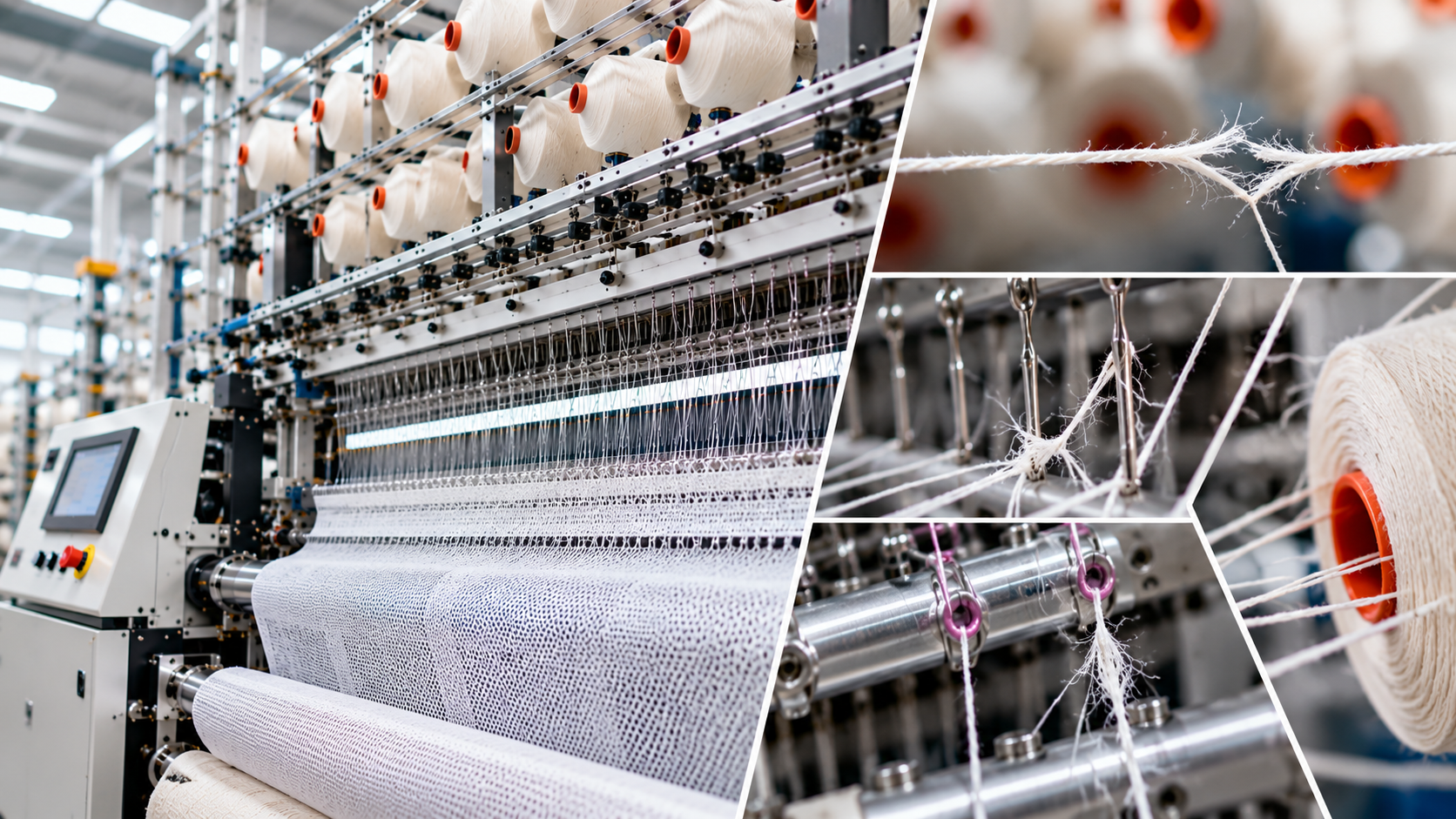
Why Does Yarn Keep Breaking on a Warp Knitting Machine? Causes, Troubleshooting and Prevention
View10 Oct 2026
Why Does Yarn Keep Breaking on a Warp Knitting Machine? Causes, Troubleshooting and Prevention
Learn why yarn breaks on warp knitting machines and how yarn quality, tension, damaged guides, beam unwinding and feeding affect production.
View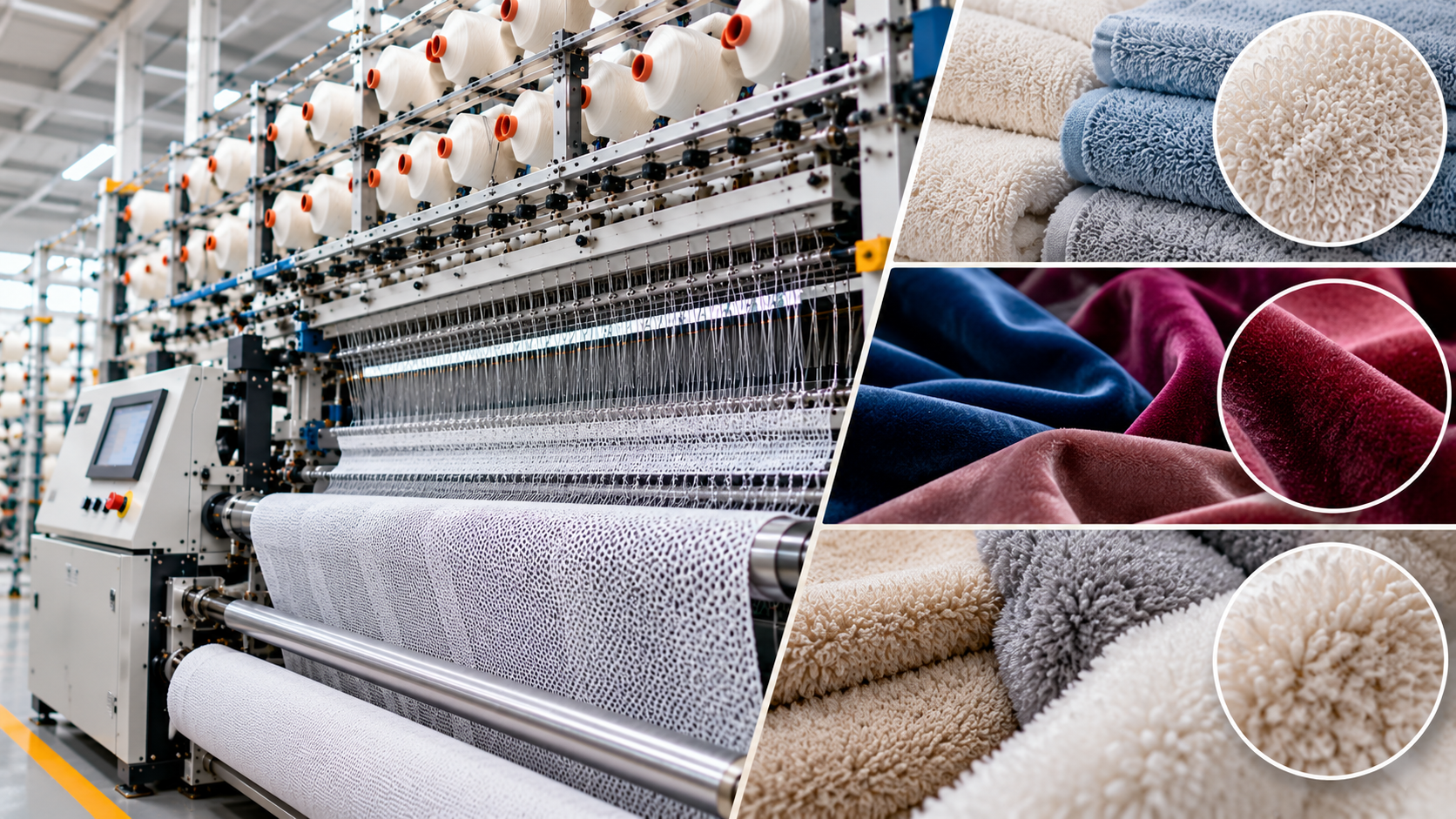
10 Oct 2026
Which Warp Knitting Machine Is Suitable for Terry, Velvet, or Pile Fabrics?
View10 Oct 2026
Which Warp Knitting Machine Is Suitable for Terry, Velvet, or Pile Fabrics?
Learn which knitting machines are suitable for terry, velvet, and pile fabrics. Explore machine configurations, yarn selection, fabric structure, finishing, and buying considerations.
View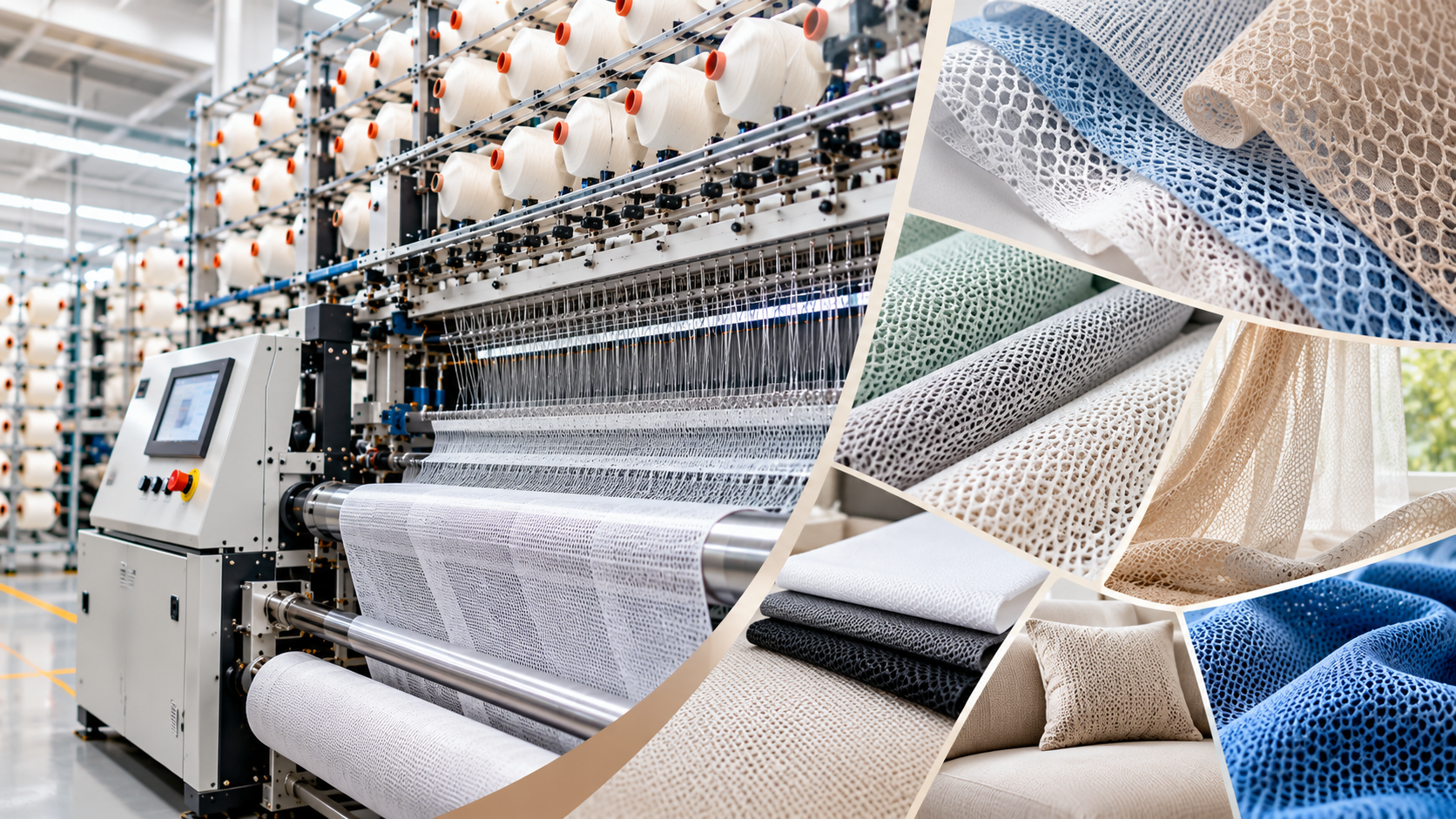
10 Oct 2026
Which Fabrics Can Be Made on a Warp Knitting Machine? A Guide to Types and Uses
View10 Oct 2026
Which Fabrics Can Be Made on a Warp Knitting Machine? A Guide to Types and Uses
Discover which fabrics can be made on a warp knitting machine, including mesh, net, lining, sportswear, lingerie, spacer fabrics, and technical textiles.
ViewFrequently Asked Questions
Find answers to the most common questions about our machines, services and support.
Basic cleaning and visual inspection should generally be performed daily or at each shift, with more detailed mechanical checks scheduled weekly and monthly as appropriate. The actual intervals depend on machine design, production hours, operating conditions, and the manufacturer's maintenance instructions.
A daily checklist should cover cleaning, lubrication indicators and oil levels, visible needle condition, yarn guides, yarn path, feeding components, fasteners, safety devices, abnormal noise, vibration, and fabric quality.
Lubrication helps reduce friction and wear in components designed to receive lubricant. Incorrect or insufficient lubrication can contribute to overheating, mechanical wear, and breakdowns, while excess oil can contaminate yarn and fabric.
Look for visible bending, damage, burrs, wear, irregular movement, and repeated fabric defects. Detailed inspection should follow the machine manufacturer's procedure, and damaged needles should be replaced with the correct specification.
Keep yarn guides clean and undamaged, maintain stable tension, inspect feeding components, monitor beam unwinding, and check knitting elements for wear. Record repeated breakage locations to identify the underlying cause.
Preventive maintenance consists of scheduled inspection, cleaning, lubrication, and component checks intended to reduce the likelihood of failure. Corrective maintenance addresses a fault after it has been detected or a component has failed.
Computerized controls may improve the management of certain operating functions, but the machine still requires routine cleaning, lubrication, mechanical inspection, yarn path checks, and electrical maintenance. Maintenance needs depend on the machine design and operating conditions.
There is no universal replacement interval for all warp knitting machines. Needle replacement depends on wear, yarn type, machine speed, operating hours, fabric requirements, and the manufacturer's recommendations. Replace damaged needles promptly when inspection identifies a problem.
Maintain records of cleaning, lubrication, inspections, yarn breakage, machine stoppages, faults, component replacements, operating hours, corrective work, and technician visits. These records help identify recurring problems and support maintenance planning.
Yes. Uneven winding, inconsistent yarn tension, crossed ends, and damaged yarn can contribute to unstable yarn delivery and knitting problems. Inspecting the yarn warping machine and warp beam preparation process can help identify upstream causes.
Inspect for obvious loose components, unusual noise, and visible damage, following the machine's safety procedures. A qualified technician should investigate alignment, bearings, drive components, and other potential causes before production resumes if the vibration is abnormal or presents a risk.
Compare machine specifications, fabric applications, yarn compatibility, documentation, spare-parts availability, warranty conditions, technical support, and supplier experience. Verify that the proposed equipment meets your actual production requirements before placing an order.