
Blog
How to Choose the Correct Spreading Method for Different Fabric Types
By Ramana Machines · November 23, 2026
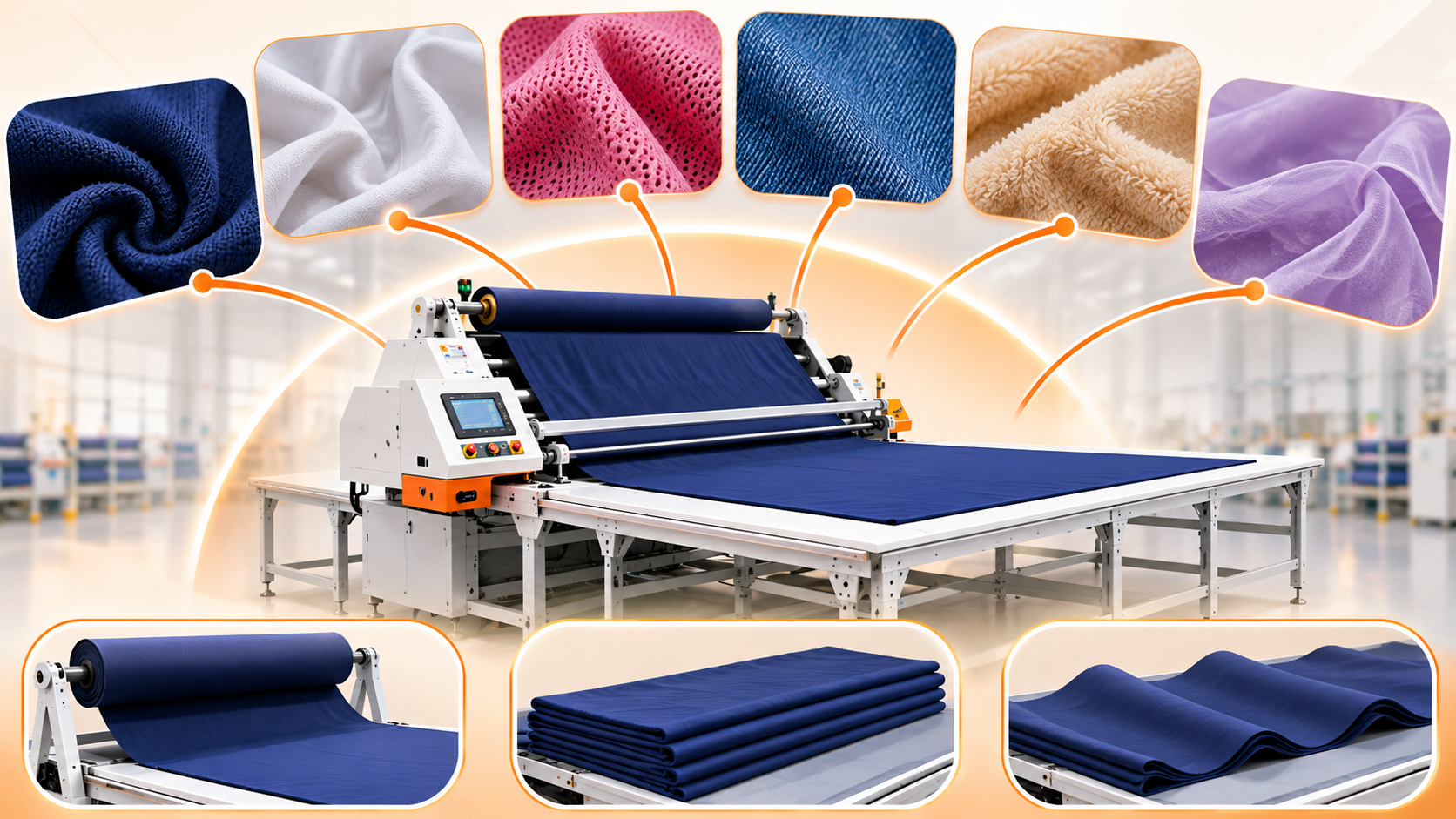
Learn how to choose the right fabric spreading method for woven, knitted, stretchable, delicate and printed fabrics to improve cutting accuracy and reduce wastage.
Choosing the correct fabric spreading method is important for maintaining fabric quality, reducing material wastage, and improving cutting accuracy in garment production. Different fabrics have different properties, such as stretchability, thickness, weight, surface texture, and tendency to wrinkle. Therefore, a spreading method that works well for woven cotton may not be suitable for knitted, delicate, or elastic fabrics.
Fabric spreading involves laying multiple layers of fabric on a cutting table in preparation for cutting garment components. The spreading method should be selected according to the fabric characteristics, production requirements, cutting layout, and type of garment being manufactured.
Why Is the Fabric Spreading Method Important?
The correct spreading method helps manufacturers maintain consistent fabric layers throughout the cutting process. Improper spreading can lead to uneven edges, fabric distortion, wrinkles, tension differences, and inaccurate garment dimensions.
Selecting a suitable spreading method can help:
- Maintain consistent fabric alignment across layers.
- Reduce stretching and distortion during spreading.
- Prevent wrinkles, folds, and uneven fabric tension.
- Improve cutting accuracy and garment quality.
- Reduce fabric wastage during production.
- Improve productivity in garment manufacturing.
Different Fabric Types and Their Recommended Spreading Methods
Different materials require different handling techniques. Understanding the fabric properties helps manufacturers choose the most suitable spreading method.
1. Woven Fabrics
Woven fabrics such as cotton, denim, polyester, and poplin generally have better dimensional stability than knitted fabrics. They are commonly used in shirts, trousers, uniforms, jackets, and other garments.
Recommended spreading methods:
- Face-to-face spreading
- Face-up spreading
- One-way spreading
- Zigzag spreading, where suitable
The method depends on the fabric design, print direction, garment requirements, and cutting layout. For fabrics with directional patterns, spreading in one direction may be necessary to maintain consistency between garment panels.
2. Knitted and Stretchable Fabrics
Knitted fabrics, including jersey, rib, interlock, and spandex-blended materials, are more sensitive to stretching during spreading. Excessive pulling can change the fabric dimensions and result in inaccurate garment sizes after cutting.
Recommended spreading methods:
- Low-tension spreading
- Relaxed spreading
- Face-up spreading
- Manual spreading for highly sensitive materials
The fabric should be allowed to settle naturally without excessive tension. Using a suitable fabric spreading machine with controlled fabric feeding can help reduce stretching during the process.
3. Lightweight and Delicate Fabrics
Materials such as chiffon, silk, georgette, satin, and lightweight synthetic fabrics can easily develop wrinkles, folds, or surface damage during spreading.
Recommended spreading methods:
- Manual spreading with careful handling
- Low-tension spreading
- Face-up spreading
- Shorter lay lengths for improved control
These fabrics require smooth handling and careful alignment. Excessive speed or pressure during spreading may affect the fabric surface and create problems during cutting.
4. Heavy Fabrics
Heavy fabrics such as denim, canvas, upholstery materials, and thick woven textiles require additional attention because of their weight and thickness.
Recommended spreading methods:
- Face-up spreading
- One-way spreading
- Mechanical spreading for larger production volumes
The spreading equipment should be suitable for the fabric roll weight and width. Proper layer alignment is important because heavy fabric layers can shift during handling or cutting.
5. Printed and Patterned Fabrics
Printed fabrics, checks, stripes, and materials with directional designs require accurate pattern alignment to maintain the appearance of finished garments.
Recommended spreading methods:
- One-way spreading
- Face-up spreading
- Manual spreading for pattern matching
- Precision spreading with alignment control
The spreading method should maintain the same pattern direction throughout the lay. For checks and stripes, additional attention may be required to ensure that garment panels match correctly during sewing.
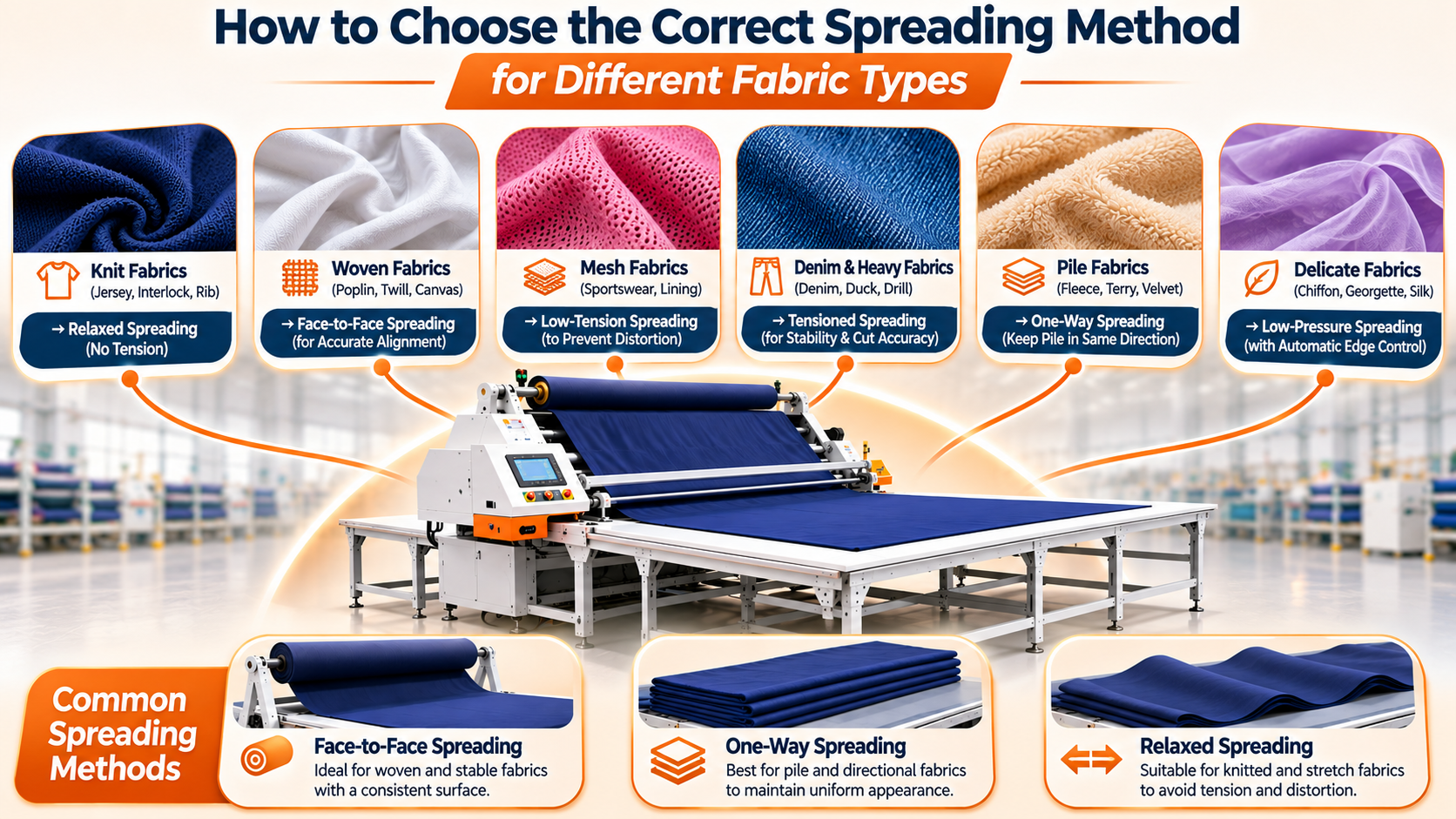
6. Fabrics with Pile or Surface Texture
Velvet, corduroy, brushed fabrics, fleece, and other materials with a directional surface require careful spreading to maintain consistent appearance.
Recommended spreading methods:
- One-way spreading
- Face-up spreading
- Manual spreading for delicate or high-value materials
Maintaining the same fabric direction across all layers is important because the surface texture may appear different when viewed from opposite directions.
Fabric Type vs. Recommended Spreading Method
Fabric Type | Recommended Method | Main Consideration |
| Cotton and woven fabrics | Face-up or face-to-face | Stable alignment |
| Denim | Face-up or one-way | Fabric weight and layer stability |
| Jersey and knitted fabrics | Low-tension spreading | Prevent stretching |
| Spandex and elastic fabrics | Relaxed, low-tension spreading | Avoid dimensional distortion |
| Chiffon and silk | Manual or low-tension spreading | Prevent wrinkles and surface damage |
| Printed fabrics | One-way spreading | Maintain print direction |
| Checks and stripes | Precision or manual spreading | Pattern matching |
| Velvet and corduroy | One-way spreading | Maintain pile direction |
| Heavy canvas | Mechanical spreading | Handle fabric weight properly |
| Fleece and brushed fabrics | One-way spreading | Maintain surface direction |
Manual vs. Machine Spreading
The choice between manual and machine spreading depends on production volume, fabric characteristics, labour availability, and required accuracy.
Manual Fabric Spreading
Manual spreading is suitable for smaller production runs, delicate fabrics, highly stretchable materials, or situations where operators need greater control over fabric alignment.
It allows operators to handle sensitive materials carefully, but it may require more labour and time for large fabric lays.
Automatic Fabric Spreading
Automatic spreading equipment is suitable for garment factories handling larger production volumes and repetitive spreading requirements. It helps maintain consistent spreading speed, fabric alignment, and layer formation.
A fully automatic spreading machine can reduce manual handling and improve production efficiency when the machine configuration is suitable for the fabric type and spreading requirements. Features such as fabric tension control, edge alignment, spreading direction, and roll handling should be considered when selecting equipment.
Factors to Consider Before Selecting a Spreading Method
Before choosing a spreading method, garment manufacturers should evaluate the following factors:
- Fabric elasticity: Stretchable materials require lower spreading tension.
- Fabric weight: Heavy materials need suitable roll handling and spreading equipment.
- Surface texture: Pile and brushed fabrics may require directional spreading.
- Print and pattern direction: Printed designs, checks, and stripes may require one-way spreading.
- Fabric width: The spreading equipment should accommodate the required working width.
- Production volume: Large production runs may benefit from automatic spreading equipment.
- Cutting requirements: The number of layers and cutting method influence the spreading process.
- Fabric relaxation: Some knitted and stretchable materials need relaxation before cutting.
Common Problems Caused by Incorrect Fabric Spreading
Using an unsuitable spreading method can create several problems during garment manufacturing.
Problem | Possible Cause | Solution |
| Fabric stretching | Excessive spreading tension | Use relaxed or low-tension spreading |
| Uneven fabric edges | Poor alignment | Adjust edge alignment and spreading technique |
| Wrinkles between layers | Improper fabric handling | Reduce tension and improve layer formation |
| Pattern mismatch | Incorrect spreading direction | Use one-way or precision spreading |
| Uneven garment sizes | Fabric distortion before cutting | Allow fabric relaxation and maintain consistent tension |
| Fabric shifting | Poor layer stability | Improve spreading conditions and handling |
Choosing the Right Fabric Spreading Machine
Selecting suitable spreading equipment can help garment manufacturers improve fabric handling and cutting preparation. The machine should be selected according to fabric width, roll weight, fabric type, production volume, spreading method, and factory layout.
For stretchable fabrics, tension control is particularly important. For printed and directional fabrics, spreading direction and alignment features should be considered. For high-volume garment production, automatic spreading equipment may help improve consistency and reduce manual workload.
Ramana Machines is a textile machinery supplier in India, supplying and trading textile and garment machinery for different manufacturing requirements. Manufacturers can explore suitable fabric spreading equipment according to their fabric types, production needs, and factory operations.
Related
More insights
21 Nov 2026
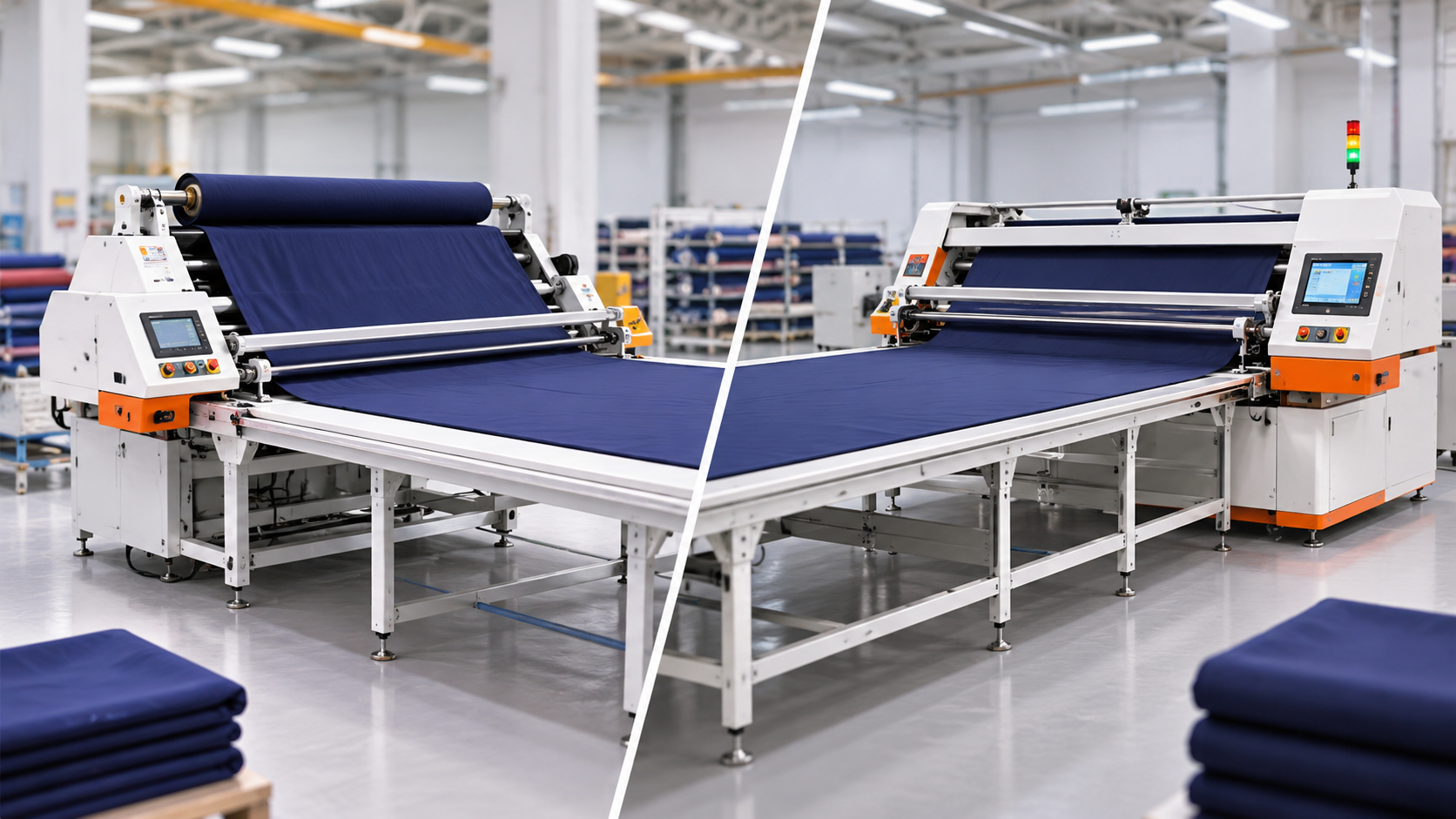
Automatic vs Fully Automatic Fabric Spreading Machine: What Is the Difference?
View21 Nov 2026
Automatic vs Fully Automatic Fabric Spreading Machine: What Is the Difference?
Automatic and fully automatic fabric spreading machines offer different levels of automation. Learn how they differ in operation, fabric handling, production workflow, labour requirements, and investment to choose the right equipment for your garment manufacturing facility.
View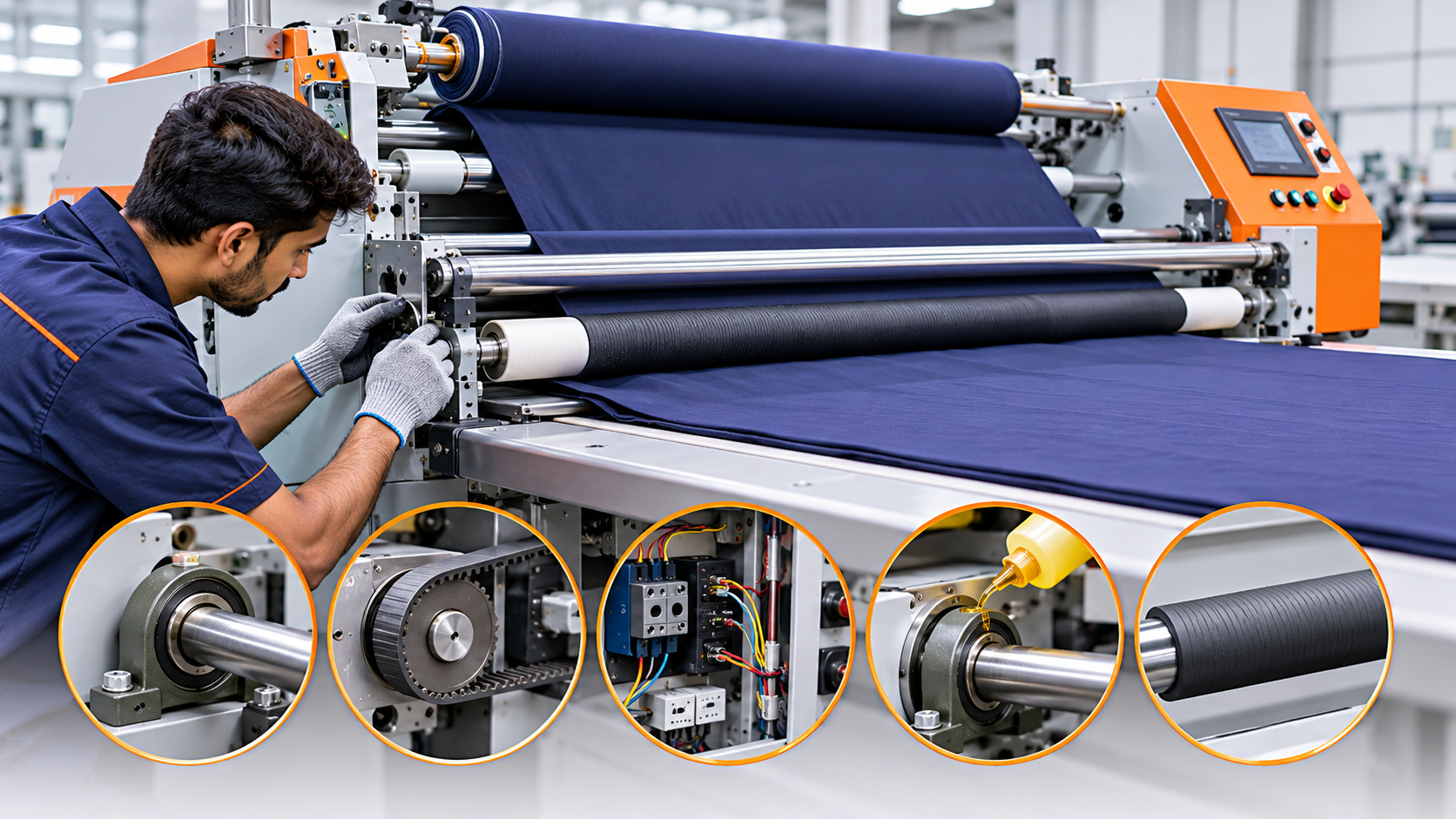
21 Nov 2026
How to Troubleshoot Roller Movement Problems in Automatic Fabric Spreading Equipment
View21 Nov 2026
How to Troubleshoot Roller Movement Problems in Automatic Fabric Spreading Equipment
Roller movement problems can interrupt fabric spreading and affect production efficiency. Learn how to identify and troubleshoot common roller issues, including slow movement, irregular rotation, stoppages, noise, and synchronization faults.
View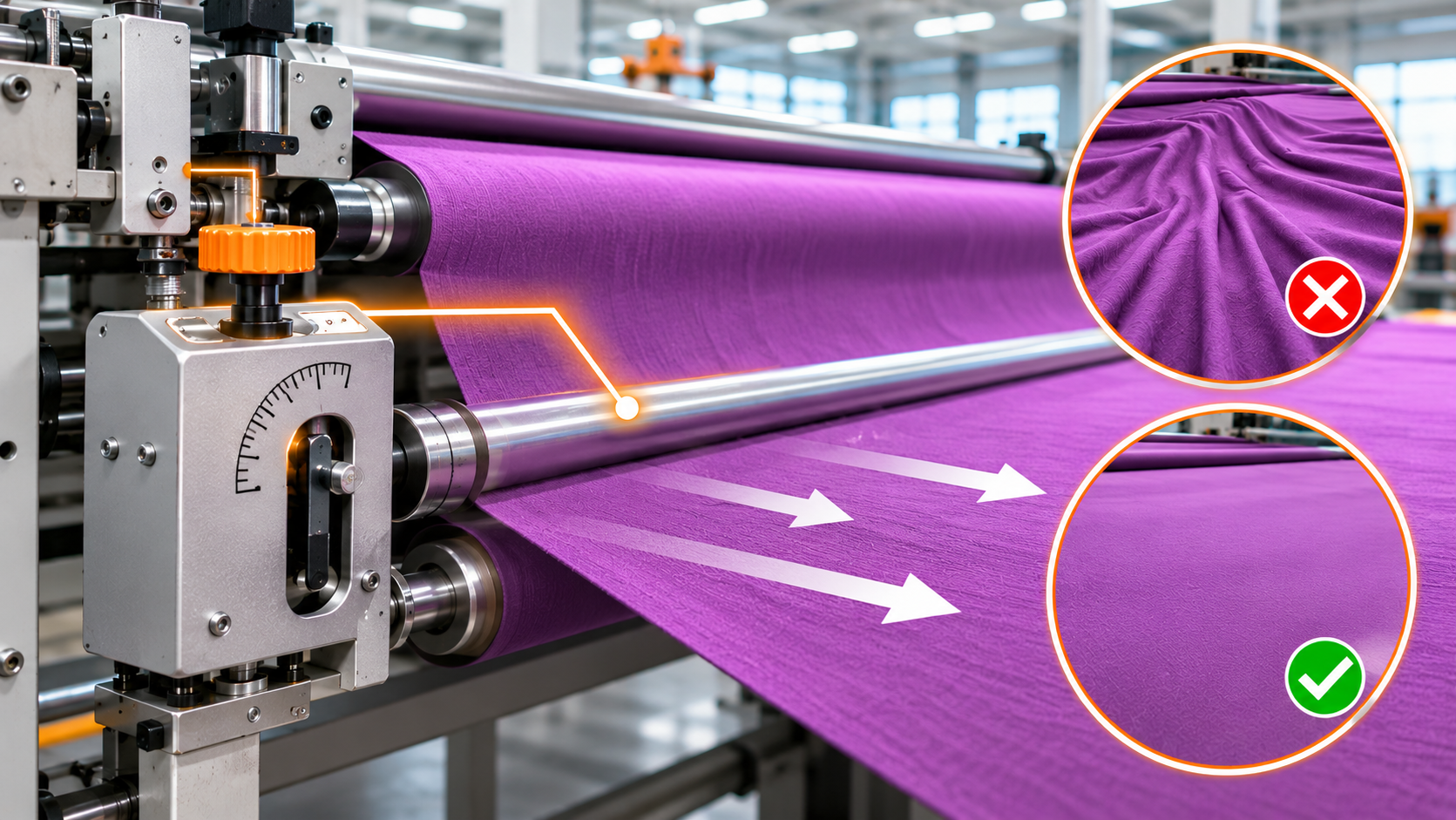
16 Nov 2026
What Is the Function of the Fabric Tension Control System?
View16 Nov 2026
What Is the Function of the Fabric Tension Control System?
A fabric tension control system regulates the force applied during fabric feeding and spreading. Learn about its components, working process, and importance for maintaining consistent fabric movement.
ViewFrequently Asked Questions
Find answers to the most common questions about our machines, services and support.
Low-tension or relaxed spreading is generally suitable for knitted fabrics because it helps reduce stretching and dimensional distortion before cutting.
One-way spreading is commonly preferred for directional prints because it helps maintain consistent print orientation across garment panels.
Yes, suitable automatic spreading machines can handle certain stretchable fabrics when they have appropriate fabric feeding and tension control features. The machine configuration and fabric properties should be checked before selection.
Excessive tension can stretch the fabric and affect its dimensions. When the fabric relaxes after cutting, garment components may become smaller or distorted.
Manual spreading can provide greater control when handling delicate or highly sensitive fabrics. However, suitable low-tension spreading equipment may also be used depending on the fabric and production requirements.