
Blog
Automatic vs Fully Automatic Fabric Spreading Machine: What Is the Difference?
By Ramana Machines · November 21, 2026
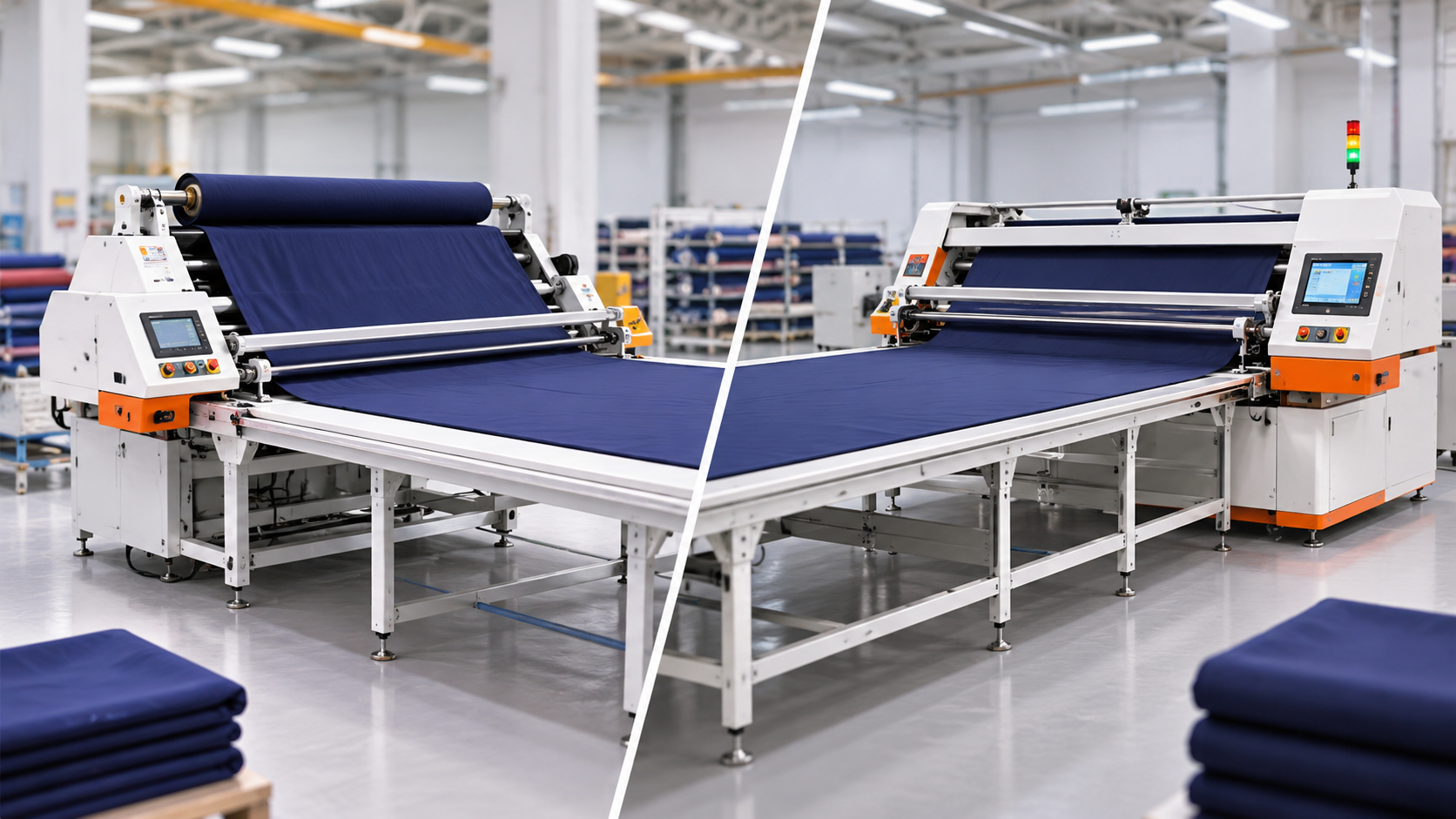
Automatic and fully automatic fabric spreading machines offer different levels of automation. Learn how they differ in operation, fabric handling, production workflow, labour requirements, and investment to choose the right equipment for your garment manufacturing facility.
Fabric spreading is an important process in garment manufacturing, where multiple layers of fabric are arranged on a cutting table before cutting. The spreading method used by a factory can influence production speed, material handling, labour requirements, and the consistency of the fabric lay.
As garment manufacturers expand their production capabilities, automated spreading equipment has become increasingly useful. However, the terms automatic and fully automatic fabric spreading machines are sometimes used interchangeably, even though the level of automation and operator involvement may differ depending on the machine configuration.
Understanding these differences can help manufacturers choose equipment that suits their production workflow, fabric types, and business requirements.
What Is an Automatic Fabric Spreading Machine?
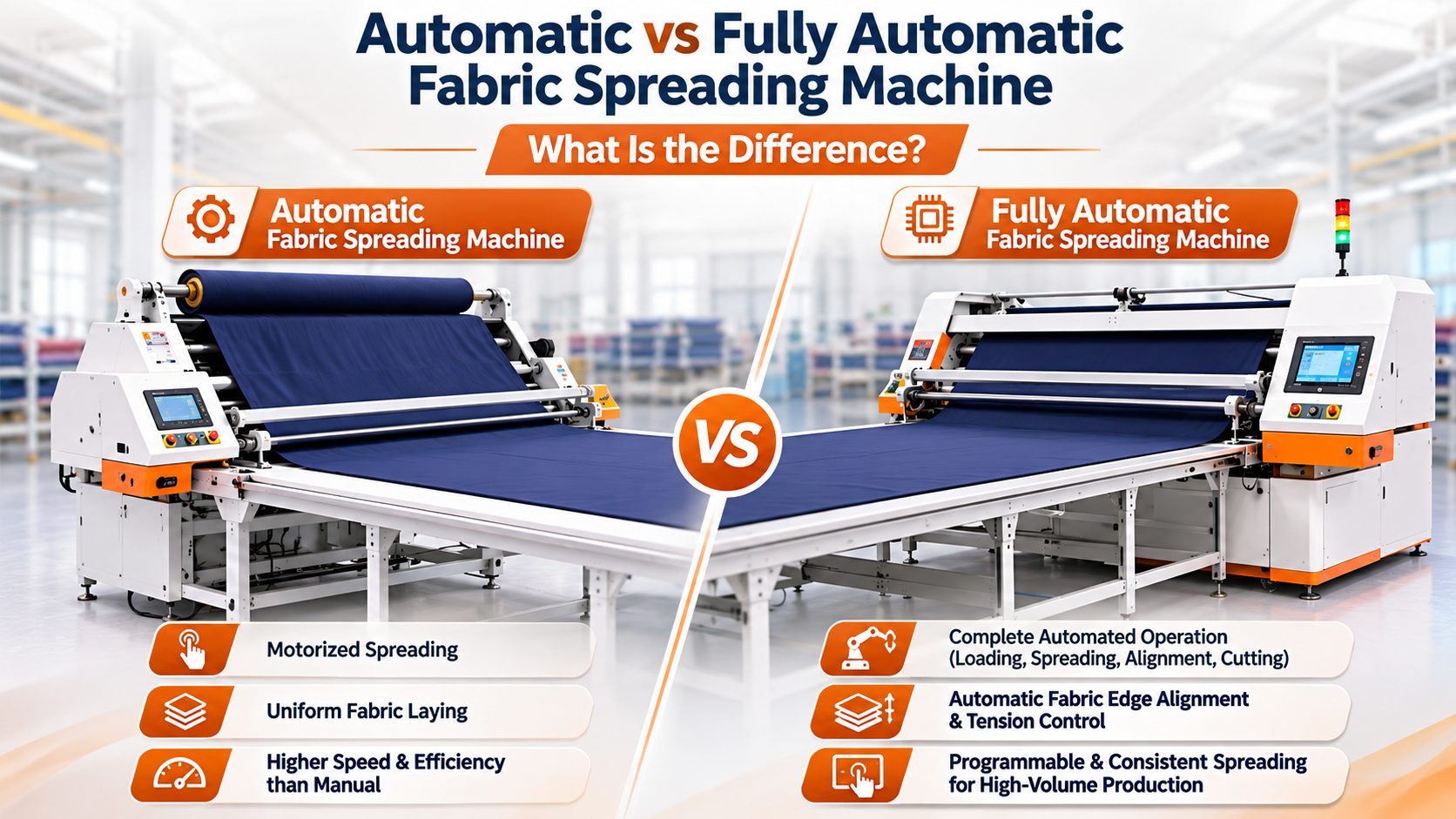
An automatic fabric spreading machine is designed to automate important parts of the fabric spreading process. It generally moves along the spreading table while feeding fabric from the roll and arranging it into layers.
Depending on the machine configuration, the operator may still need to perform certain tasks, such as loading the fabric roll, setting spreading parameters, positioning the machine, or managing the spreading cycle.
Automation helps reduce the physical effort involved in manually carrying and spreading fabric across a cutting table.
Typical functions may include:
- Automated machine movement along the spreading table.
- Controlled fabric feeding.
- Adjustable spreading speed.
- Fabric roll handling.
- Layer placement assistance.
- Operator-controlled starting and stopping.
The exact functions vary between models and manufacturers.
What Is a Fully Automatic Fabric Spreading Machine?
A fully automatic fabric spreading machine is designed to automate a greater number of operations within the spreading workflow. Depending on its configuration, it may offer integrated controls for fabric feeding, machine travel, spreading cycles, and other operational functions.
The objective is to reduce repeated manual intervention and make the spreading process more consistent across production runs.
A fully automatic fabric spreading machine may include features such as:
- Programmable spreading length.
- Automatic machine travel.
- Integrated fabric feeding.
- Automated spreading cycle management.
- Electronic operating controls.
- Automatic stopping at programmed positions.
- Advanced fabric handling functions.
However, the term "fully automatic" does not mean that the machine requires no human involvement. Operators may still need to load fabric, select production settings, monitor the process, inspect the spread, and manage fabric changes.
Automatic vs Fully Automatic Fabric Spreading Machine: Key Differences
The main difference lies in the level of automation and how much operator involvement is required during the spreading process.
Comparison factor | Automatic fabric spreading machine | Fully automatic fabric spreading machine |
| Automation level | Automates selected spreading operations | Automates a wider range of operations |
| Operator involvement | May require more manual adjustments | Generally requires less intervention during programmed cycles |
| Machine movement | Automated movement depending on configuration | May include programmed travel and cycle control |
| Fabric feeding | Automated or assisted feeding | More integrated feeding functions may be available |
| Cycle control | May involve operator-controlled steps | May support programmed spreading cycles |
| Production workflow | Suitable for partially automated operations | Designed for more integrated spreading workflows |
| Operating controls | Basic or intermediate control functions | May offer advanced programmable controls |
| Production requirements | Small to medium or larger production depending on configuration | Often considered for repetitive and higher-volume operations |
| Investment | Depends on specifications and features | May require higher investment due to additional automation |
| Flexibility | Can suit different production arrangements | Depends on programming, machine design, and fabric compatibility |
These are general distinctions. Actual features should be verified from the manufacturer's machine specifications because terminology can vary between suppliers.
1. Difference in Operator Involvement
One of the most noticeable differences is the amount of work required from the operator.
With an automatic machine, certain spreading movements are automated, but the operator may still be involved in adjusting settings, controlling the cycle, or handling fabric at different stages.
A fully automatic system may combine several functions into a programmed workflow, allowing the operator to supervise the process instead of controlling each movement individually.
This can be useful in production environments where spreading operations are repeated throughout the day.
2. Difference in Production Workflow
The production workflow also influences which machine is more suitable.
An automatic machine may fit well into a factory where spreading operations are performed alongside other manual or semi-automated processes.
A fully automatic machine may be more suitable for facilities seeking a more standardised spreading workflow, particularly where the same spreading requirements are repeated across multiple production orders.
For example, a factory producing large quantities of similar garment components may benefit from programmable operations, whereas a factory handling frequently changing orders may prioritise flexibility and ease of adjustment.
3. Difference in Fabric Handling
Both machine types can be designed to handle different fabrics, but the available feeding and handling functions may vary.
Fabric handling requirements depend on:
- Fabric weight and thickness.
- Fabric width.
- Knitted or woven construction.
- Stretch characteristics.
- Roll diameter.
- Directional patterns.
- Production spreading method.
A machine with more automation may provide additional control over fabric movement. However, the machine still needs to be compatible with the materials being processed.
The suitability of a spreading machine should therefore be evaluated using the actual fabrics handled by the factory rather than automation level alone.
4. Difference in Production Speed and Efficiency
Automation can improve the consistency and efficiency of fabric spreading by reducing repeated manual tasks.
However, production speed does not depend only on whether the machine is automatic or fully automatic. Other factors also influence output, including:
- Machine travel speed.
- Fabric feeding performance.
- Spreading length.
- Number of layers.
- Fabric loading and unloading time.
- Operator experience.
- Production layout.
- Fabric characteristics.
A fully automatic machine may improve workflow efficiency in suitable applications, but its actual production output should be evaluated using practical production trials and the manufacturer's specifications.
5. Difference in Labour Requirements
Automatic spreading equipment can reduce the physical effort required to move and spread fabric manually.
Fully automatic systems may further reduce operator involvement during repetitive spreading cycles, depending on the functions available.
The labour requirement of a factory will still depend on its overall production arrangement. Operators may be needed for fabric roll loading, machine setup, inspection, handling completed spreads, and coordination with the cutting department.
When comparing machines, manufacturers should consider the complete workflow rather than calculating labour savings based only on the spreading operation.
6. Difference in Operating Controls
Control systems determine how operators interact with the spreading machine.
An automatic machine may provide controls for movement, speed, feeding, and spreading operations.
A fully automatic configuration may offer additional programming options, digital settings, cycle management, and automated stopping functions.
The usefulness of these controls depends on how frequently the factory changes spreading requirements.
For production environments handling different fabric lengths, layer counts, and spreading arrangements, programmable controls may provide greater convenience.
7. Difference in Investment and Business Suitability
The price of a machine is influenced by its configuration, working width, automation functions, production capacity, and additional equipment.
Generally, a machine with more advanced automation may involve a higher initial investment. However, the difference should be evaluated against its practical benefits.
Factory requirement | Machine type to consider |
| Basic automated spreading operations | Automatic spreading machine |
| Repetitive spreading requirements | Automatic or fully automatic, depending on features |
| Greater automation of spreading cycles | Fully automatic configuration |
| Reduced operator involvement | Fully automatic configuration with suitable functions |
| Flexible production and changing orders | Machine with appropriate adjustment and control features |
| Higher-volume production | Equipment selected according to output requirements |
The right choice depends on the factory's actual workload, available labour, production layout, and budget.
Which Machine Should You Choose?
Before selecting an automatic or fully automatic spreading machine, manufacturers should evaluate their production requirements.
Choose an automatic machine when:
- You want to automate important spreading operations.
- Your factory requires improved fabric handling compared with manual spreading.
- You need flexibility in production arrangements.
- Your production volume does not justify additional automation features.
- You prefer a machine configuration suited to your existing workflow.
Consider a fully automatic machine when:
- Your factory performs repetitive spreading operations.
- You want to automate more stages of the spreading cycle.
- You need programmable operating functions.
- You want to reduce repeated manual intervention.
- Your production requirements justify the additional investment.
The final decision should be based on the functions actually offered by the machine rather than the product name alone.
What to Check Before Purchasing a Fabric Spreading Machine
When comparing machine quotations, consider the following:
- Working width: Confirm that the machine supports the fabric widths used in your factory.
- Automation functions: Identify which operations are automated and which still require manual control.
- Fabric compatibility: Check whether the machine is suitable for your knitted, woven, lightweight, or stretchable materials.
- Spreading methods: Confirm compatibility with the spreading arrangements required for your garment production.
- Control system: Evaluate available operating controls and programmable functions.
- Production capacity: Compare practical output with your daily spreading requirements.
- Technical support: Check the availability of installation assistance, spare parts, and service support.
- Total investment: Consider the machine price, delivery, installation, training, and other applicable expenses.
A detailed comparison of machine specifications can help manufacturers identify the equipment that offers the most suitable balance of automation, flexibility, and cost.
Explore Fabric Spreading Machinery with Ramana Machines
Automatic and fully automatic fabric spreading machines offer different levels of operational automation. Understanding these differences helps garment manufacturers select equipment that supports their production workflow without investing in unnecessary functions.
Ramana Machines is a supplier, distributor, and trader of knitting and textile machinery, including fabric spreading equipment. We help businesses explore suitable machinery options according to their production requirements.
Visit www.ramanainternational.com or contact us at +91 98159-02561 to discuss your fabric spreading machinery requirements.
Related
More insights
21 Nov 2026
How to Troubleshoot Roller Movement Problems in Automatic Fabric Spreading Equipment
View21 Nov 2026
How to Troubleshoot Roller Movement Problems in Automatic Fabric Spreading Equipment
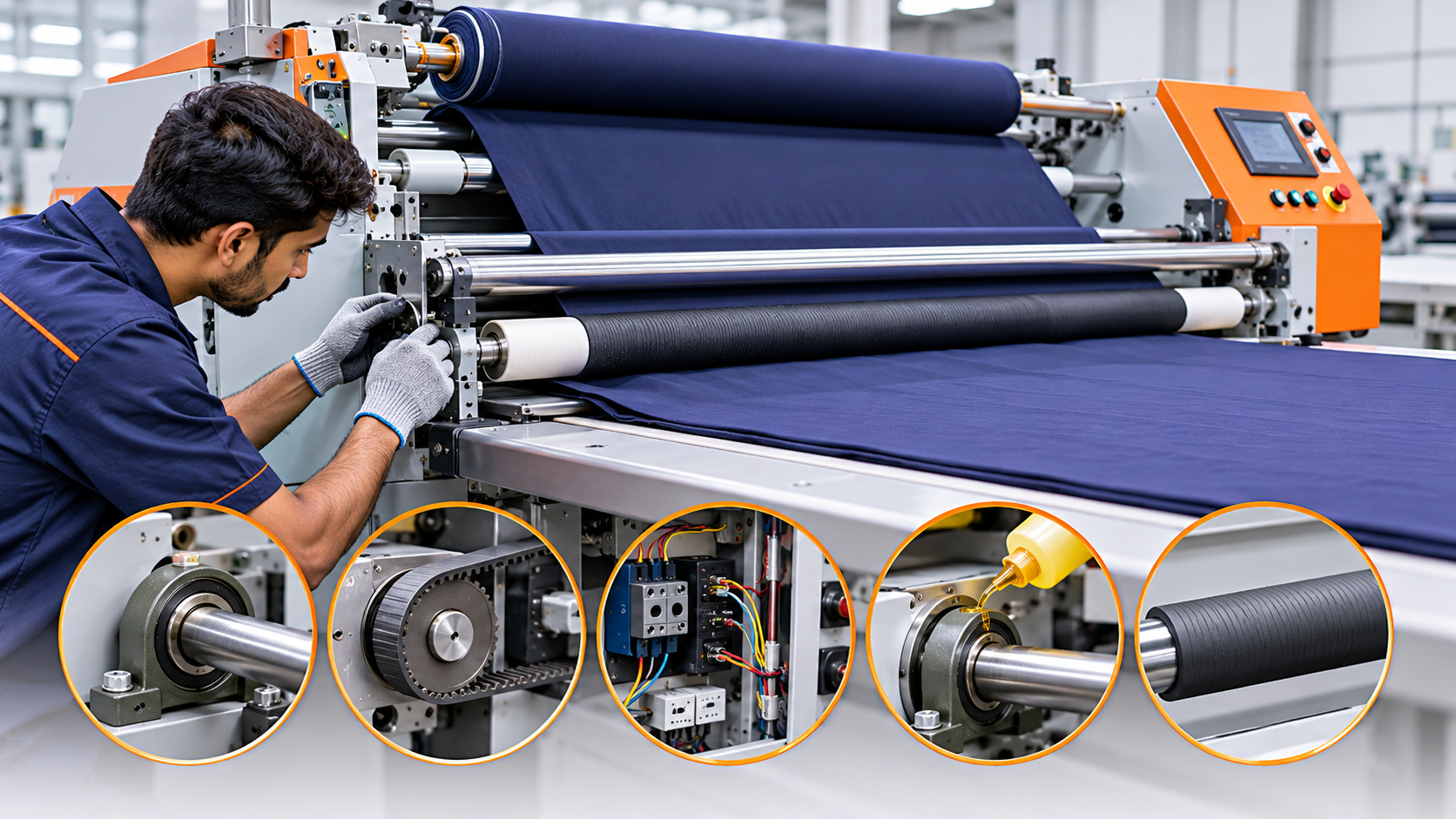
Roller movement problems can interrupt fabric spreading and affect production efficiency. Learn how to identify and troubleshoot common roller issues, including slow movement, irregular rotation, stoppages, noise, and synchronization faults.
View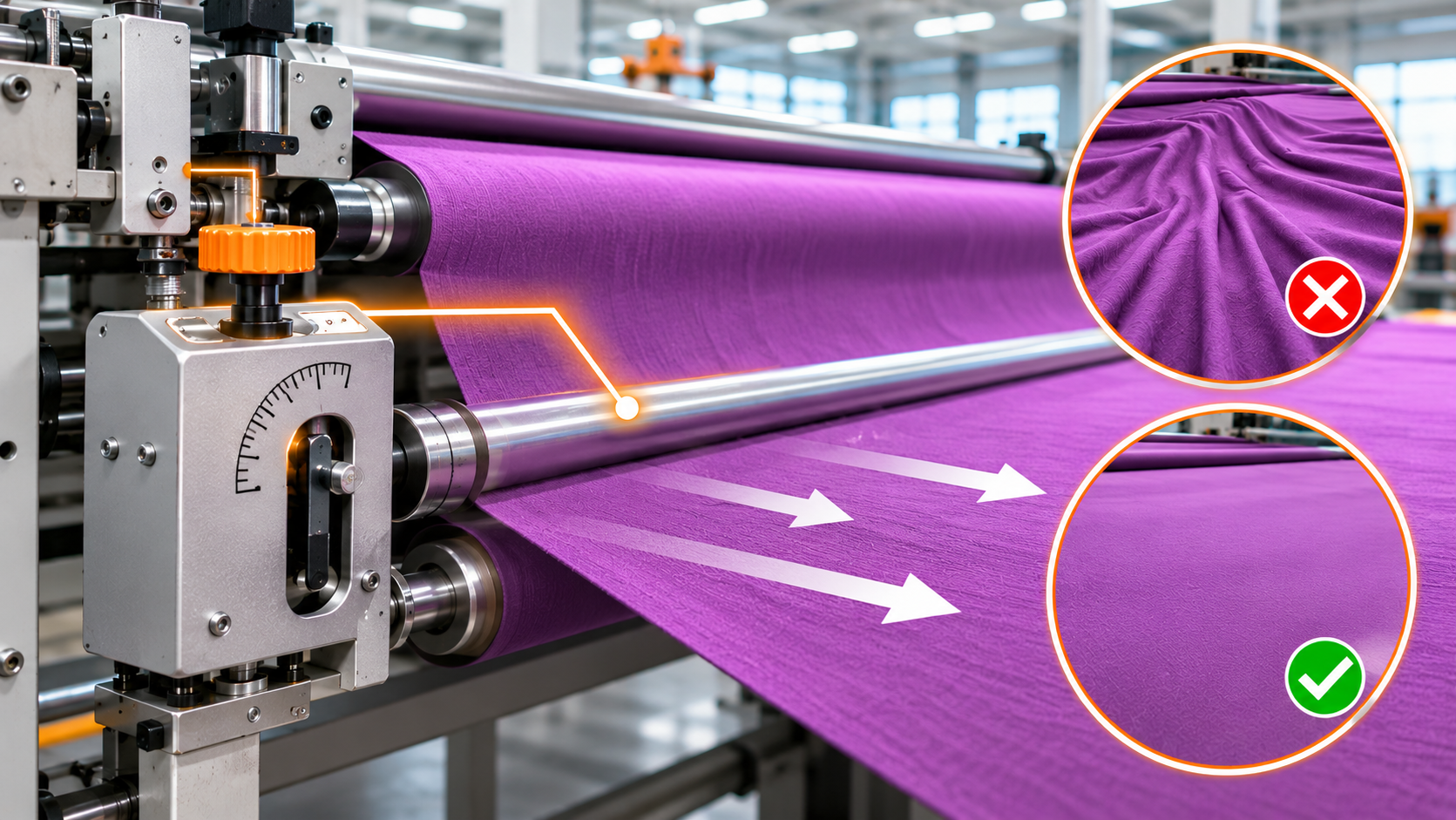
16 Nov 2026
What Is the Function of the Fabric Tension Control System?
View16 Nov 2026
What Is the Function of the Fabric Tension Control System?
A fabric tension control system regulates the force applied during fabric feeding and spreading. Learn about its components, working process, and importance for maintaining consistent fabric movement.
View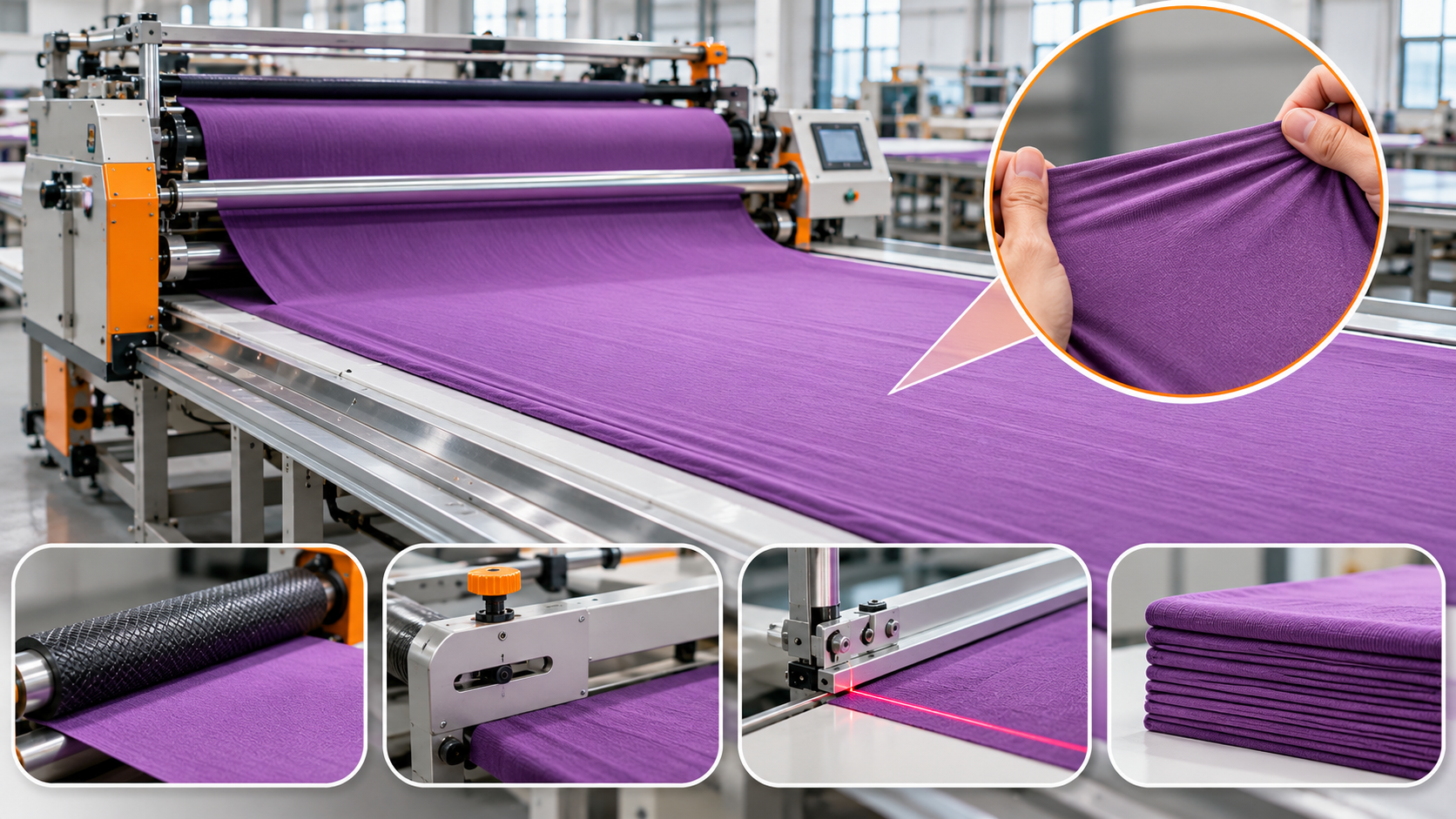
16 Nov 2026
How to Handle Stretchable Fabrics Without Distortion During Spreading
View16 Nov 2026
How to Handle Stretchable Fabrics Without Distortion During Spreading
Stretchable fabrics need careful handling during spreading to prevent unwanted extension and dimensional changes. Explore practical techniques for fabric relaxation, tension control, alignment, and accurate cutting preparation.
ViewFrequently Asked Questions
Find answers to the most common questions about our machines, services and support.
An automatic machine automates selected spreading operations, while a fully automatic machine may integrate a greater number of functions into a programmed spreading workflow, reducing operator intervention.
It may improve workflow efficiency by automating additional operations, but actual spreading speed depends on the machine specifications, fabric type, spreading length, and production conditions.
Yes. Operators may still be required for fabric loading, machine setup, monitoring, inspection, and managing production requirements.
A suitable automatic machine may be sufficient for factories with moderate production requirements. The choice depends on fabric types, working width, daily output, and budget.
Some fully automatic machines can handle knitted fabrics, but suitability depends on their feeding arrangements, fabric handling features, and compatibility with the specific material.
Advanced automation may increase the initial investment. The actual cost depends on machine specifications, working width, available functions, and configuration.
Compare automation functions, working width, fabric compatibility, production capacity, control system, spreading methods, technical support, and total investment.
Yes. Automation can reduce the physical effort and repetitive tasks involved in spreading fabric. The level of labour reduction depends on the machine's functions and production workflow.