
Blog
How to Troubleshoot Roller Movement Problems in Automatic Fabric Spreading Equipment
By Ramana Machines · November 21, 2026
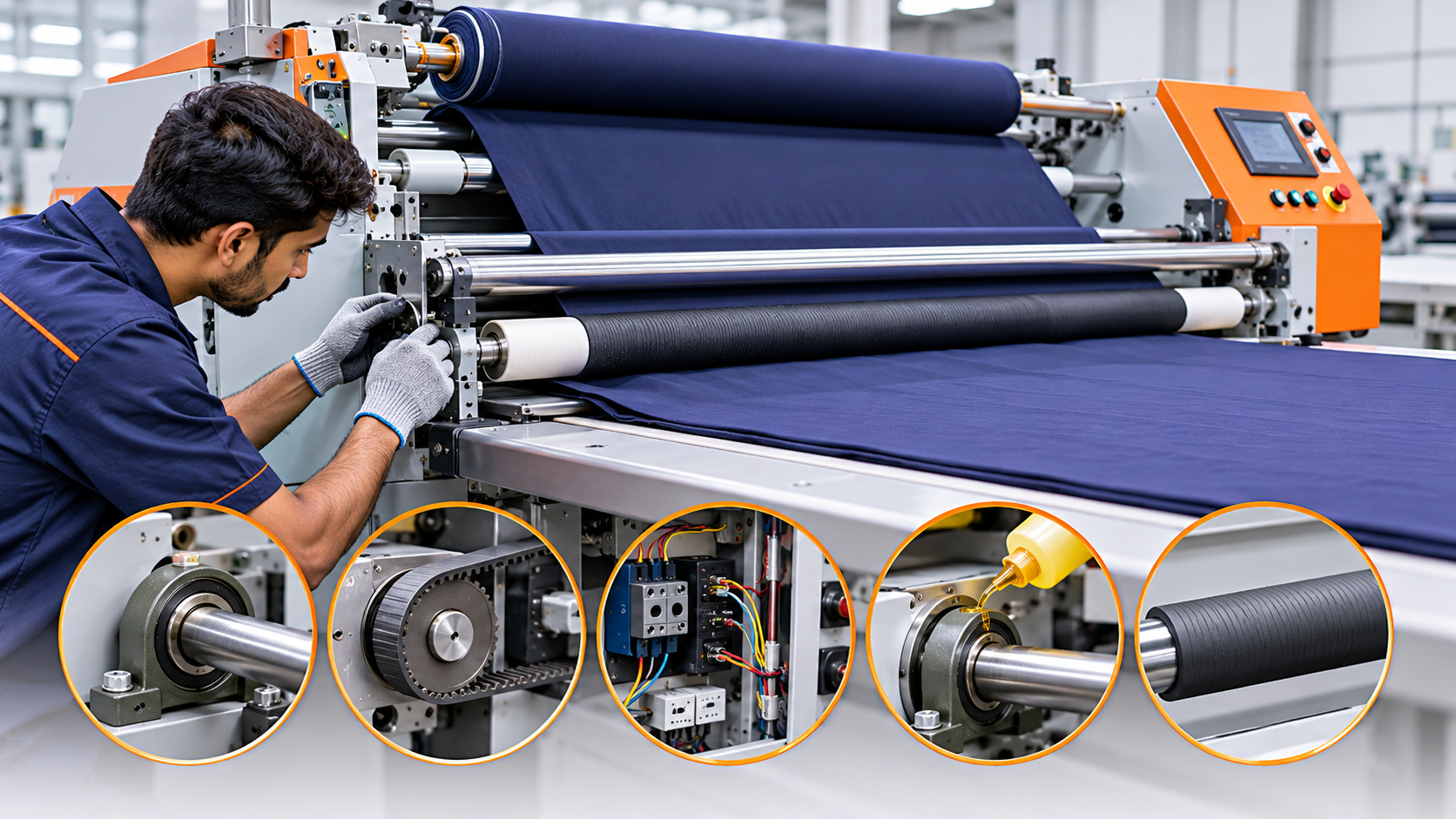
Roller movement problems can interrupt fabric spreading and affect production efficiency. Learn how to identify and troubleshoot common roller issues, including slow movement, irregular rotation, stoppages, noise, and synchronization faults.
Rollers play an important role in automatic fabric spreading equipment by supporting fabric feeding, movement, positioning, and spreading operations. When rollers fail to move correctly, the spreading process can become inconsistent, affecting production speed, fabric alignment, and the overall efficiency of the cutting room.
Roller movement problems may appear in different forms. A roller might stop unexpectedly, rotate unevenly, move slower than expected, produce unusual noise, or fail to respond to machine commands. Identifying the exact cause is important because these symptoms can originate from mechanical components, electrical systems, drive mechanisms, or machine control settings.
This guide explains common roller movement problems in automatic fabric spreading equipment and practical steps to troubleshoot them.
1. Roller Is Not Moving at All
When a roller completely stops moving, the problem may originate from the power supply, drive system, motor, or a mechanical obstruction.
Before inspecting individual components, check whether the machine is receiving power and whether the control panel is displaying an error message.
Possible causes include:
- Motor power supply interruption.
- Loose electrical connections.
- Drive belt disconnection or failure.
- Motor malfunction.
- Mechanical obstruction.
- Safety interlock activation.
- Faulty control signal.
Troubleshooting steps
- Check whether the machine is powered on and ready for operation.
- Review the control panel for error messages or safety warnings.
- Inspect the visible drive arrangement for disconnected belts or obstructions.
- Check whether other machine movements are functioning normally.
- If the roller motor is not responding, the electrical drive system may require inspection by a qualified technician.
If the roller remains stationary while the rest of the machine operates, the issue may be isolated to its particular drive mechanism or control circuit.
2. Roller Is Moving Slowly
Slow roller movement can affect fabric feeding and may cause the spreading process to fall behind the selected operating speed.
The problem can occur when the motor is not receiving the required operating conditions or when resistance in the mechanical arrangement prevents normal movement.
Common reasons include:
- Incorrect speed settings.
- Excessive mechanical resistance.
- Drive belt slipping.
- Motor performance problems.
- Roller bearing resistance.
- Incorrect drive parameters.
- Excessive load on the roller mechanism.
How to identify the problem
Observe whether the roller moves slowly from the beginning or gradually loses speed during operation.
If the movement is consistently slow, the operating settings or drive system may be responsible. If the speed changes unexpectedly, investigate the motor, electrical supply, drive connections, and mechanical resistance.
Operators should also check whether the problem occurs with every fabric roll or only with particular material loads.
3. Roller Movement Is Jerky or Uneven
A roller should move smoothly during the spreading operation. Jerky movement can cause irregular fabric feeding and make it difficult to maintain consistent material placement.
This type of problem may result from interrupted drive transmission, mechanical resistance, or inconsistent motor control.
Possible causes include:
Possible cause | Effect on roller movement |
| Damaged drive belt | Irregular transmission of movement |
| Worn bearings | Increased resistance or uneven rotation |
| Mechanical obstruction | Sudden interruption of movement |
| Motor control problem | Fluctuating roller speed |
| Loose coupling | Inconsistent power transmission |
| Incorrect drive settings | Unstable operating speed |
Troubleshooting approach
Observe the roller during a controlled test to determine whether the movement becomes irregular at specific positions.
If the problem repeats at the same point during rotation, the roller, bearing arrangement, or connected mechanical components may require inspection.
If the movement is irregular throughout the cycle, the drive system or motor control may be a more likely source.
4. Roller Is Rotating but Fabric Is Not Feeding Properly
Sometimes the roller appears to be working, but the fabric does not move as expected. This can create the impression that the roller itself is faulty.
The actual issue may involve the interaction between the roller surface and the fabric.
Possible causes include:
- Insufficient contact between fabric and roller.
- Incorrect roller positioning.
- Slippage between the roller and material.
- Fabric roll feeding problems.
- Incorrect fabric loading.
- Material caught in the feeding arrangement.
What should be checked?
First, determine whether the roller is rotating at its normal speed. Then observe whether the fabric is moving in coordination with the roller.
If the roller rotates normally but the fabric remains stationary or moves inconsistently, inspect the fabric contact area and feeding arrangement rather than immediately replacing the motor or drive components.
This distinction helps avoid unnecessary component replacement.
5. Rollers Are Moving in the Wrong Direction
Incorrect roller direction can interfere with fabric feeding and may prevent the machine from carrying out the intended spreading operation.
This problem may occur after electrical work, drive replacement, control configuration changes, or incorrect machine setup.
Potential causes include:
- Incorrect motor direction configuration.
- Incorrect electrical connections.
- Drive parameter changes.
- Incorrect control commands.
- Configuration errors following component replacement.
Troubleshooting steps
Check the direction of roller movement against the machine's operating instructions.
If the direction is incorrect after a motor, drive, or electrical component replacement, the configuration should be reviewed by a qualified technician.
Do not change electrical connections while the machine is powered. Isolate the power supply before inspection and follow the manufacturer's safety instructions.
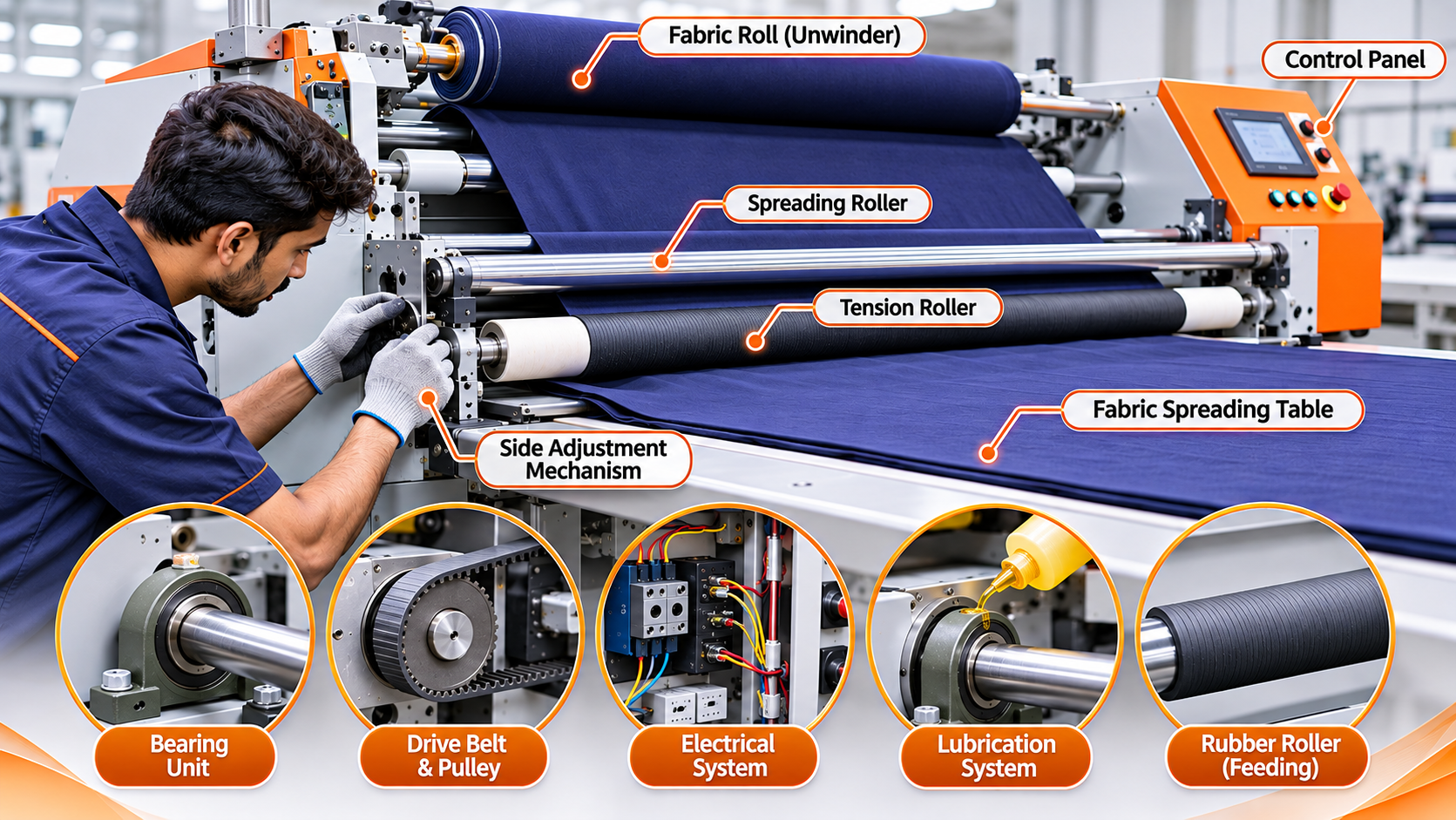
6. Roller Stops Intermittently During Operation
Intermittent roller movement can be particularly difficult to diagnose because the machine may operate normally for some time before the problem appears.
The roller may stop briefly and then restart, or the movement may become inconsistent during a spreading cycle.
Possible reasons include:
- Intermittent electrical connections.
- Motor overheating or overload protection.
- Drive system faults.
- Sensor-related interruptions.
- Safety circuit activation.
- Excessive mechanical resistance.
- Loose electrical connectors.
How to troubleshoot intermittent movement
Record when the roller stops and whether the machine displays an error message.
Check whether the interruption occurs:
- At a particular machine position.
- After a specific period of operation.
- During a change in spreading speed.
- When the fabric roll becomes heavier or more difficult to feed.
- When another machine movement is activated.
The timing of the interruption can help narrow down the possible source of the fault.
7. Roller Produces Unusual Noise During Movement
Unusual sounds may provide useful clues about the condition of the roller assembly.
Different noises can indicate different types of problems.
Noise | Possible source |
| Grinding sound | Bearing damage or mechanical contact |
| Repeated knocking | Loose components or irregular movement |
| Squealing | Belt slippage or friction |
| Vibrating noise | Imbalance or loose mounting |
| Clicking | Intermittent engagement or mechanical interference |
The sound should be observed along with the roller's movement. A noise occurring only during startup may have a different cause from one that continues throughout operation.
If the noise becomes severe or is accompanied by excessive vibration, stop the machine and arrange an inspection before continuing production.
8. Roller Movement Is Not Synchronized With the Spreading Machine
Automatic spreading equipment involves several coordinated movements. The roller, fabric feeding arrangement, and machine carriage may need to operate in synchronization.
If the roller movement does not match the machine's travel, the fabric may be fed incorrectly or placed inconsistently.
Possible causes include:
- Incorrect speed coordination.
- Drive communication problems.
- Incorrect machine parameters.
- Faulty position sensors.
- Control system errors.
- Changes in machine configuration.
In this situation, checking only the roller motor may not identify the problem. The movement of the entire spreading system should be evaluated to determine where synchronization is being lost.
9. How to Troubleshoot Roller Problems Systematically
Instead of replacing components immediately, use a step-by-step diagnostic approach.
Inspection stage | What to investigate |
| Machine status | Power supply, alarms, safety conditions |
| Movement observation | Direction, speed, interruptions, vibration |
| Mechanical arrangement | Belts, couplings, bearings, obstructions |
| Drive system | Motor response, drive signals, settings |
| Fabric interaction | Feeding, contact, slippage, loading |
| Control system | Commands, sensors, error messages |
| Test operation | Whether the issue has been resolved under controlled conditions |
A systematic approach helps distinguish between a mechanical problem, an electrical fault, a control issue, or a fabric feeding problem.
10. When Should Roller Components Be Replaced?
Component replacement should be considered when inspection confirms that a part is damaged, excessively worn, or no longer functioning within its intended operating conditions.
For example, a damaged belt may require replacement if it cannot transmit movement properly. A worn bearing may need replacement if it creates excessive resistance, noise, or instability. Similarly, a faulty motor or drive component may need professional evaluation.
Replacing components without identifying the actual cause can lead to recurring problems and additional production interruptions.
Selecting Suitable Fabric Spreading Equipment
Reliable roller movement is an important consideration when evaluating fabric spreading equipment. Buyers should understand the machine's roller arrangement, drive system, movement controls, available operating speeds, and technical support options.
The suitability of equipment depends on the fabric types being processed, production requirements, working width, and the operating environment.
Ramana Machines is a supplier, distributor, and trader of knitting and textile machinery suppliers in India. We help businesses explore machinery options according to their production requirements.
For enquiries about fabric spreading equipment, visit www.ramanainternational.com or contact us at +91 98159-02561.
Related
More insights
21 Nov 2026
Automatic vs Fully Automatic Fabric Spreading Machine: What Is the Difference?
View21 Nov 2026
Automatic vs Fully Automatic Fabric Spreading Machine: What Is the Difference?
Automatic and fully automatic fabric spreading machines offer different levels of automation. Learn how they differ in operation, fabric handling, production workflow, labour requirements, and investment to choose the right equipment for your garment manufacturing facility.
View
16 Nov 2026
What Is the Function of the Fabric Tension Control System?
View16 Nov 2026
What Is the Function of the Fabric Tension Control System?
A fabric tension control system regulates the force applied during fabric feeding and spreading. Learn about its components, working process, and importance for maintaining consistent fabric movement.
View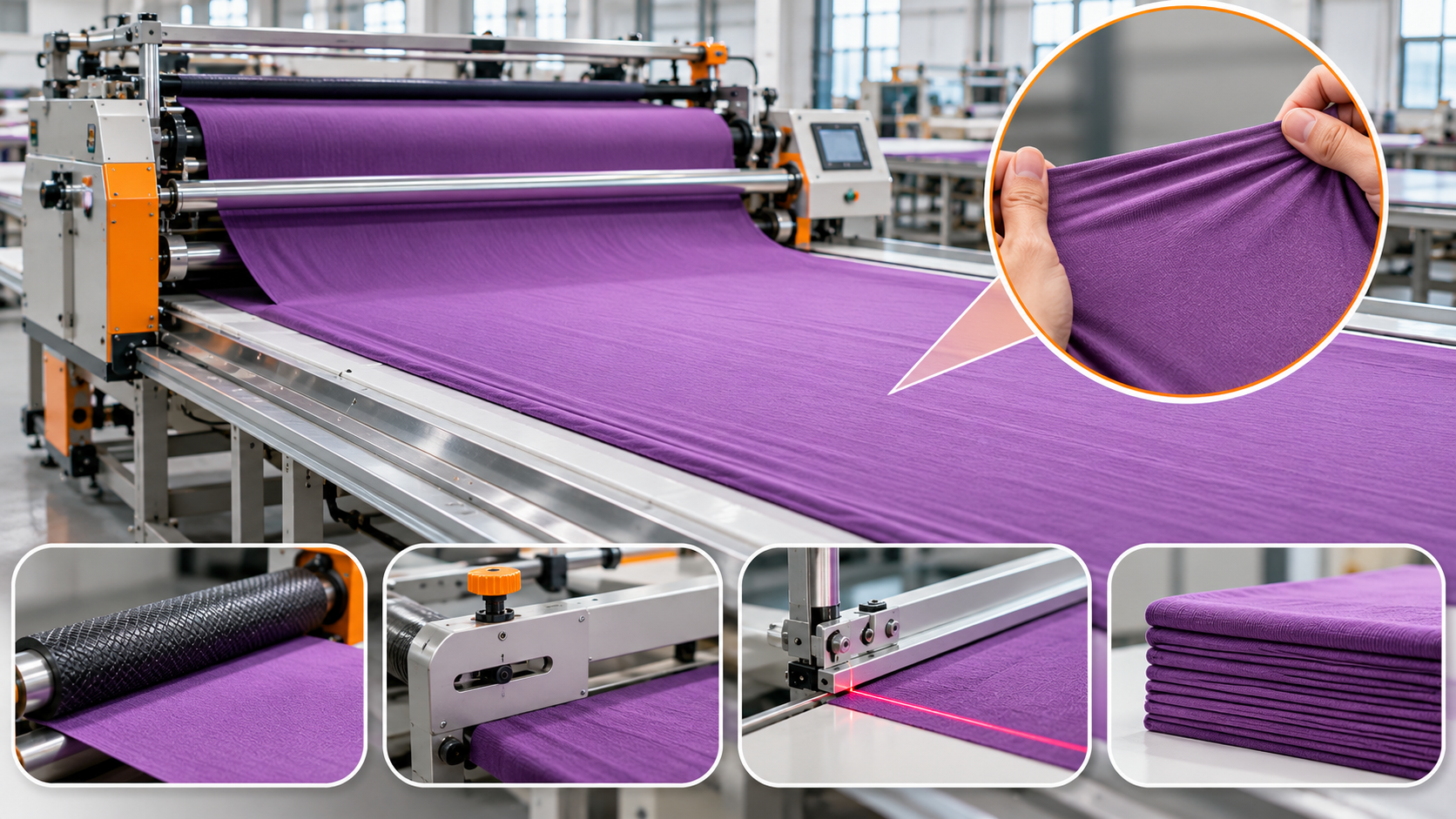
16 Nov 2026
How to Handle Stretchable Fabrics Without Distortion During Spreading
View16 Nov 2026
How to Handle Stretchable Fabrics Without Distortion During Spreading
Stretchable fabrics need careful handling during spreading to prevent unwanted extension and dimensional changes. Explore practical techniques for fabric relaxation, tension control, alignment, and accurate cutting preparation.
ViewFrequently Asked Questions
Find answers to the most common questions about our machines, services and support.
The problem may be caused by a power supply issue, motor fault, drive belt problem, mechanical obstruction, safety interlock, or control system error.
Irregular movement may result from damaged belts, worn bearings, loose couplings, mechanical resistance, or inconsistent motor control.
The issue may be related to fabric slippage, insufficient contact, incorrect positioning, or problems in the feeding arrangement rather than the roller motor.
Grinding, squealing, knocking, and vibrating sounds may indicate bearing problems, belt slippage, loose components, friction, or mechanical interference.
Intermittent stoppages may be caused by electrical connections, motor overload, drive faults, sensor interruptions, safety circuits, or excessive mechanical resistance.
Yes. Incorrect speed, drive, or control settings may affect roller direction, speed, synchronization, and movement consistency.
Components should be replaced when inspection confirms damage, excessive wear, or improper functioning. Identifying the actual cause before replacement helps prevent recurring problems.
Consider the roller arrangement, drive system, movement controls, spreading speed, fabric compatibility, production capacity, spare parts availability, and technical support.