Blog
Why Is Your Embroidery Machine Running Slowly? Causes and Solutions
By Ramana Machines · November 11, 2026
Is your embroidery machine running slower than usual? Learn about common causes such as motor issues, incorrect speed settings, poor lubrication, thread breakage, and electrical faults, along with practical solutions to maintain consistent production.
An embroidery machine is expected to maintain a consistent speed to meet production requirements and deliver quality stitching. However, sometimes the machine starts running slower than usual, even when the operator has selected a higher speed setting. This can affect production output, increase order completion time, and create unnecessary pressure on the production team.
Slow machine operation does not always indicate a major mechanical fault. It can happen due to incorrect settings, thread-related problems, worn components, electrical issues, or a lack of regular maintenance.
Understanding how different machine parts work and what causes them to affect operating speed can help operators identify problems early and take the right corrective action.
Important Embroidery Machine Parts That Affect Running Speed
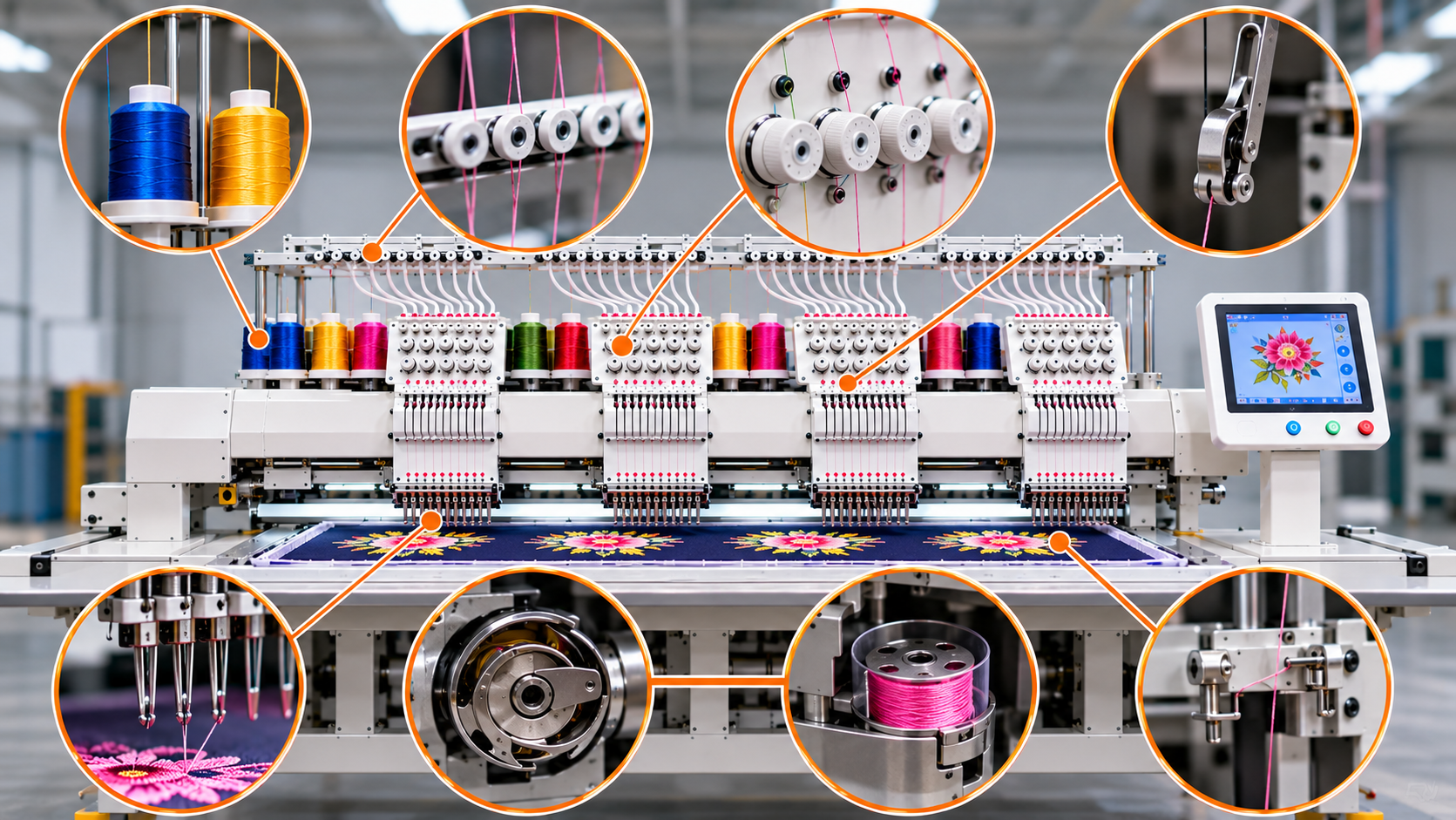
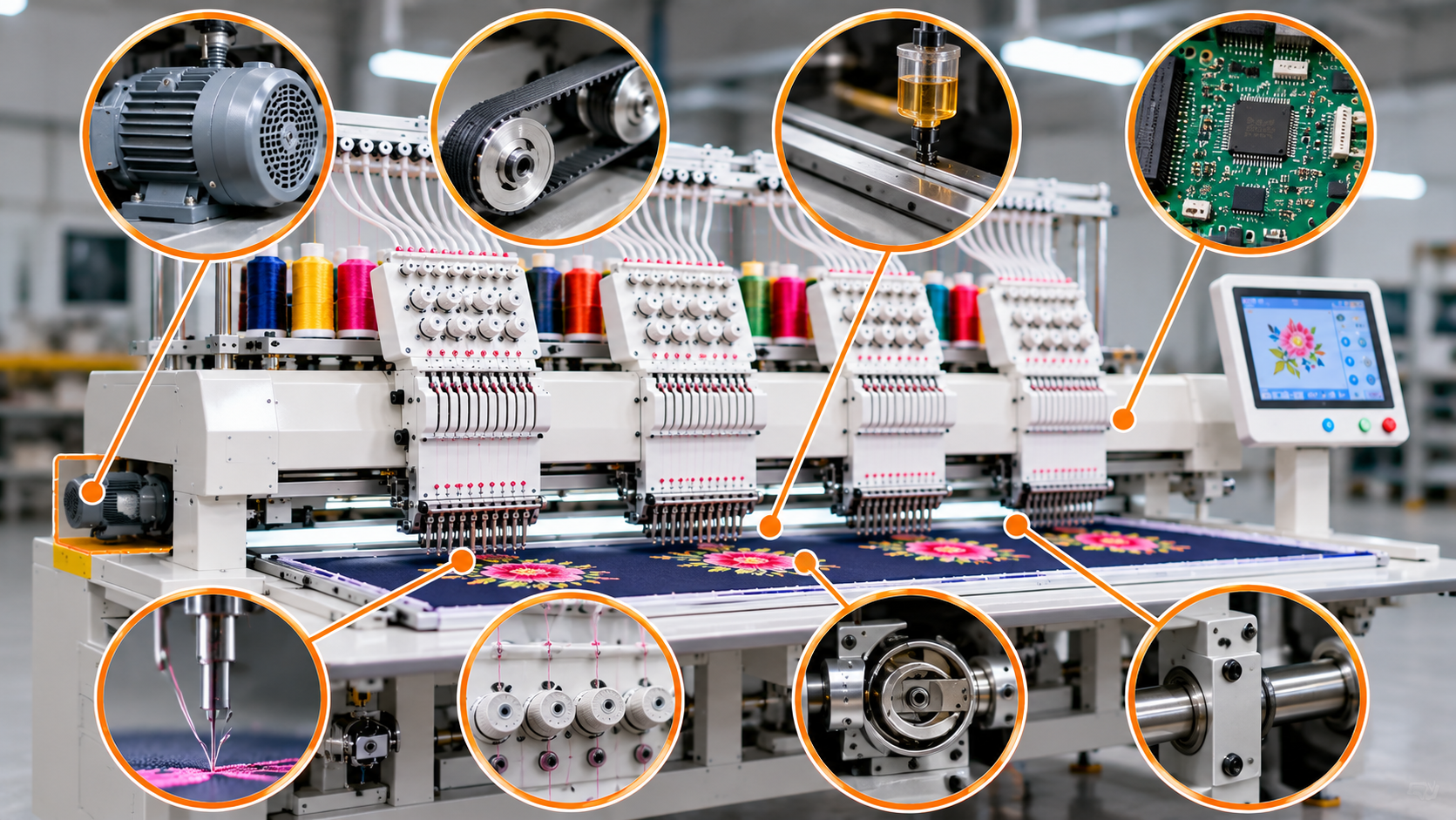
Several mechanical and electronic components work together to maintain the operating speed of an embroidery machine. If any of these parts are not functioning correctly, the machine may reduce its speed or fail to reach the selected RPM.
1. Main Motor
The main motor provides the power required to operate the machine. It drives the main shaft and supports the movement of different stitching components.
How it affects speed: A weak motor, overheating, electrical supply problems, or excessive mechanical load can prevent the machine from reaching its normal operating speed.
2. Main Shaft
The main shaft transfers rotational movement from the motor to the stitching mechanism. It helps coordinate the movement of the needle and other mechanical parts.
How it affects speed: Poor lubrication, worn bearings, or incorrect alignment can increase friction and make the machine operate more slowly.
3. Motor Driver
The motor driver controls the electrical power supplied to the motor and helps regulate its speed according to the machine's settings.
How it affects speed: Incorrect driver settings, overheating, electrical faults, or communication problems can affect motor performance.
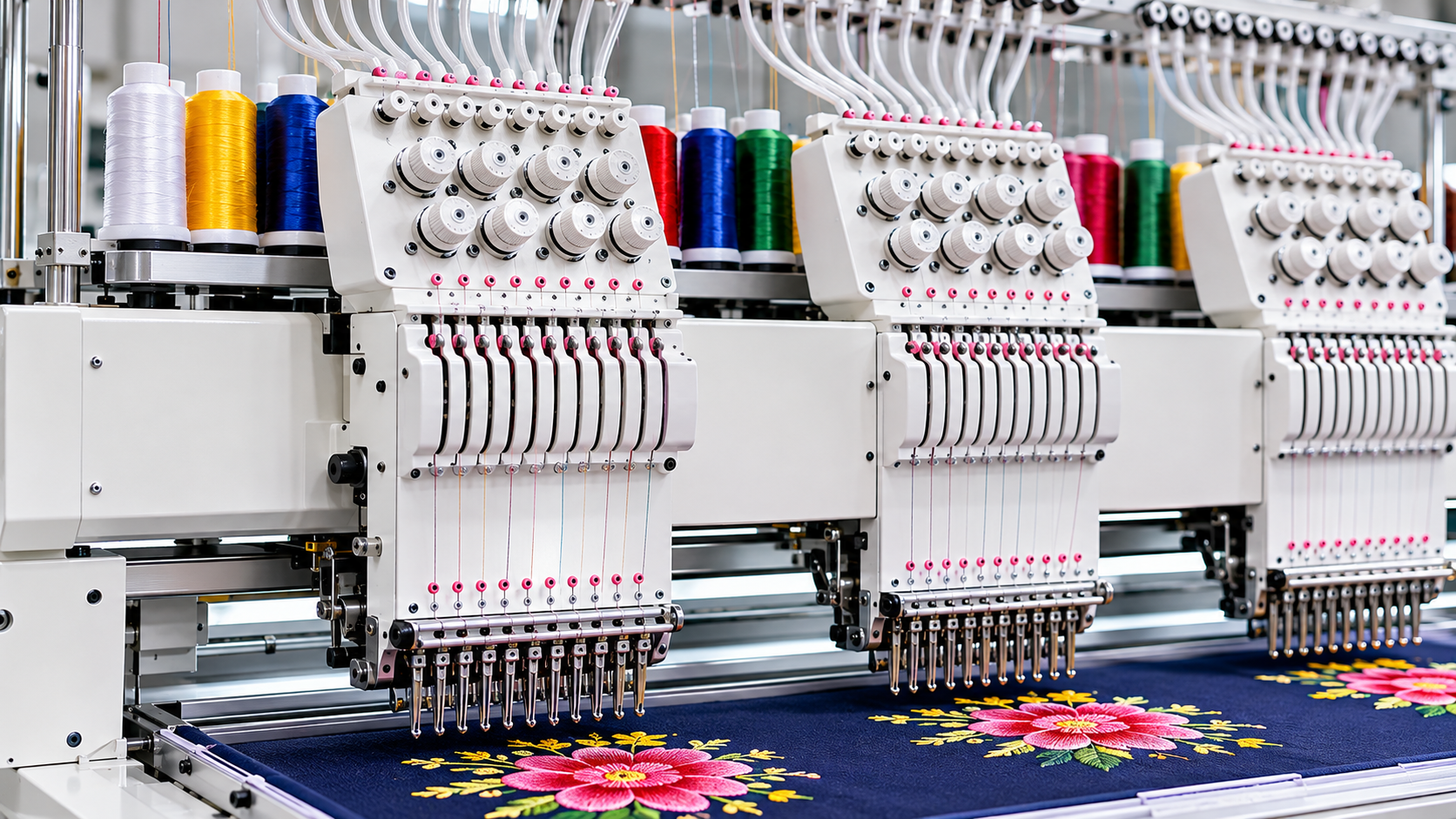
4. Needle Bar and Needle Assembly
The needle bar moves the needle up and down during stitching. It must operate smoothly and remain correctly aligned with the machine's timing.
How it affects speed: Bent needles, incorrect installation, or resistance in the needle bar mechanism can create stitching problems and require the operator to reduce machine speed.
5. Hook and Bobbin Assembly
The hook and bobbin mechanism work together to form stitches by connecting the upper thread with the bobbin thread.
How it affects speed: Incorrect hook timing, thread entanglement, lint accumulation, or bobbin-related problems can cause skipped stitches and thread breaks. Repeated interruptions reduce overall production speed.
6. Thread Tension Assembly
The tension assembly controls the amount of resistance applied to the upper thread during stitching.
How it affects speed: Incorrect tension can cause thread breakage, loose stitches, or inconsistent embroidery. Operators may need to reduce speed to avoid repeated thread-related interruptions.
7. Embroidery Frame and Pantograph System
The frame holds the fabric in position, while the pantograph or X-Y movement system moves the fabric according to the embroidery design.
How it affects speed: Excessive friction, incorrect frame movement, loose connections, or mechanical obstruction can affect the movement of the embroidery frame.
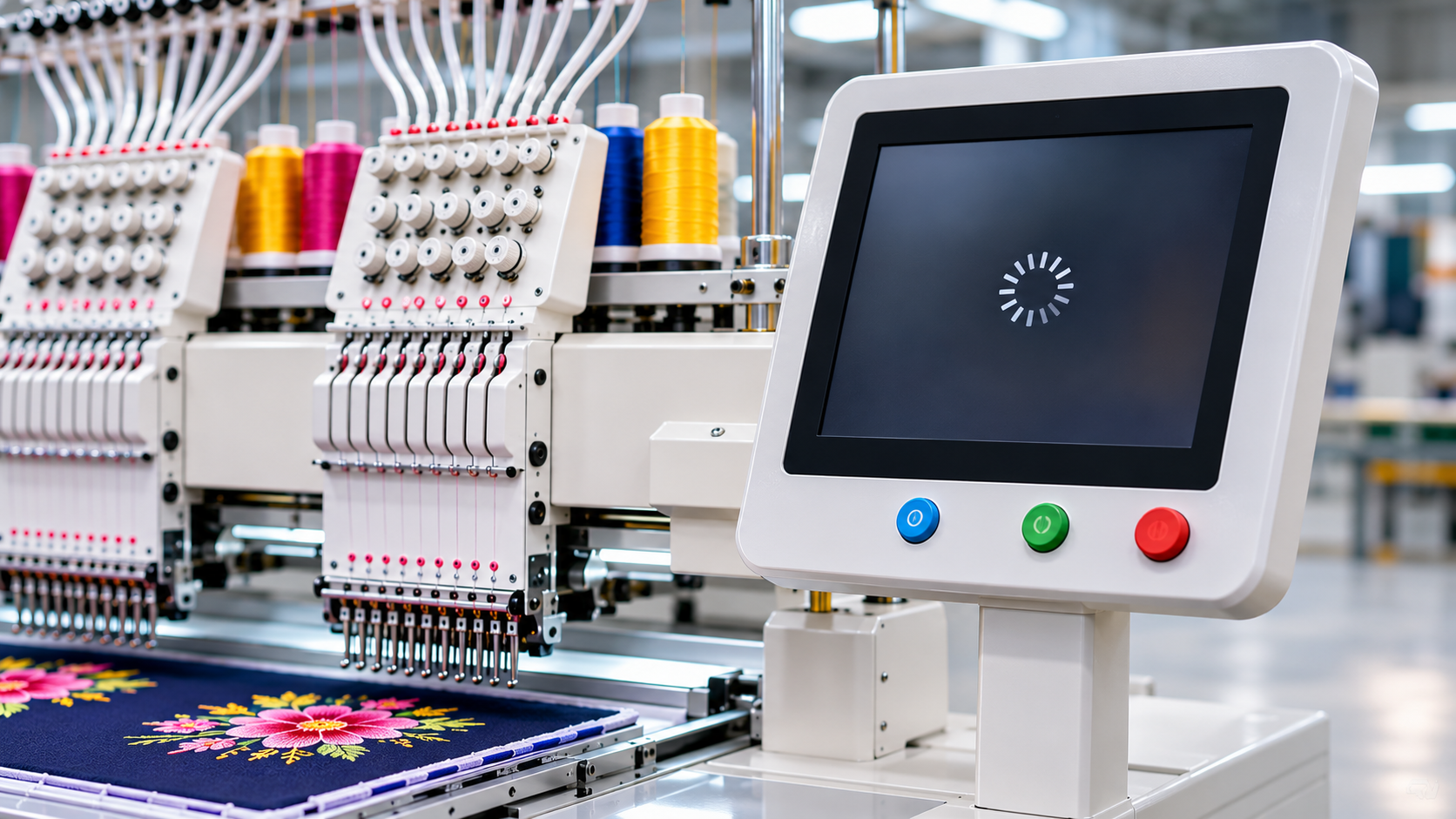
8. Control Panel and Main Circuit Board
The control panel allows operators to select designs, adjust speed, and manage machine settings. The main circuit board processes commands and controls machine operations.
How it affects speed: Incorrect speed parameters, electronic faults, or communication problems can prevent the machine from operating at the selected speed.
Common Reasons Why Your Embroidery Machine Is Running Slowly
Once you understand the main components, it becomes easier to identify the possible reasons behind slow machine operation.
1. Incorrect Speed Settings
Sometimes the machine runs slowly simply because its maximum speed or operating speed has been set too low.
Different embroidery designs may require different speed settings. Designs with dense stitching, small lettering, or frequent direction changes may also require controlled speed for better results.
Solution:
- Check the speed setting on the control panel.
- Verify whether a speed limit has been programmed.
- Check whether the selected design has specific speed restrictions.
- Increase the speed gradually and observe stitching quality.
Avoid immediately setting the machine to its maximum RPM without checking the design and fabric requirements.
2. Motor Overheating or Reduced Performance
A motor that becomes excessively hot may not perform efficiently. In some machines, protection systems can also reduce performance or stop operation when overheating is detected.
Common reasons include blocked ventilation, excessive mechanical load, worn motor components, and electrical supply fluctuations.
Solution:
- Check whether the motor cooling fan is working properly.
- Keep ventilation openings free from dust.
- Inspect the motor for unusual noise or vibration.
- Check the electrical supply and motor connections.
- Allow the motor to cool if it becomes excessively hot.
If the problem continues, arrange a technical inspection instead of repeatedly running the machine under heavy load.
3. Poor Lubrication and Increased Mechanical Friction
Moving parts such as the main shaft, bearings, needle bar, and other mechanical assemblies need appropriate lubrication.
When lubrication is insufficient, friction increases. This can make the machine work harder and affect its operating speed.
Solution:
- Follow the manufacturer's lubrication schedule.
- Use the recommended machine oil.
- Check lubrication points regularly.
- Clean accumulated lint and dust around moving components.
- Inspect bearings and other parts for signs of wear.
Do not apply excessive oil or lubricate electrical components.
4. Thread Breakage and Frequent Machine Stops
Frequent thread breakage can make an embroidery machine appear slow, even when its actual running speed is normal.
Every time the thread breaks, the operator needs to stop the machine, rethread it, and restart production. Repeated interruptions reduce the number of completed pieces per shift.
Possible reasons include incorrect tension, damaged needles, poor-quality thread, rough thread guides, and incorrect hook timing.
Solution:
- Check upper-thread and bobbin-thread tension.
- Replace damaged or worn needles.
- Inspect thread guides for sharp edges.
- Use suitable thread for the fabric and design.
- Check the hook and needle timing if breakage continues.
5. Heavy or Complicated Embroidery Designs
Not every design can be stitched efficiently at the same speed. Designs containing dense stitching, frequent colour changes, short stitches, and complicated movements may require slower operation.
Running such designs too quickly can affect stitch quality and increase thread breaks.
Solution:
- Review the design before starting production.
- Check stitch density and unnecessary overlapping stitches.
- Remove unwanted stitches from the design file where appropriate.
- Adjust the speed according to fabric and design complexity.
- Test the design on a sample before starting bulk production.
6. Electrical Supply and Voltage Fluctuations
An unstable electrical supply can affect the performance of the motor, motor driver, and control system.
Loose connections, damaged wiring, insufficient power capacity, or voltage fluctuations may cause inconsistent operation.
Solution:
- Check the incoming electrical supply.
- Inspect power cables and connectors.
- Check circuit breakers and electrical protection devices.
- Ensure the machine has a suitable power supply arrangement.
- Ask a qualified technician to inspect electrical faults.
Do not open electrical panels or handle live wiring without proper training.
7. Embroidery Frame Movement Problems
The embroidery frame must move smoothly in the X and Y directions to follow the design. If the frame movement becomes restricted, the machine may struggle to maintain its normal production speed.
Common causes include dust accumulation, mechanical obstruction, loose connections, worn guide components, and incorrect frame installation.
Solution:
- Check the frame for smooth movement.
- Remove lint and dust from the movement area.
- Inspect belts, guides, and mechanical connections.
- Make sure the frame is installed correctly.
- Arrange alignment checks if movement remains uneven.
8. Incorrect Machine Parameters or Software Settings
Computerized embroidery machines use programmed settings to control stitching operations. Incorrect parameters or software-related issues can affect speed, movement, and production performance.
This may happen after a parameter change, software update, or incorrect design-file transfer.
Solution:
- Review the machine's speed and operating parameters.
- Check whether any speed limit is active.
- Verify the design file and machine compatibility.
- Keep a backup of important machine settings.
Consult the machine's technical support team before changing advanced parameters.
Troubleshooting Table: Embroidery Machine Running Slowly
Problem noticed | Possible reason | Recommended action |
| Machine does not reach selected RPM | Speed limit or motor issue | Check speed settings and motor performance |
| Speed decreases during operation | Motor overheating or excessive load | Inspect cooling and mechanical movement |
| Frequent stops during stitching | Thread breakage or sensor issues | Check thread path, tension, and sensors |
| Slow frame movement | Dust, friction, or alignment issue | Clean and inspect the frame mechanism |
| Inconsistent motor speed | Electrical supply or driver fault | Check power supply and motor driver |
| Slow operation with complex designs | High stitch density or frequent movements | Review design and adjust speed |
| Machine becomes noisy | Worn bearings or poor lubrication | Inspect moving components |
How to Maintain Your Embroidery Machine for Consistent Speed
Regular maintenance helps prevent unexpected slowdowns and supports stable production. Instead of waiting for a problem to occur, follow a routine inspection schedule.
Daily Maintenance
- Remove lint and thread waste from the needle and hook areas.
- Check the upper-thread and bobbin-thread paths.
- Inspect needles for bending or damage.
- Observe the machine for unusual noise or vibration.
- Check whether the embroidery frame moves smoothly.
Weekly Maintenance
- Inspect accessible belts, connectors, and mechanical fittings.
- Clean dust from the machine's external ventilation areas.
- Check thread tension and stitching consistency.
- Inspect the hook and bobbin assembly.
- Review machine speed and operating settings.
Periodic Maintenance
- Check motor performance and cooling arrangements.
- Inspect bearings and other moving components.
- Verify shaft and frame alignment.
- Check electrical connections through a qualified technician.
- Review software parameters and maintain backups.
- Replace worn components according to the manufacturer's recommendations.
When Should You Call a Technician?
Basic cleaning and checking machine settings can solve many minor speed-related problems. However, some faults require professional inspection.
Contact a qualified technician if:
- The motor repeatedly overheats.
- The machine cannot reach its normal operating speed despite correct settings.
- The motor driver displays an error.
- The machine produces unusual mechanical noise.
- Frame movement becomes irregular.
- Electrical protection devices repeatedly trip.
- Speed changes suddenly without any adjustment.
Avoid repeatedly increasing the speed to overcome a mechanical or electrical problem. This can increase component wear and lead to further breakdowns.
Choosing the Right Embroidery Machine for Your Production Requirements
Machine speed is only one factor to consider when planning embroidery production. Buyers should also evaluate stitching quality, design compatibility, number of heads, fabric requirements, operating controls, spare parts availability, and technical support.
Before purchasing, understand your daily production targets and the type of embroidery work you plan to handle. Discuss the machine's operating speed under actual production conditions rather than relying only on its maximum advertised RPM.
Working with a reliable embroidery machine supplier can also help buyers understand available machine options, specifications, and the technical requirements of their production setup.
Ramana Machines is a supplier, distributor, and trader of knitting and textile machinery. We help businesses explore machinery options according to their production requirements and operational needs.
Visit www.ramanainternational.com or contact our team to discuss your textile machinery requirements.