
Blog
Electric vs Automatic Embossing Machine: Which One Should You Choose?
By Ramana Machines · November 13, 2026
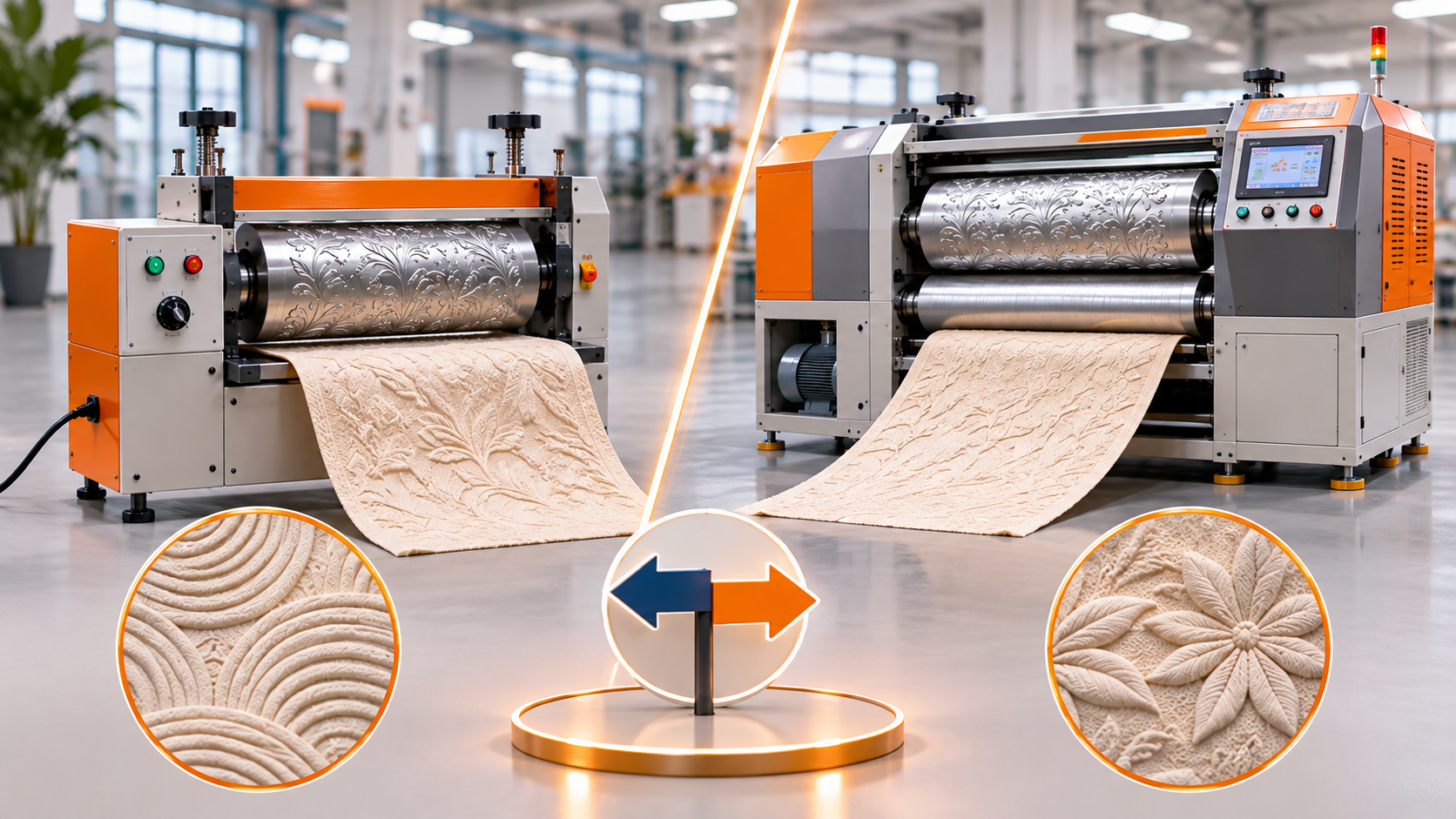
Choosing between an electric and automatic embossing machine? Understand their working methods, key differences, advantages, limitations, and suitability for different fabric production requirements before selecting the right equipment.
Choosing the right embossing machine is an important decision for textile manufacturers and fabric processing businesses. The machine you select can affect production speed, fabric finishing quality, operating costs, and the amount of manual work required during production.
When exploring embossing equipment, two commonly considered options are electric and automatic embossing machines. Both are designed to create patterns and textures on suitable fabric surfaces, but they can differ in their operating arrangements, level of automation, controls, and production capabilities.
An electric embossing machine uses an electrical power system to operate its working components. An automatic embossing machine focuses on reducing manual intervention through automated feeding, pressure control, speed adjustment, or other programmed functions, depending on its configuration.
Understanding these differences can help you select equipment that matches your fabric type, production volume, and business requirements.
What Is an Electric Embossing Machine?
An electric embossing machine uses electrical power to operate the motor and other working components responsible for the embossing process.
The machine applies pressure through rollers or specially designed embossing surfaces to create a pattern on the fabric. Depending on its design, it may also include an electric heating arrangement for heat-assisted embossing.
Operators generally manage the fabric feeding, machine settings, and processing operations according to the machine's configuration.
How Does an Electric Embossing Machine Work?
The working process usually involves the following steps:
- Power supply: The machine is connected to a suitable electrical supply.
- Machine preparation: The required embossing roller or pattern arrangement is installed.
- Setting adjustment: The operator adjusts pressure, speed, and temperature where applicable.
- Fabric feeding: The fabric is guided into the embossing section.
- Pattern formation: The machine applies controlled pressure, and heat where required, to transfer the selected pattern.
- Fabric inspection: The processed fabric is checked for pattern clarity and surface quality.
Advantages of an Electric Embossing Machine
- Uses an electrical drive system for machine operation.
- Can be suitable for small and medium-scale production, depending on its capacity.
- Offers a practical option for businesses with relatively straightforward embossing requirements.
- May have a simpler operating arrangement than highly automated systems.
- Can be selected for specific fabric finishing applications.
Limitations to Consider
- Some models require more manual involvement in fabric handling.
- Production consistency depends on correct operator settings and material feeding.
- Manual adjustments may take additional time when changing fabric or patterns.
- Production capacity varies according to the machine's design and specifications.
What Is an Automatic Embossing Machine?
An automatic embossing machine is designed to perform embossing operations with reduced manual intervention. Depending on its configuration, it may include automated fabric feeding, electronic controls, adjustable operating speed, pressure regulation, and temperature management.
These features help streamline the production process and reduce the need for continuous manual adjustments.
An automatic system can be useful for businesses that process larger fabric quantities or require consistent production settings across repeated orders.
How Does an Automatic Embossing Machine Work?
The general working process includes:
- Machine configuration: The operator selects the required embossing pattern and prepares the machine.
- Parameter setting: Operating speed, pressure, and temperature are adjusted through the available control system.
- Fabric loading: Fabric is positioned in the feeding arrangement.
- Automatic processing: The machine controls the embossing operation according to the selected settings.
- Continuous movement: The fabric passes through the embossing section at the configured speed.
- Quality inspection: The finished material is checked for uniform patterns and surface quality.
The exact level of automation depends on the model. Not every automatic machine includes the same feeding, control, or adjustment features.
Advantages of an Automatic Embossing Machine
- Reduces manual intervention in suitable production operations.
- Can support continuous fabric processing.
- Helps maintain repeatable operating settings.
- May improve production efficiency for larger orders.
- Offers greater control over selected machine parameters.
- Can reduce operator involvement in repetitive adjustments.
Limitations to Consider
- Initial investment may be higher than that of a simpler machine.
- Operators may require training to use electronic controls.
- Automated systems can require more specialised maintenance.
- Businesses should check the availability of spare parts and technical support.
The additional features may not be necessary for low-volume production.
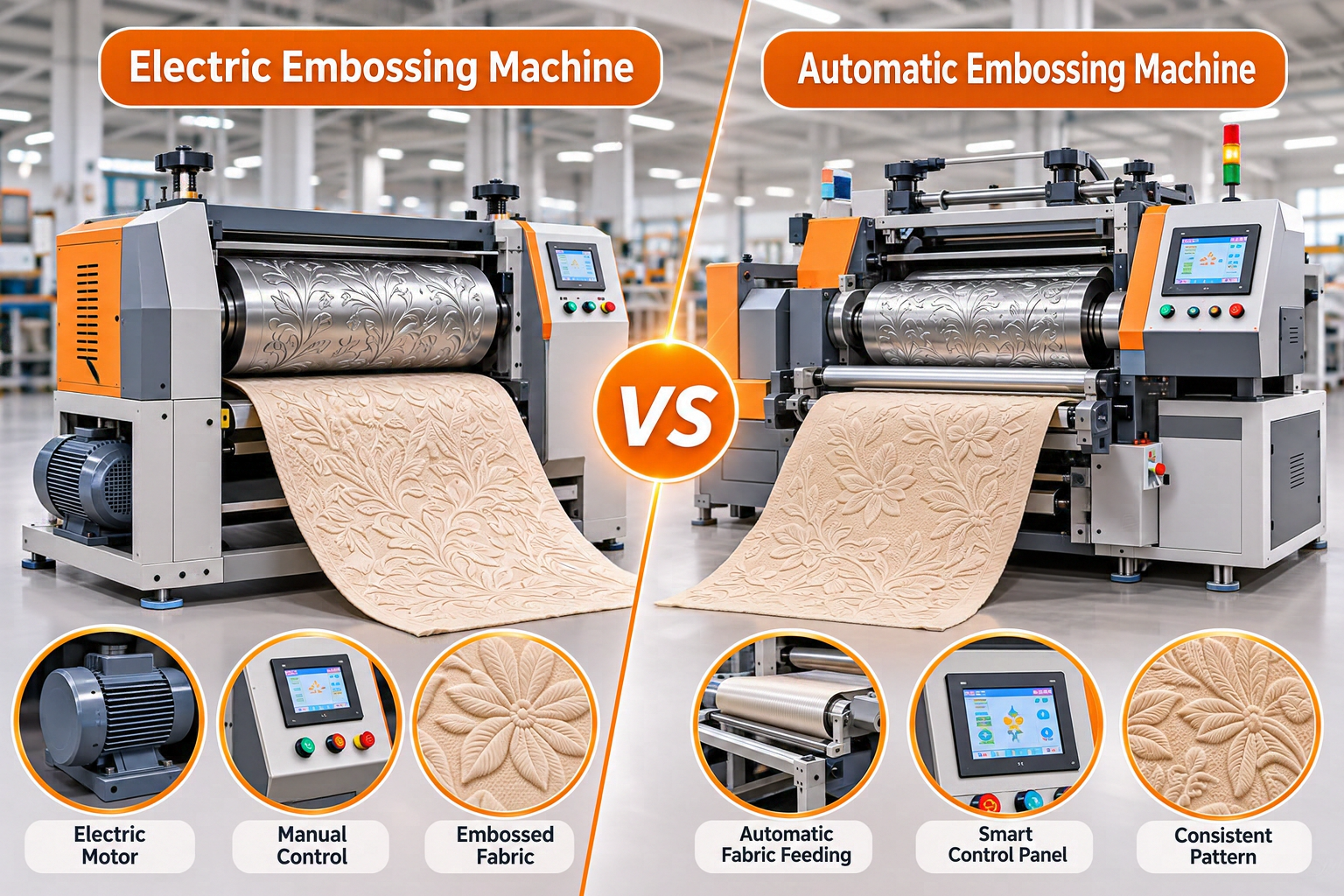
Electric vs Automatic Embossing Machine: Key Differences
Although both machine types can be used for fabric embossing, their operating arrangements and suitability can differ.
Comparison factor | Electric embossing machine | Automatic embossing machine |
| Main operation | Uses an electric drive system | Uses automated controls for selected operations |
| Fabric feeding | May require manual feeding or assistance | May include automatic feeding |
| Operator involvement | Depends on machine design; can be higher | Generally reduced for automated functions |
| Speed control | Depends on the available drive and controls | May offer programmed or electronic speed control |
| Pressure adjustment | Can be manual or powered | May include automated pressure regulation |
| Production suitability | Depends on capacity and configuration | Often suitable for repetitive or larger-volume work |
| Operating complexity | Can be relatively straightforward | May require additional operator training |
| Investment | Depends on specifications and features | May involve higher initial investment |
| Maintenance | Motor, drive, rollers, and electrical components | Includes mechanical, electrical, and automation components |
Important: Electric and automatic are not always completely separate machine categories. An automatic embossing machine also uses electrical power, and some electric machines include automated functions. The actual difference should be evaluated by comparing the machine's features rather than relying only on its name.
Which Machine Is Better for Different Production Requirements?
The better option depends on how much fabric you process, how frequently you change patterns, and how much automation your production setup needs.
1. For Small-Scale Fabric Processing
A simpler electric machine may be suitable for businesses handling smaller production quantities or occasional embossing orders.
It can offer a practical arrangement where operators are comfortable managing fabric feeding and machine settings.
What to check:
- Working width.
- Available embossing patterns.
- Pressure adjustment.
- Ease of operation.
- Power requirements.
2. For Medium-Scale Production
Businesses with regular fabric processing requirements should compare both options based on production capacity and operating convenience.
An electric machine with suitable controls may meet the requirements of some businesses, while an automatic model may be more useful when repetitive production tasks need to be streamlined.
What to check:
- Fabric processing speed.
- Pattern consistency.
- Fabric feeding arrangement.
- Changeover time.
- Maintenance requirements.
3. For Large-Scale Manufacturing
An automatic embossing machine may be worth considering when production involves large fabric quantities, repeated patterns, and continuous processing.
Automated features can reduce manual intervention and help maintain repeatable settings across production batches.
What to check:
- Continuous processing capability.
- Automatic feeding system.
- Speed control.
- Pressure and temperature management.
- Machine downtime and service support.
Important Factors to Consider Before Buying an Embossing Machine
Do not select a machine only because it is electric or automatic. Evaluate its actual specifications and whether it can handle your production requirements.
1. Fabric Compatibility
Different fabrics respond differently to pressure and heat. Polyester, nylon, cotton blends, nonwoven materials, and furnishing fabrics may require different embossing conditions.
Always confirm that the machine is suitable for the material you intend to process.
2. Working Width
Working width determines the maximum fabric width that can pass through the embossing section.
Choose a machine that matches your regular fabric dimensions and production requirements.
3. Embossing Roller Design
The roller or plate determines the pattern transferred onto the fabric.
Check:
- Available pattern designs.
- Roller material and surface quality.
- Custom pattern options.
- Ease of roller replacement.
- Pattern alignment.
4. Pressure Adjustment
Different fabric thicknesses and structures require suitable pressure settings. The machine should provide an appropriate adjustment arrangement for the materials you process.
Excessive pressure can damage or flatten fabric, while insufficient pressure can produce weak patterns.
5. Temperature Control
If the embossing process requires heat, check the heating system and temperature control accuracy.
Temperature should be selected according to the fabric's properties to prevent shrinkage, discolouration, or surface damage.
6. Production Speed
Compare the machine's operating speed with your expected production volume.
Also consider how fabric thickness, pattern complexity, and material handling affect actual output.
7. Maintenance and Spare Parts
Before purchasing, understand the machine's maintenance requirements and availability of essential components such as rollers, belts, bearings, motors, and electrical parts.
Technical guidance and spare parts availability can make a difference to long-term machine operation.
Common Mistakes to Avoid When Choosing Between Electric and Automatic Machines
Selecting a machine without understanding its actual capabilities can create production difficulties later.
Choosing only by price: A lower purchase price may not always mean lower operating costs. Consider maintenance, production capacity, and material wastage.
Ignoring fabric compatibility: A machine that works well with one fabric may not produce the same result with another.
Assuming every automatic machine has the same features: Check the actual feeding, pressure, temperature, and speed control systems.
Overlooking roller requirements: The available roller patterns should match your intended fabric designs.
Not checking operating costs: Consider electrical consumption, maintenance, spare parts, and operator training.
Skipping fabric trials: Always test your actual fabric before finalising a machine. This helps evaluate pattern quality and processing suitability.
Maintenance Tips for Both Electric and Automatic Embossing Machines
Regardless of the machine type, regular maintenance is important for consistent fabric finishing.
Daily Maintenance
- Clean fabric residue and dust from accessible machine areas.
- Inspect embossing rollers for visible damage.
- Check fabric feeding and alignment.
- Observe the machine for unusual noise or vibration.
- Check operating temperature and pressure where applicable.
Weekly Maintenance
- Inspect belts and drive components.
- Check roller alignment.
- Examine electrical connections through a qualified person.
- Inspect pressure adjustment mechanisms.
- Review the quality of processed fabric.
Periodic Maintenance
- Inspect the motor and drive system.
- Check heating components and temperature controls.
- Examine bearings and other moving parts.
- Verify the accuracy of machine controls.
- Replace worn components according to the manufacturer's recommendations.
Always follow the manufacturer's maintenance instructions and isolate the power supply before carrying out maintenance work.
Which Embossing Machine Should You Choose?
The choice between electric and automatic embossing equipment should be based on your production volume, fabric requirements, operating budget, and expected level of automation.
An electric model may be suitable when the production setup is relatively simple and manual involvement is manageable. An automatic model may be a better option when you need to reduce repetitive manual work and process larger quantities with repeatable settings.
Before making a decision, compare actual machine specifications, test your fabric, and understand the available controls and maintenance requirements.
Ramana Machines is a supplier, distributor, and trader of knitting and textile machinery. We help businesses explore machinery options according to their production requirements and operational needs. Businesses looking for textile machinery traders in India can visit our website to explore machinery information and discuss their requirements with our team.
Visit www.ramanainternational.com or contact us to discuss your textile machinery requirements.
Related
More insights
13 Nov 2026
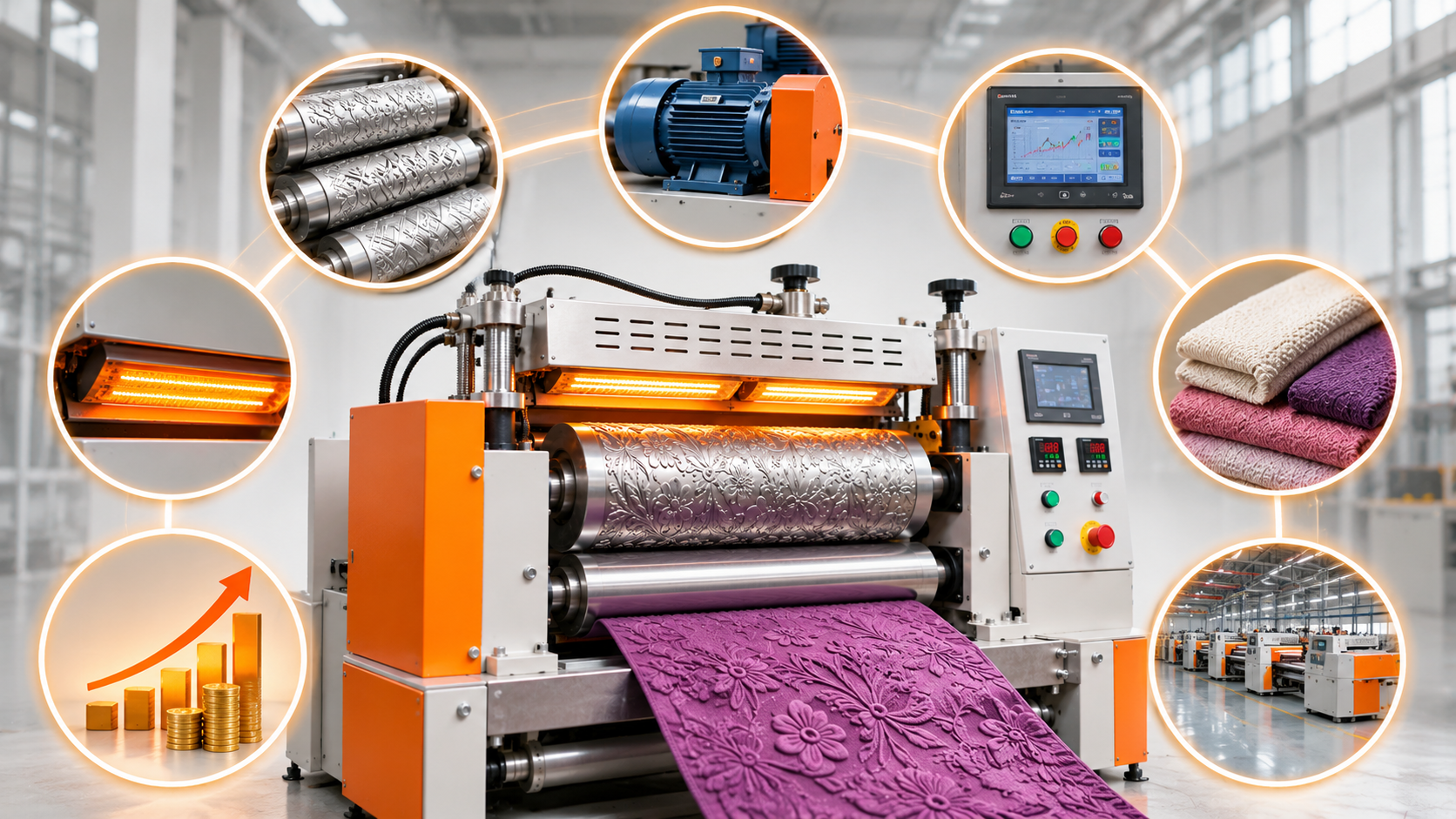
What Factors Affect the Cost of an Embossing Machine?
View13 Nov 2026
What Factors Affect the Cost of an Embossing Machine?
Planning to invest in an embossing machine? Understand the key pricing factors, including production capacity, pattern tooling, automation, import expenses, installation, and long-term operating costs.
View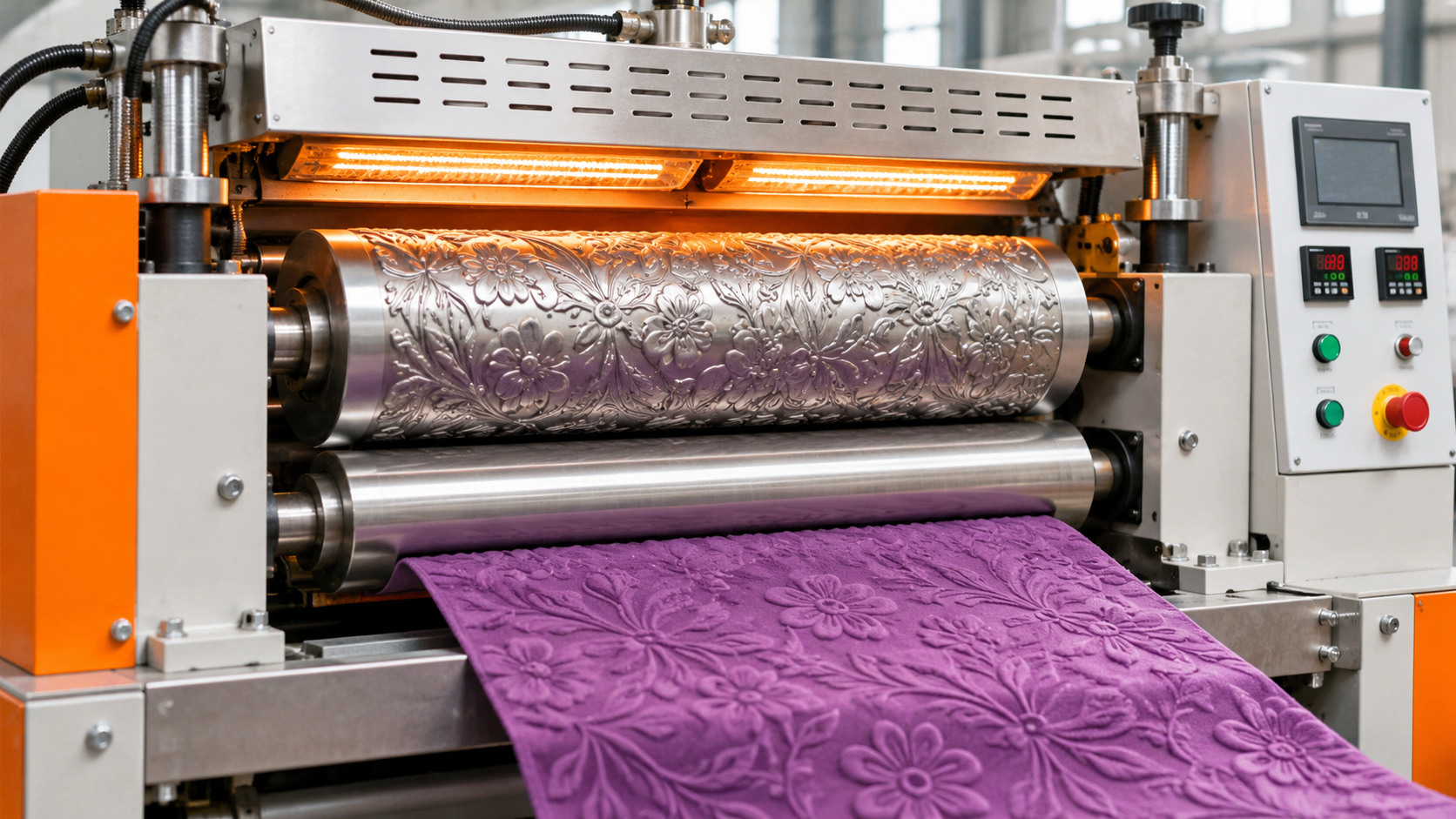
13 Nov 2026
How Temperature and Pressure Settings Affect Fabric Embossing Quality
View13 Nov 2026
How Temperature and Pressure Settings Affect Fabric Embossing Quality
Temperature and pressure play an important role in fabric embossing. Learn how different settings affect pattern clarity, fabric texture, surface appearance, and processing results across polyester, nylon, cotton, and blended fabrics.
View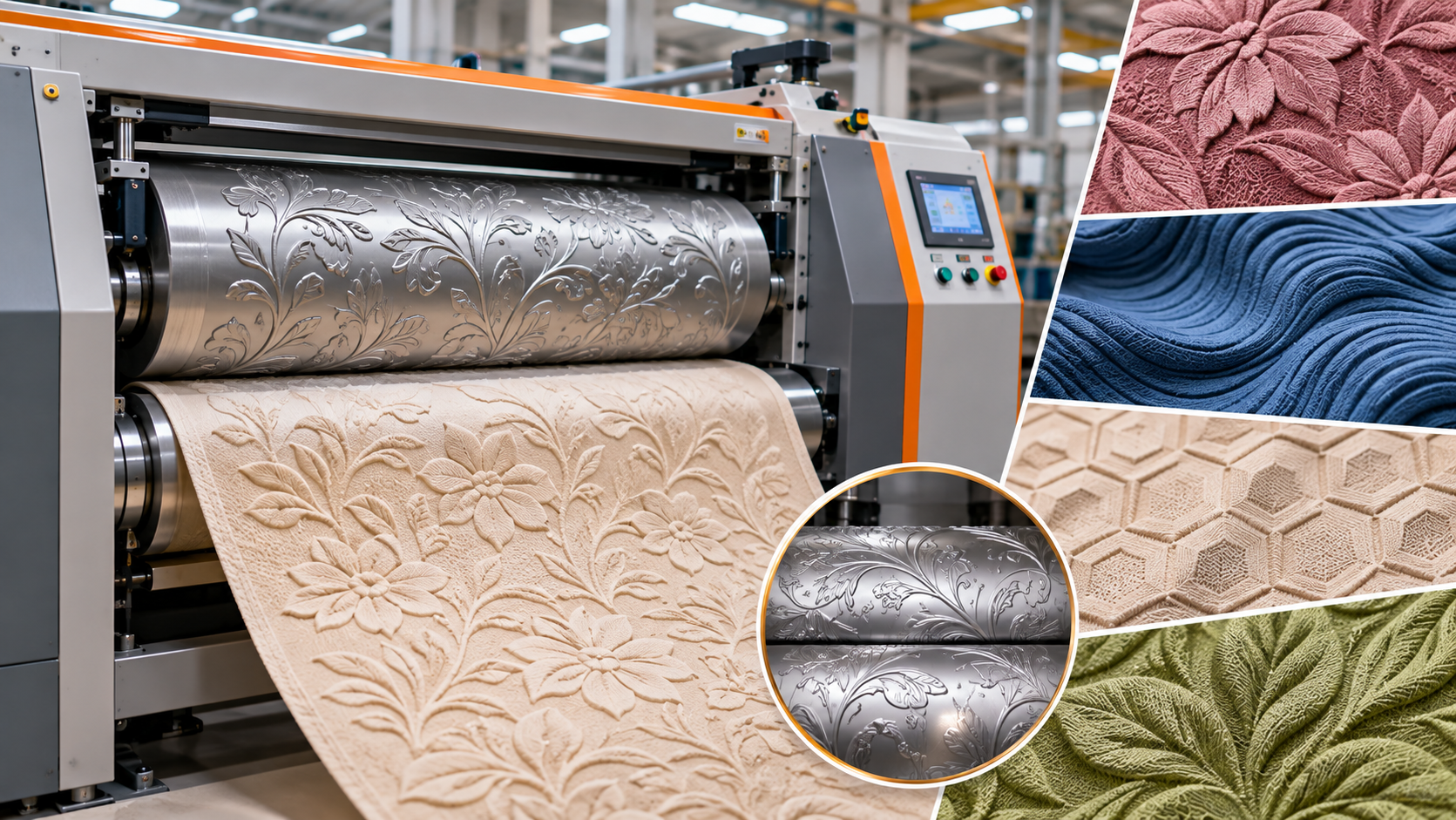
13 Nov 2026
Why Is an Embossing Machine Not Maintaining Consistent Pressure?
View13 Nov 2026
Why Is an Embossing Machine Not Maintaining Consistent Pressure?
Is your embossing machine producing uneven fabric patterns? Learn how hydraulic issues, roller alignment, faulty pressure controls, and incorrect settings affect embossing pressure, along with practical troubleshooting and maintenance tips.
ViewFrequently Asked Questions
Find answers to the most common questions about our machines, services and support.
An electric embossing machine uses an electric drive system to operate its components, while an automatic embossing machine includes automated functions such as feeding, speed control, or pressure adjustment, depending on its configuration.
Not necessarily. An automatic machine may be more suitable for repetitive, larger-volume production, while a simpler electric model may meet the needs of businesses with smaller or less frequent production requirements.
Yes. Although automation reduces manual involvement, an operator is still needed for fabric loading, machine setup, monitoring, quality inspection, and routine maintenance.
A simpler electric model may be suitable for small businesses, depending on the fabric type, working width, required patterns, and production volume.
Both may be suitable for different fabric materials, but compatibility depends on machine specifications and the embossing technique. Fabric testing is recommended before production.
Fabric composition, roller design, pressure, temperature, operating speed, and fabric tension all influence the final embossed pattern.
It may have a higher initial cost because of additional automation and control features. However, the actual price depends on the machine's working width, capacity, specifications, and configuration.
Check fabric compatibility, working width, roller design, pressure and temperature controls, production speed, power requirements, maintenance needs, and spare parts availability.