
Loading…
Loading…
Loading blog…
Blog
By Ramana Machines · November 13, 2026
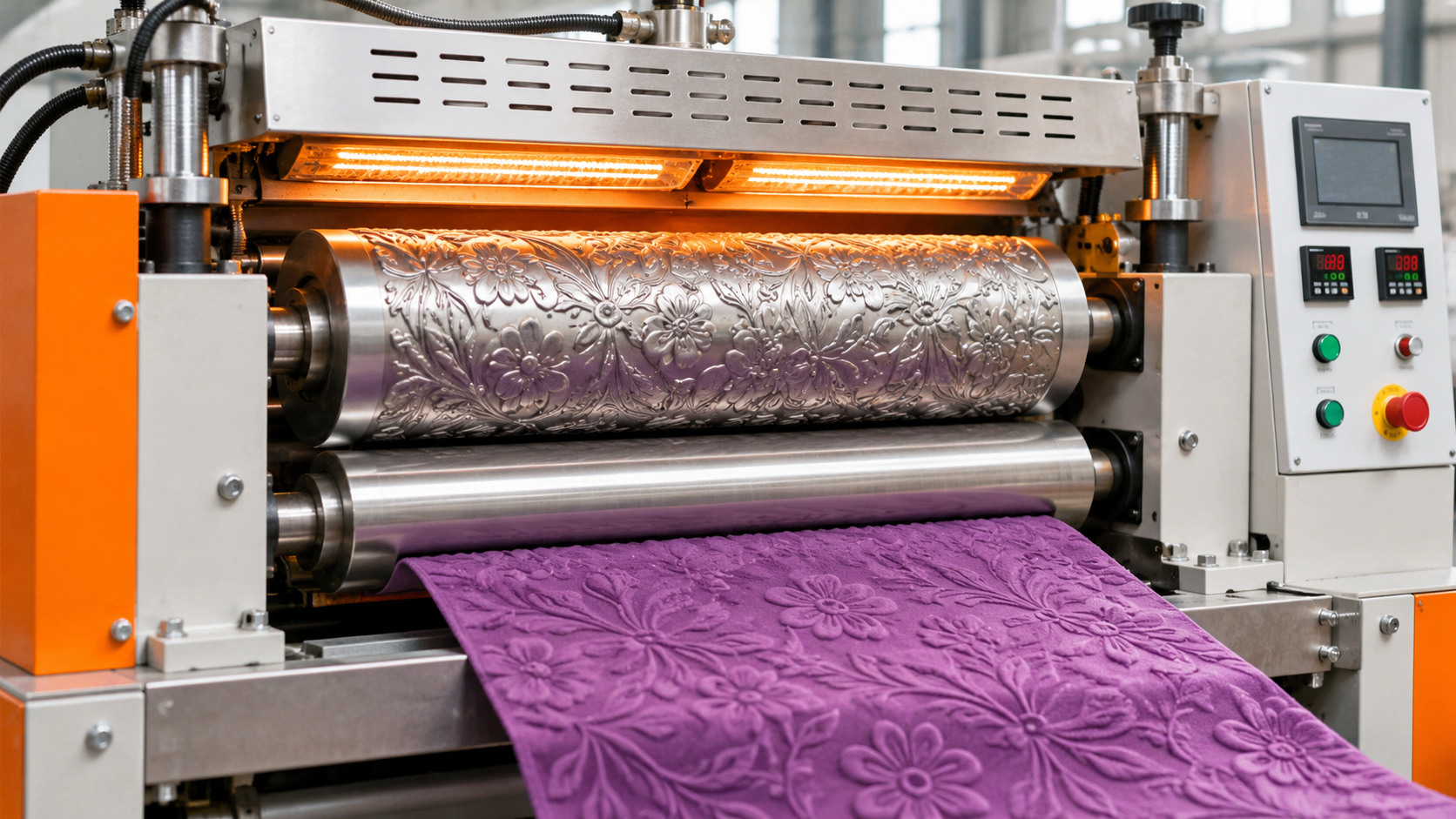
Temperature and pressure play an important role in fabric embossing. Learn how different settings affect pattern clarity, fabric texture, surface appearance, and processing results across polyester, nylon, cotton, and blended fabrics.
Fabric embossing is a textile finishing process that creates decorative patterns and textures on fabric surfaces. The final appearance of embossed fabric depends on several processing factors, but temperature and pressure are two of the most important.
Even when the same embossing pattern is used, changing the temperature or pressure can produce a different result. The fabric may develop a clear and well-defined texture, a faint impression, an overly flattened surface, or unwanted marks.
This is why selecting suitable operating conditions is important before starting fabric embossing production. Understanding how heat and pressure interact with different materials helps textile manufacturers achieve the desired finish while avoiding unnecessary fabric rejection.
Temperature and pressure work together to transfer a pattern onto the fabric surface.
In heat-assisted embossing, temperature helps soften or activate suitable materials so that the pattern can be formed more effectively. Pressure brings the embossing surface into contact with the fabric and creates the required impression.
However, the correct combination depends on the fabric composition, thickness, construction, and embossing pattern.
For example, a synthetic fabric may respond differently to heat compared with cotton or a blended material. Similarly, a thick fabric may require a different pressure setting from a lightweight fabric.
The objective is not to use the highest possible temperature or pressure. It is to find the appropriate processing conditions for the required finish.
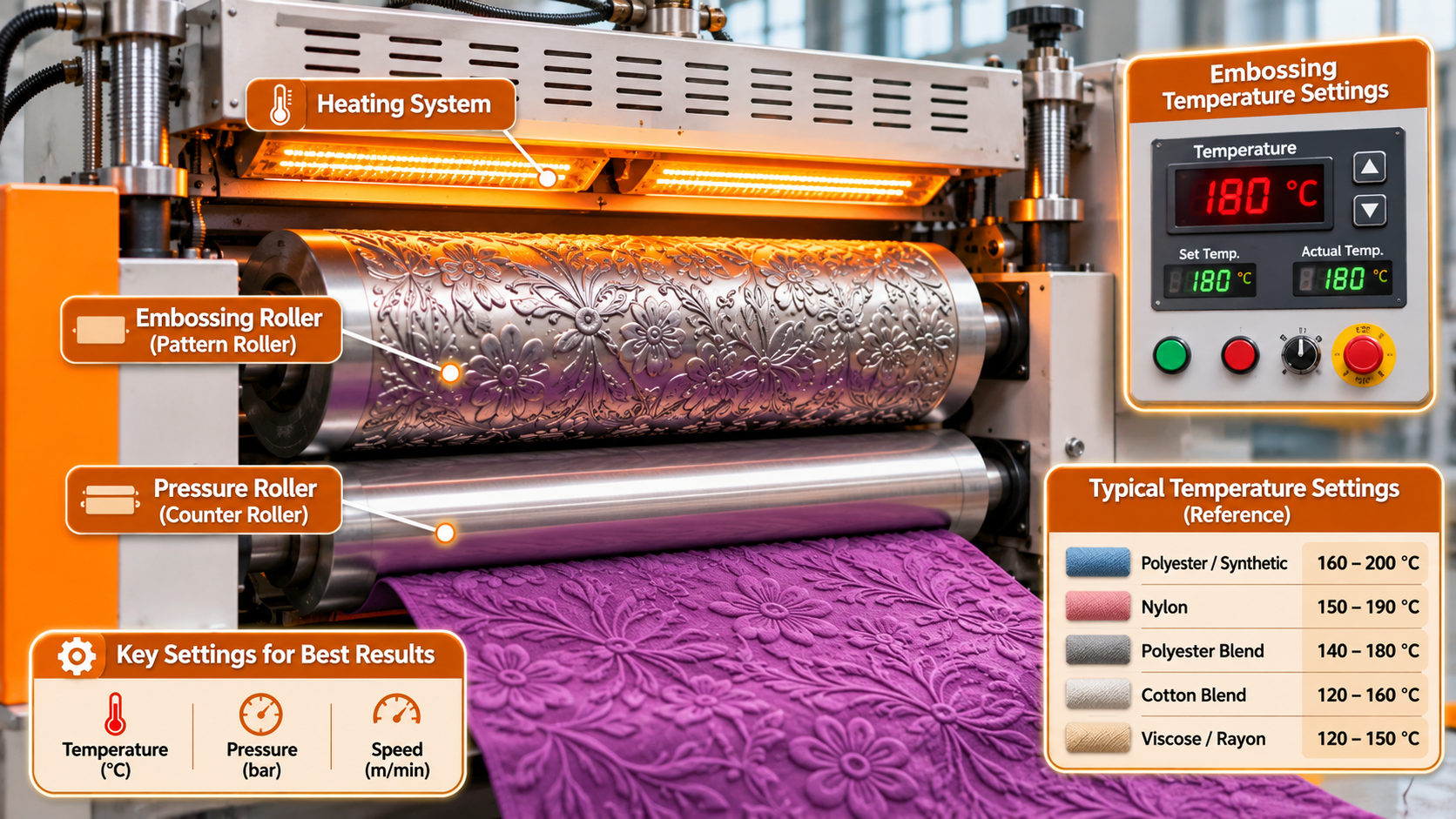
Temperature influences how the fabric responds when it comes into contact with the embossing surface. Its effect depends on the fibres and the finishing method being used.
When the temperature is too low for a heat-assisted process, the fabric may not respond sufficiently to the embossing surface.
This can result in:
What should be considered?
Check the material's recommended processing temperature and make gradual adjustments. Do not increase the temperature without considering the fabric's heat resistance.
Excessive temperature can damage sensitive materials and affect their appearance.
Possible results include:
Synthetic fibres and blended materials can be particularly sensitive to unsuitable heat conditions, depending on their composition.
What should be considered?
Use a temperature suitable for the fabric and the embossing technique. Test the material before processing a full production roll.
Temperature should remain reasonably uniform across the working area.
If different sections of the embossing roller operate at different temperatures, the fabric may receive uneven heat during processing.
This can create:
What should be considered?
Evaluate temperature distribution across the working width rather than checking only the displayed temperature value.
Some materials can temporarily retain an embossed impression but may lose part of the texture after cooling or further handling.
This behaviour depends on fibre properties, fabric construction, and the embossing method.
What should be considered?
Inspect the fabric after it has cooled and stabilised. This helps determine whether the embossed pattern retains the required appearance beyond the immediate machine output.
Pressure determines how firmly the embossing pattern comes into contact with the fabric. The right amount is necessary to create a clear impression without damaging the material.
When pressure is insufficient, the embossing roller may not transfer the pattern clearly.
Common results include:
What should be considered?
Check the pressure setting and ensure the fabric is positioned correctly. Increase pressure gradually while observing the finished pattern.
Applying too much pressure can affect the natural structure of the fabric.
Possible results include:
What should be considered?
Select pressure according to fabric thickness, structure, and desired pattern depth. Higher pressure does not automatically produce better embossing.
Even when the overall pressure setting is correct, uneven pressure distribution can affect the finished result.
For example, one side of the fabric may show a deeper pattern while the other side has a weaker impression.
This can be especially noticeable on wide fabric rolls.
What should be considered?
Check whether the pressure is distributed evenly across the working width and whether the fabric enters the embossing section in a stable position.
Temperature and pressure should not be treated as completely independent settings. Their combined effect determines how the fabric responds to the embossing process.
A suitable temperature with insufficient pressure may produce a weak impression. Similarly, excessive pressure combined with high temperature can create unwanted compression or surface damage.
The following table explains their general relationship.
Temperature | Pressure | Possible result |
| Too low | Too low | Weak and poorly defined pattern |
| Suitable | Too low | Shallow or incomplete impression |
| Too high | Suitable | Heat damage or changes in fabric appearance |
| Suitable | Too high | Excessive compression or flattened texture |
| Too high | Too high | Greater risk of fabric damage and unwanted marks |
| Suitable | Suitable | Better pattern definition and fabric appearance |
These are general processing observations. The actual results depend on the material, roller design, embossing method, and machine configuration.
Different textile materials respond differently to embossing. A setting that produces a good finish on one material may not work well on another.
Polyester is widely used in garments, home furnishings, and decorative textile products. Suitable polyester materials can respond well to heat-assisted embossing.
Important considerations:
Nylon is used in various textile applications and may require careful control of heat and pressure.
Important considerations:
Cotton has different thermal and structural properties from synthetic fibres. Its response to embossing depends on the fabric construction and the finishing method.
Important considerations:
Blended fabrics contain two or more fibre types. Their response to heat and pressure depends on the proportion and properties of the fibres used.
Important considerations:
These materials have a raised surface or pile that can be affected by excessive pressure.
Important considerations:
There is no single temperature and pressure combination suitable for every fabric. The settings should be selected through material testing and controlled adjustments.
Follow this practical approach:
Step 1: Identify the fabric composition
Check whether the material is polyester, nylon, cotton, a blend, or another textile. Its composition provides a starting point for selecting processing conditions.
Step 2: Understand the required pattern
A fine decorative design may require different processing conditions from a deep or heavily textured pattern.
Step 3: Check the machine specifications
Review the available temperature and pressure ranges and follow the manufacturer's operating recommendations.
Step 4: Conduct a sample trial
Process a small fabric sample before starting full production. This helps identify whether the pattern is clear and whether the material shows any unwanted changes.
Step 5: Adjust one setting at a time
Change temperature or pressure gradually rather than adjusting both significantly at once. This makes it easier to understand which setting is affecting the result.
Step 6: Inspect the cooled fabric
Evaluate pattern clarity, surface texture, dimensional changes, and consistency after the fabric has cooled.
Step 7: Record successful settings
Maintain a record of suitable processing conditions for different fabrics and patterns. This can help reduce trial time when similar production orders are received.
Sometimes the fabric's appearance provides useful information about the processing conditions.
Fabric appearance | Possible setting-related issue |
| Very faint pattern | Insufficient temperature or pressure, depending on the process |
| Overly flattened surface | Excessive pressure |
| Yellowing or discolouration | Excessive heat or material sensitivity |
| Uneven pattern depth | Uneven pressure or temperature distribution |
| Pattern loses definition after cooling | Unsuitable material and process combination |
| Shiny or glossy marks | Excessive heat or pressure for the fabric |
| Different results between batches | Variations in fabric properties or processing conditions |
These signs should be evaluated alongside fabric composition and machine settings before making adjustments.
The machine's design influences how accurately temperature and pressure can be controlled.
When evaluating an automatic embossing machine, buyers should understand which parameters can be adjusted, how temperature is monitored, and how pressure is distributed across the fabric width.
Important features to evaluate include:
The actual capabilities vary between machine models, so buyers should compare technical specifications rather than relying only on the machine category.
Even when temperature and pressure remain unchanged, the final fabric appearance may vary.
Some additional factors include:
Fabric thickness: Variations in thickness can change how pressure is transferred through the material.
Moisture content: The moisture present in a fabric can influence its behaviour during certain finishing processes.
Roller pattern: Different roller designs create different impressions, even under similar operating conditions.
Processing speed: The time for which fabric remains in contact with the embossing surface can influence the finishing result.
Fabric construction: Woven, knitted, nonwoven, and pile fabrics may respond differently to the same processing conditions.
Previous finishing treatments: Dyeing, coating, or other treatments may change how a material responds during embossing.
Understanding these factors is useful when a fabric produces different results despite apparently identical machine settings.
Temperature and pressure control are important considerations when selecting embossing equipment. However, the right choice also depends on fabric composition, working width, pattern requirements, production capacity, and the type of finishing effect you want to achieve.
Before purchasing, discuss your actual fabric requirements, compare machine specifications, and request a trial wherever possible.
Ramana Machines is a supplier, distributor, and trader of knitting and textile machinery. We help businesses explore machinery options according to their production requirements and operational needs.
Visit www.ramanainternational.com to explore textile machinery information and discuss your requirements with our team.
Related
13 Nov 2026
13 Nov 2026
Planning to invest in an embossing machine? Understand the key pricing factors, including production capacity, pattern tooling, automation, import expenses, installation, and long-term operating costs.
View
13 Nov 2026
13 Nov 2026
Is your embossing machine producing uneven fabric patterns? Learn how hydraulic issues, roller alignment, faulty pressure controls, and incorrect settings affect embossing pressure, along with practical troubleshooting and maintenance tips.
View
13 Nov 2026
13 Nov 2026
Choosing between an electric and automatic embossing machine? Understand their working methods, key differences, advantages, limitations, and suitability for different fabric production requirements before selecting the right equipment.
ViewFind answers to the most common questions about our machines, services and support.
Temperature influences how a fabric responds to the embossing surface. Incorrect temperature can result in faint patterns, shrinkage, discolouration, or unwanted surface changes.
Excessive pressure can flatten the fabric, compress its structure, create unwanted marks, or damage delicate materials.
Insufficient pressure may produce shallow, faint, or incomplete patterns because the embossing surface does not create the required impression.
No. Different fibres and fabric constructions respond differently to heat. Processing conditions should be selected according to the material's properties.
Yes. Both influence how the embossing pattern transfers onto the fabric. Their combined effect determines the appearance and depth of the impression.
This can happen when the material and embossing conditions are not suitable for retaining the impression. Fabric properties, temperature, pressure, and the finishing method all influence pattern retention.
Yes. Processing speed affects the time fabric spends in contact with the embossing surface. It should be considered along with temperature, pressure, and material properties.
They can identify the fabric composition, review machine recommendations, conduct sample trials, adjust settings gradually, and inspect the fabric after cooling.