Blog
What Is Textile Embossing? A Complete Guide to Fabric Embossing Techniques
By Ramana Machines · November 13, 2026
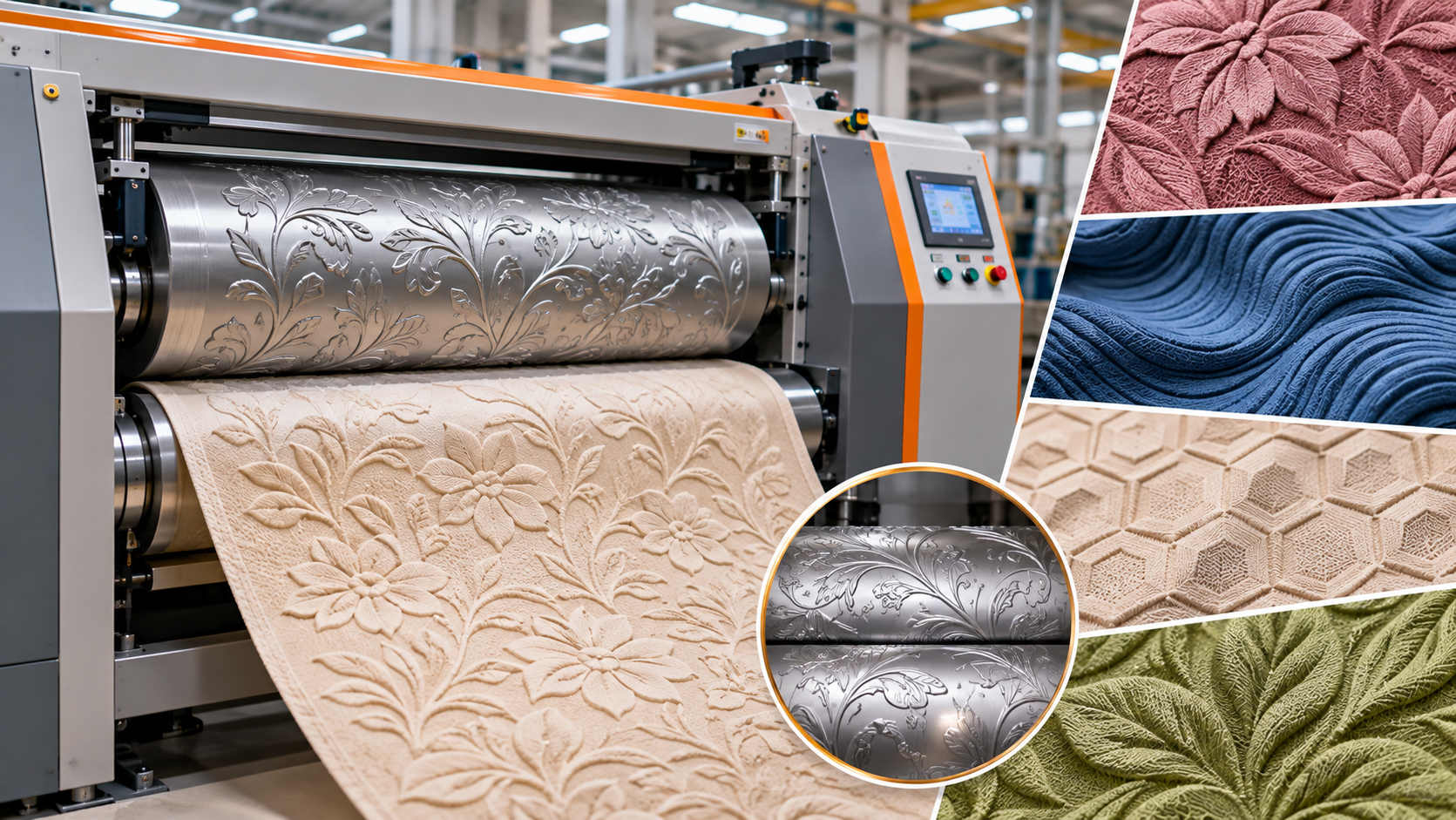
Textile embossing creates raised, recessed, and textured patterns on fabric surfaces. Explore different fabric embossing techniques, machine components, applications, common production problems, and important factors to consider when selecting embossing equipment.
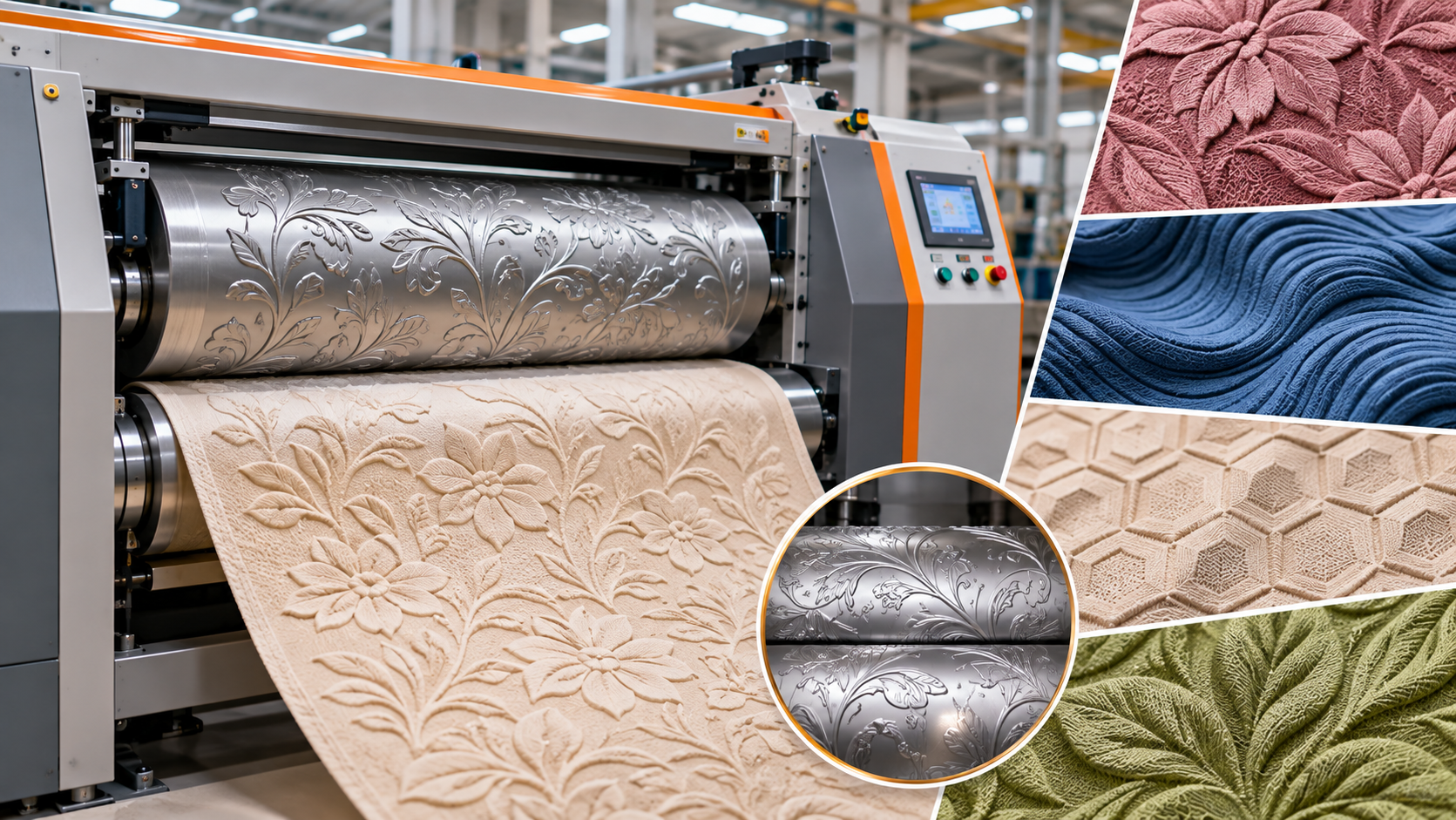
Textile embossing is a fabric finishing process used to create raised, recessed, or textured patterns on the surface of a fabric. It changes the appearance and feel of the material without necessarily changing its basic structure. Depending on the technique, embossing can produce decorative designs, geometric patterns, brand logos, and textured finishes.
This process is widely used in textile applications where appearance and surface texture are important. From clothing and upholstery to home furnishings and decorative fabrics, embossed materials offer manufacturers more design possibilities.
With the right equipment, pressure, temperature, and roller settings, textile producers can create consistent patterns across fabric surfaces. Understanding the embossing process and the available techniques helps businesses choose suitable machinery for their production requirements.
What Is Textile Embossing?
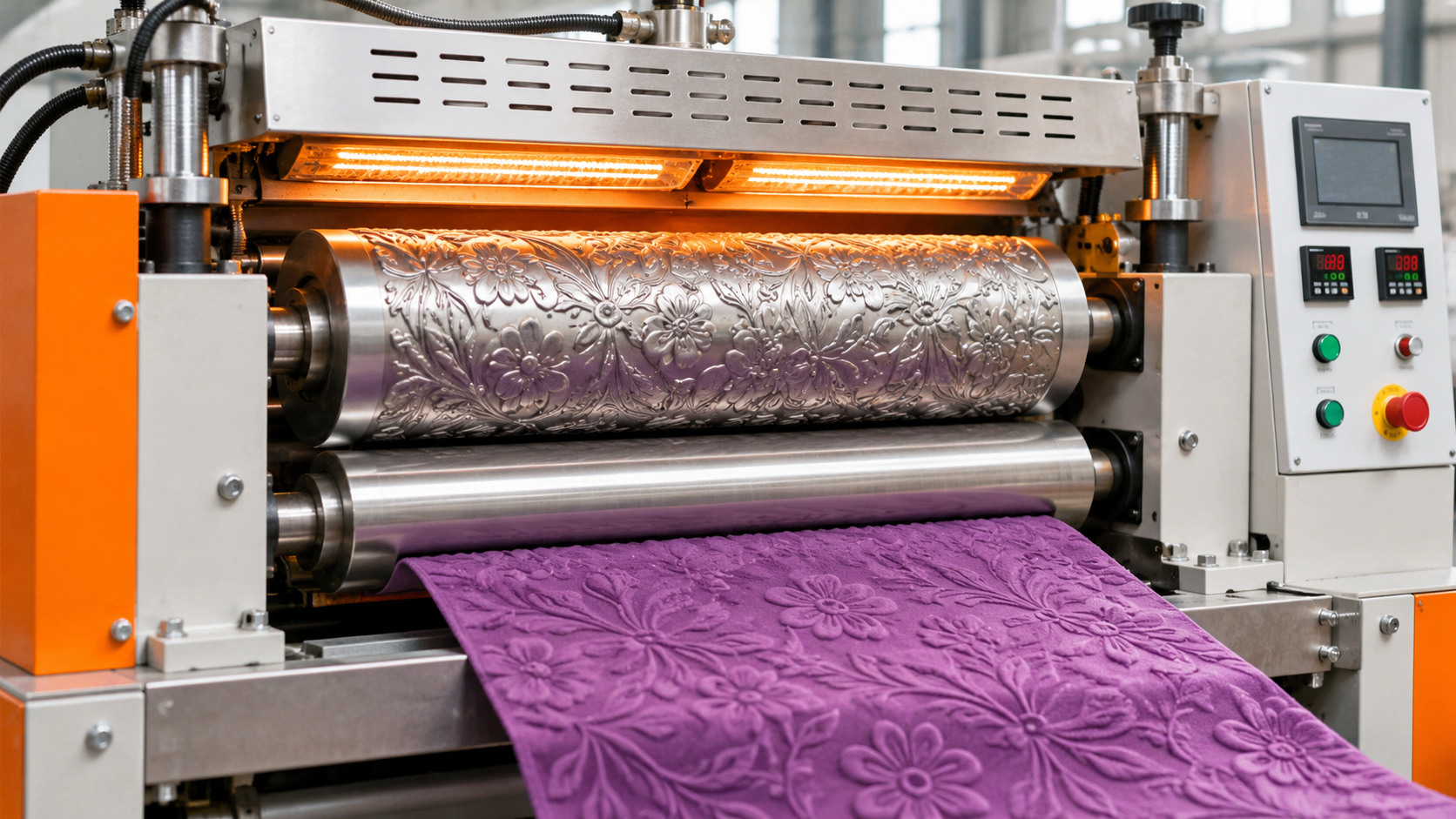
Textile embossing is a mechanical or heat-assisted finishing technique in which a pattern is transferred onto a fabric surface using specially designed rollers, plates, or embossing tools.
During the process, fabric passes through an embossing arrangement where controlled pressure, and sometimes heat, is applied. The pressure creates a textured pattern that gives the material a different surface appearance.
Depending on the fabric and machine configuration, embossing can produce:
- Raised patterns and decorative textures.
- Recessed or pressed designs.
- Repeated geometric patterns.
- Logo and brand impressions.
- Decorative surface effects for garments and furnishings.
The final result depends on the fabric composition, thickness, moisture content, embossing temperature, pressure, and design of the embossing roller or plate.
How Does the Fabric Embossing Process Work?
The embossing process generally involves passing fabric through a pair of rollers or between specially designed surfaces. One surface carries the required pattern, while the other provides the necessary support and pressure.
The basic process includes the following steps:
1. Fabric preparation
The fabric is inspected and prepared before embossing. It should be clean and suitable for the selected finishing process. Wrinkles, dust, or uneven fabric tension can affect the final pattern.
2. Pattern selection
The required texture or design is selected according to the application. Patterns may include lines, shapes, decorative textures, or customised designs.
3. Machine setting
The operator adjusts the required pressure, roller alignment, temperature (where applicable), and fabric speed according to the material and desired result.
4. Fabric feeding
The fabric is guided into the embossing section. Proper alignment helps ensure that the design is applied evenly across the material.
5. Embossing operation
The fabric passes through the embossing rollers or plates. Controlled pressure transfers the pattern onto its surface. In heat-assisted processes, temperature helps create or stabilise the desired effect.
6. Inspection and finishing
The embossed fabric is checked for pattern consistency, clarity, surface damage, and alignment. Depending on the material and process, additional cooling or finishing may be required.
Different Types of Textile Embossing Techniques
Different embossing techniques are used depending on the fabric material, required pattern, production volume, and desired surface finish.
1. Heat Embossing
Heat embossing uses a combination of temperature and pressure to create a pattern on the fabric surface. The heated embossing roller or plate helps produce a more defined impression, particularly on suitable thermoplastic or heat-sensitive materials.
Applications:
- Synthetic fabrics.
- Decorative textiles.
- Upholstery materials.
- Fashion and furnishing fabrics.
Temperature must be controlled according to the fabric's heat resistance. Excessive heat can cause shrinkage, discolouration, or surface damage.
2. Mechanical Embossing
Mechanical embossing uses pressure from patterned rollers or plates to create a textured surface. It does not always require additional heating.
The pattern is transferred through physical contact between the embossing surface and the fabric.
Applications:
- Decorative fabric textures.
- Upholstery materials.
- Surface pattern finishing.
- Selected woven and nonwoven fabrics.
The pressure and roller design must be suitable for the fabric to avoid flattening or damaging its structure.
3. Rotary Embossing
Rotary embossing uses cylindrical rollers to apply continuous or repeating patterns as fabric moves through the machine. It is useful for processing longer fabric lengths and maintaining a repeated design.
Applications:
- Continuous fabric finishing.
- Repeated decorative patterns.
- Home furnishing materials.
- Large-scale textile processing.
Correct roller alignment and fabric feeding are important for maintaining pattern consistency.
4. Plate Embossing
Plate embossing uses a patterned plate or mould to create a specific impression on the fabric. It is generally suitable for applications where a particular design or defined area needs to be embossed.
Applications:
- Logos and decorative impressions.
- Special fabric designs.
- Selected textile accessories.
- Customised surface patterns.
The plate design and applied pressure determine the clarity of the embossed pattern.
5. Continuous Fabric Embossing
Continuous embossing is used when fabric needs to pass through the embossing section in a steady production process. Rotary roller arrangements are commonly used for this type of operation.
Applications:
- Large fabric rolls.
- Repeated surface textures.
- Industrial fabric finishing.
- High-volume textile production.
Consistent fabric tension and machine speed are important for avoiding uneven patterns.
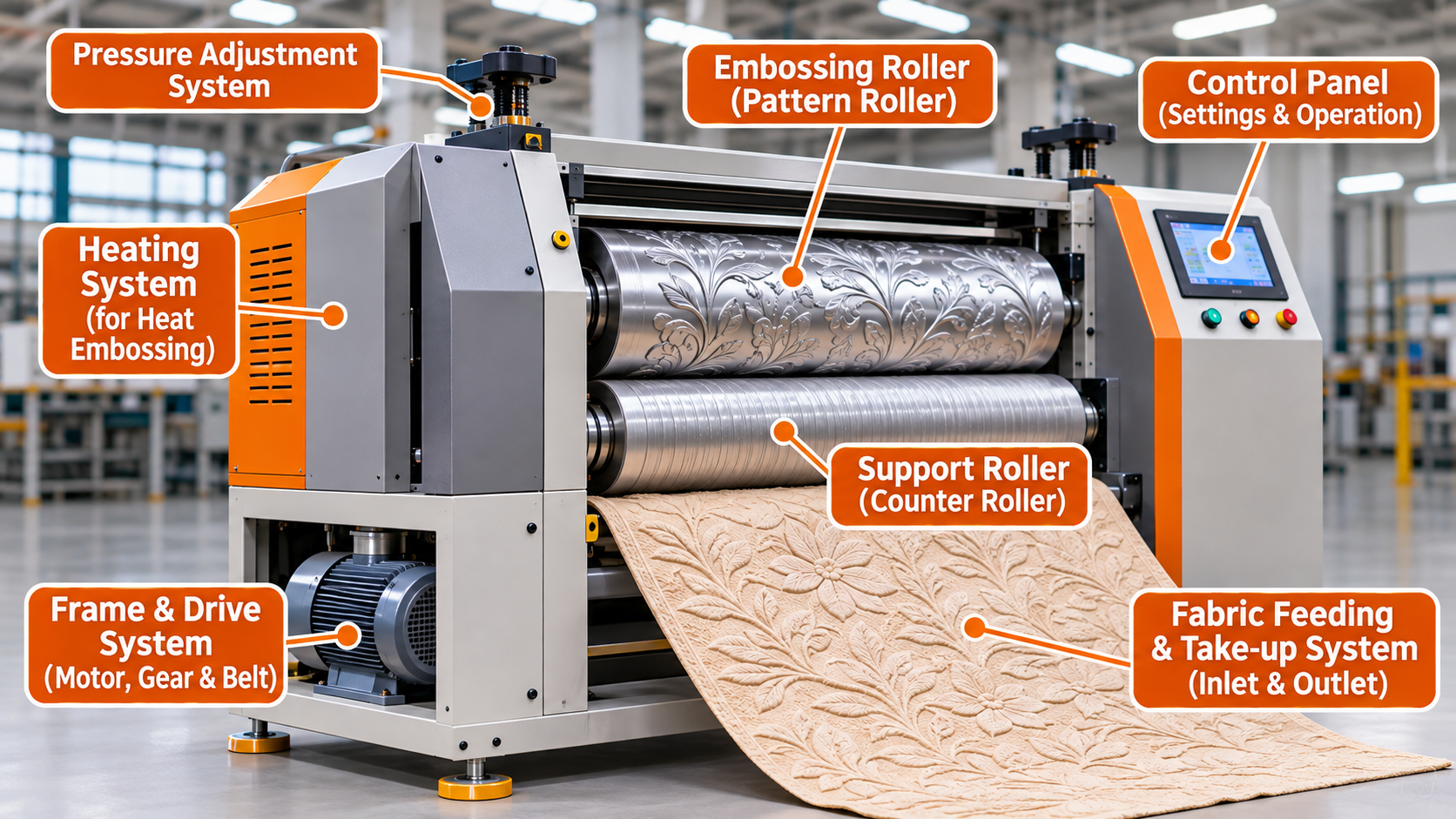
Important Parts of a Textile Embossing Machine
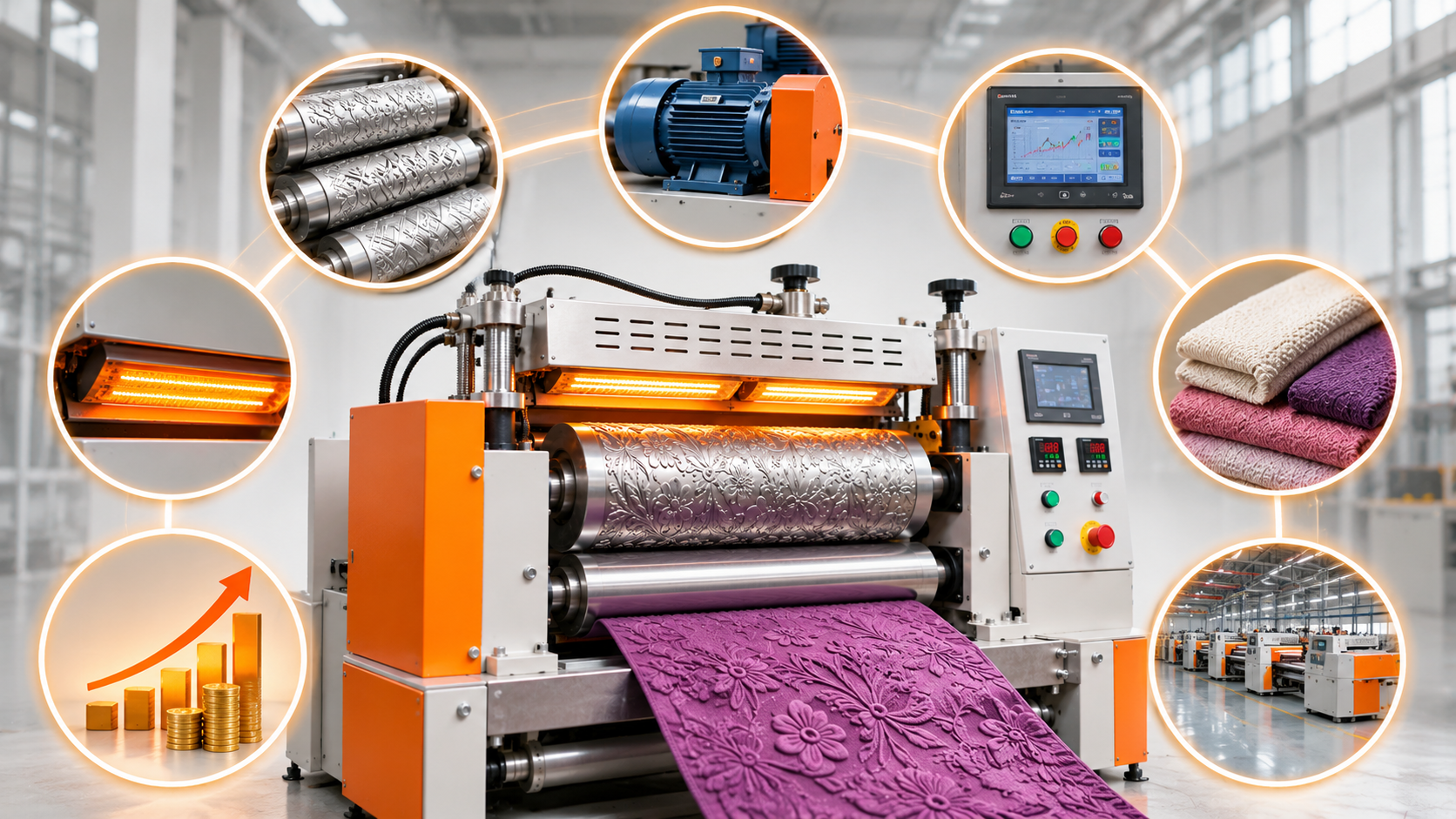
A fabric embossing machine consists of several mechanical and control components that work together to transfer patterns onto fabric.
1. Embossing Rollers
Embossing rollers are among the most important components. Their surfaces carry the required pattern, which is transferred onto the fabric during operation.
Function:
- Create raised or recessed patterns.
- Apply the design across the fabric surface.
- Maintain repeated pattern formation during continuous processing.
Roller condition, surface quality, and alignment directly influence the final finish.
2. Pressure Adjustment System
The pressure system controls the force applied between the embossing surfaces.
Function:
- Maintain suitable pressure for different fabric types.
- Support consistent pattern formation.
- Help prevent excessive compression or fabric damage.
Incorrect pressure can result in weak impressions or overly flattened fabric.
3. Heating System
Some embossing machines include a heating arrangement to apply controlled temperature during the process.
Function:
- Provide heat for suitable heat-assisted embossing processes.
- Support pattern formation on compatible materials.
- Maintain the required operating temperature.
Not every embossing process requires heating. Temperature settings should always match the material being processed.
4. Fabric Feeding System
The feeding system guides the fabric towards the embossing section and helps maintain smooth movement.
Function:
- Feed fabric at a consistent speed.
- Reduce wrinkles and folding.
- Support accurate fabric alignment.
5. Tension Control System
The tension control system helps maintain the correct fabric tension throughout the process.
Function:
- Prevent loose or excessive fabric tension.
- Support consistent fabric movement.
- Reduce the risk of wrinkles and uneven patterns.
6. Motor and Drive System
The motor and drive system provide the movement required to rotate the rollers and operate the machine.
Function:
- Drive the embossing rollers.
- Maintain operating speed.
- Support continuous production.
Motor performance and drive alignment are important for stable operation.
7. Control Panel
The control panel allows operators to manage machine settings and monitor operation.
Depending on the machine configuration, it may provide controls for:
- Operating speed.
- Temperature.
- Pressure settings.
- Start and stop functions.
- Machine status and safety alerts.
Which Fabrics Can Be Embossed?
Not every fabric responds to embossing in the same way. The result depends on fibre composition, fabric construction, thickness, surface texture, and the embossing technique.
Fabric type | Embossing suitability and considerations |
| Polyester | Often suitable for heat-assisted embossing when temperature is correctly controlled |
| Nylon | Can be embossed with suitable process settings and material testing |
| Cotton | May be suitable for mechanical or specialised finishing methods; results depend on fabric construction and treatment |
| Blended fabrics | Require settings based on the behaviour of their different fibre components |
| Nonwoven fabrics | Can be embossed using suitable roller pressure and pattern arrangements |
| Velvet and plush fabrics | Require careful pressure control to avoid damaging or flattening the pile |
Before full-scale production, manufacturers should test the selected fabric to determine suitable pressure, temperature, and operating speed.
Applications of Fabric Embossing in the Textile Industry
Textile embossing is used in several industries where surface design and texture add value to the finished material.
1. Garment and Fashion Industry
Embossed fabrics are used to create distinctive surface patterns for garments, accessories, and decorative fashion products.
2. Home Furnishing
Embossing can add texture to upholstery, curtains, cushion covers, and selected furnishing materials.
3. Automotive Textiles
Certain automotive interior materials use embossed surface patterns to improve their visual appearance and create specific textures.
4. Decorative and Promotional Fabrics
Embossing can be used to create customised designs, brand impressions, and decorative patterns on suitable textile materials.
5. Nonwoven Textile Products
Selected nonwoven materials are embossed to create patterns, textures, or functional surface characteristics depending on their intended application.
Common Problems During Textile Embossing and Their Solutions
Even when the machine is operating, incorrect settings or material conditions can affect the final fabric quality.
1. Uneven Embossing Patterns
Possible causes:
- Uneven roller pressure.
- Incorrect roller alignment.
- Inconsistent fabric thickness.
- Uneven fabric feeding.
Solutions:
- Check roller alignment.
- Adjust pressure according to the material.
- Inspect the fabric feeding system.
- Test the process on a sample before bulk production.
2. Faint or Poorly Defined Patterns
Possible causes:
- Insufficient pressure.
- Incorrect temperature in heat-assisted processes.
- Worn or damaged embossing rollers.
- Unsuitable fabric properties.
Solutions:
- Review pressure and temperature settings.
- Inspect the embossing surface.
- Check fabric compatibility.
- Make controlled adjustments and evaluate the result.
3. Fabric Shrinkage or Surface Damage
Possible causes:
- Excessive temperature.
- Too much pressure.
- Incorrect processing speed.
- Unsuitable fabric selection.
Solutions:
- Follow the fabric's heat and pressure limitations.
- Reduce excessive settings.
- Conduct material testing.
- Check the machine's temperature control system.
4. Wrinkles During Embossing
Possible causes:
- Incorrect fabric tension.
- Poor fabric alignment.
- Problems with feeding rollers.
- Uneven fabric entry.
Solutions:
- Check fabric alignment before processing.
- Adjust the tension control system.
- Inspect feeding rollers.
- Ensure the fabric enters the embossing section smoothly.
5. Repeated Pattern Marks or Alignment Errors
Possible causes:
- Incorrect roller positioning.
- Inconsistent roller rotation.
- Drive system problems.
- Fabric movement during processing.
Solutions:
- Check roller positioning and alignment.
- Inspect the drive system.
- Maintain consistent fabric tension.
- Verify the pattern arrangement before production.
How to Maintain a Fabric Embossing Machine
Regular maintenance helps maintain consistent pattern quality and reduces unexpected production interruptions.
Daily maintenance:
- Clean dust and fabric residue from accessible machine areas.
- Check the embossing rollers for visible damage.
- Inspect fabric feeding and alignment.
- Observe the machine for unusual noise or vibration.
- Check temperature and pressure readings where applicable.
Weekly maintenance:
- Inspect roller surfaces and drive components.
- Check tension control arrangements.
- Examine belts, connections, and accessible moving parts.
- Clean areas where fabric residue may accumulate.
- Review the consistency of embossed fabric samples.
Periodic maintenance:
- Check roller alignment and condition.
- Inspect motor and drive performance.
- Verify heating and temperature control systems.
- Check pressure adjustment mechanisms.
- Replace worn components according to the manufacturer's recommendations.
Always follow the machine manufacturer's maintenance instructions and isolate the power supply before carrying out maintenance that requires access to moving or electrical components.
What to Consider Before Buying a Textile Embossing Machine
Choosing suitable embossing equipment requires an understanding of the fabric, design, and production requirements.
Before selecting a machine, consider the following factors:
- Fabric compatibility: Check whether the machine can process the materials and thicknesses you use.
- Embossing technique: Decide whether you need mechanical, heat-assisted, rotary, or plate embossing.
- Pattern requirements: Evaluate the available roller or plate designs and whether customised patterns are possible.
- Working width: Select a machine width suitable for your fabric rolls.
- Pressure control: Check whether pressure can be adjusted according to different materials.
- Temperature control: If heat-assisted embossing is required, review the heating range and control accuracy.
- Production speed: Consider your daily production targets and the required processing capacity.
- Maintenance and spare parts: Understand the maintenance requirements and availability of important components.
It is also useful to test your actual fabric on the machine before making a purchase decision. This helps evaluate pattern clarity, material behaviour, and production suitability.
Explore Textile Embossing Machinery for Your Production Needs
Textile embossing offers manufacturers a practical way to add surface patterns and textures to suitable fabrics. The right embossing technique depends on the material, design requirements, production volume, and finishing expectations.
Understanding machine components, operating settings, and maintenance requirements helps businesses make informed decisions and maintain consistent fabric quality.
Ramana Machines is a supplier, distributor, and trader of knitting and textile machinery. As a textile machinery supplier in India, we help businesses explore machinery options according to their production requirements and operational needs.
Visit www.ramanainternational.com or contact our team to discuss your textile machinery requirements.